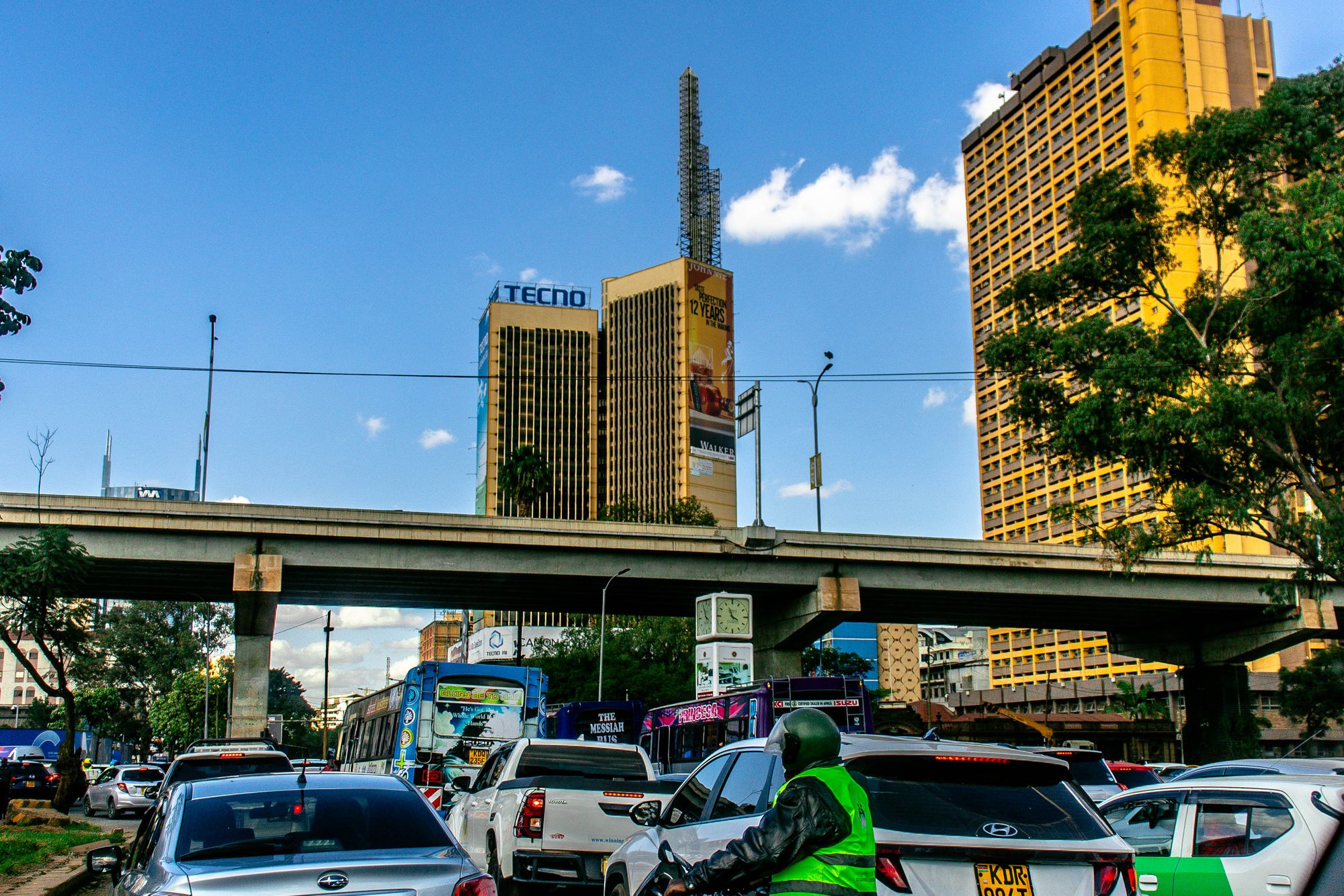
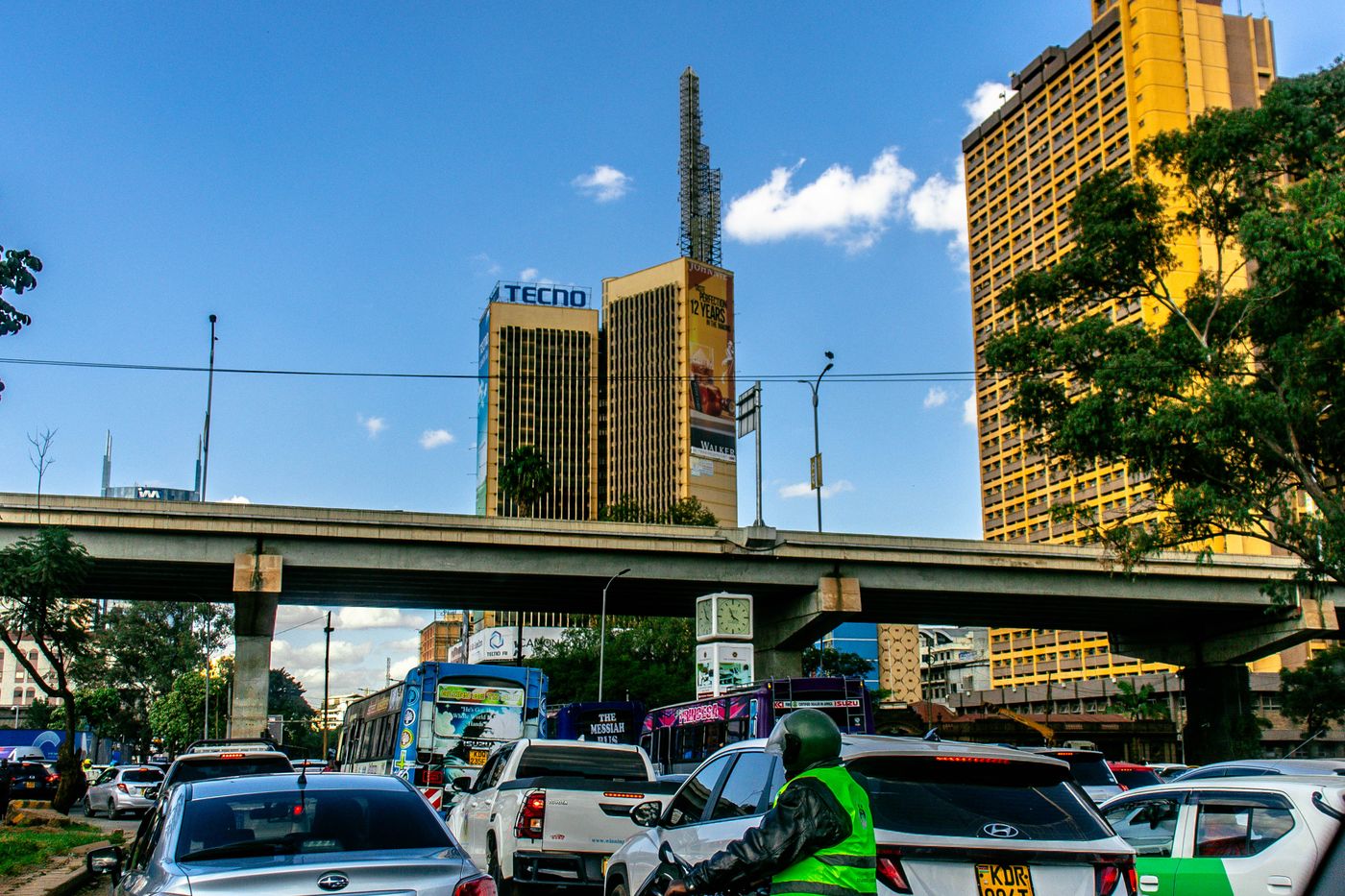
Moi Avenue and Tom Mboya Street run parallel through the eastern half of the grid and between them carry what is probably the heaviest pedestrian traffic in the country. Shops at street level, offices stacked above, matatu stages at both ends, and a pavement that does not thin out between seven in the morning and eight at night.
It is also where the CBD keeps one of its best rooms. The Kenya National Archives occupies the old Bank of India building at the Hilton corner, and behind the banking-hall columns is the Murumbi collection: African art, textiles, beadwork and photographs, stacked floor to ceiling.
01Why base here
- The densest street life in Kenya, and the fastest way to understand how the city works.
- The National Archives gallery is a few metres off the pavement.
- Every matatu route out of the eastern city touches one of these two streets.
- Shops for everything practical: phones, chemists, tailoring, bookshops, luggage.
02The longer view
Moi Avenue was Government Road, and it carried the colonial administration from the station up to the top of the town. Tom Mboya Street, one block east, is named for the trade unionist and minister assassinated in 1969. Between them they now take more pedestrians than any other pair of streets in Kenya, and almost none of that traffic is going anywhere in particular: this is where the city shops, changes buses, eats lunch and preaches.
The buildings tell the same story as the avenue one block west, only louder. Offices stack above ground floors that have been subdivided into phone shops, kiosks and stairwell arcades, and the National Archives sits in the middle of it in a former banking hall. The quarter is not tidy and it is not trying to be. It is the clearest view of how the centre actually works that a visitor can get on foot.
03The streets
Moi Avenue
The wider of the two, running from the railway end north to the Globe. The Archives sits mid-way at the Hilton corner, and the hawker pressure is heaviest at the southern half.
Tom Mboya Street
One block east and narrower: cinemas turned churches, fabric shops, and the loudest sound system per metre in the centre.
Kimathi Lane and Muindi Mbingu crossings
The short cross streets that link the busy grid to the market quarter. Quicker on foot than any vehicle, at any hour.
Ronald Ngala Street
The northern boundary of this quarter and the transition into the River Road side. Busy, functional, and worth crossing in daylight only.
04What to walk to
Kenya National Archives
Ticketed, an hour, and the most surprising interior in the CBD. Photography rules are posted at the desk and enforced.
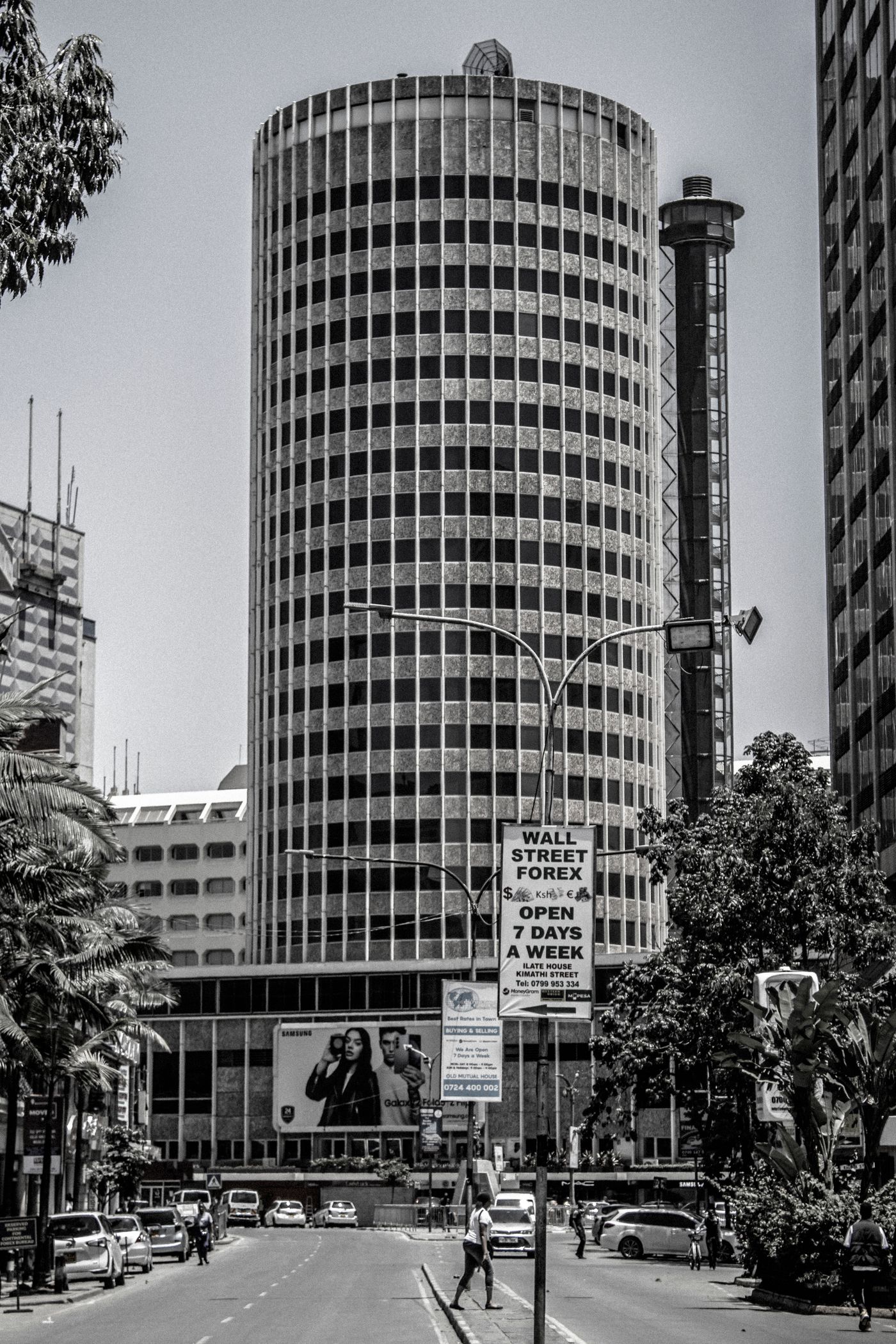
The Hilton roundabout
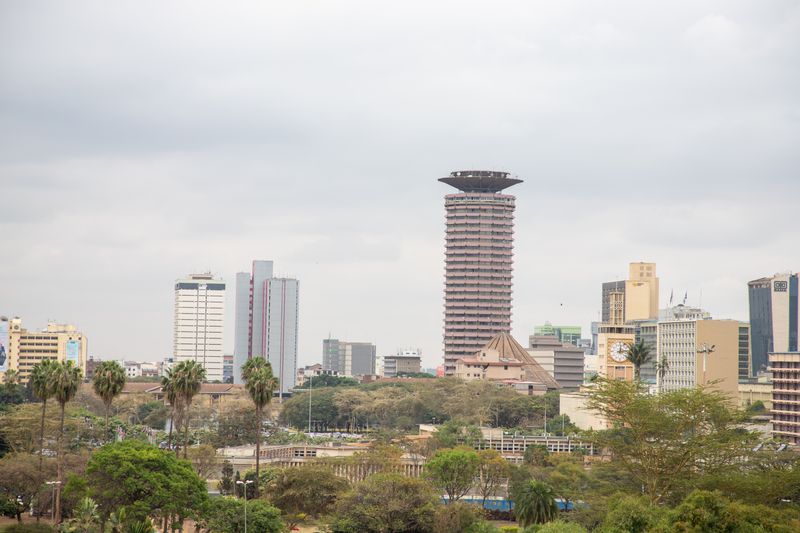
The circular tower is the orientation point for the whole eastern grid, visible from most of these streets.
Bookshops and news stands
Several of the old bookshops survive along Moi Avenue, and the news stands here are the best in the city.
The stages
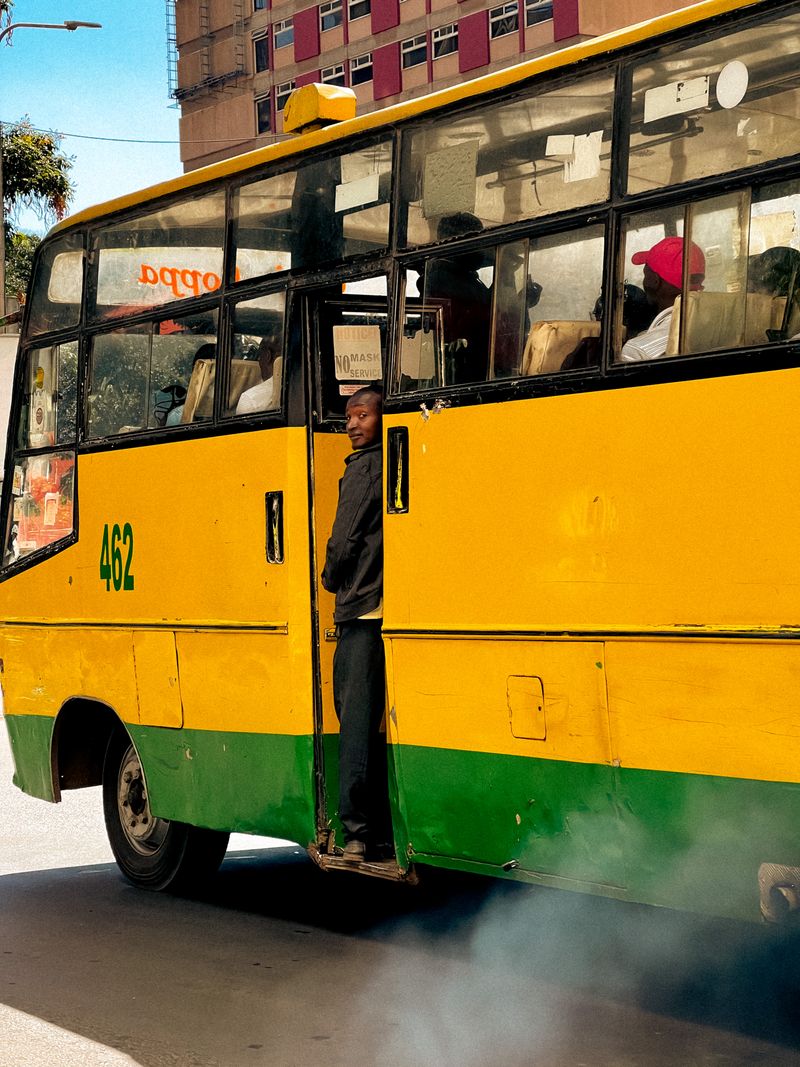
The informal matatu stands at both ends have no signage but a strict internal order. Watching one work for ten minutes explains the city.
05One walk through the quarter
One straight line, done once, in daylight. It is the loudest walk in the centre and the most useful: everything else in the grid makes sense afterwards.
- 01 Start at the Haile Selassie Avenue end The south end, near the memorial park and the station approach. The pavement is wide here and the pressure is lower.
- 02 North to the Archives The banking-hall columns are unmissable. Inside, the Murumbi collection is stacked floor to ceiling, and it is the most surprising room in the centre.
- 03 Cross to Tom Mboya Street One block east and narrower: cinemas turned churches, fabric shops, and the loudest sound system per metre in the city.
- 04 North to Ronald Ngala Street The boundary with the River Road side. Keep this as the turning point rather than crossing it unless you have a reason.
- 05 Back down the west pavement The return leg reads differently: shopfronts you walked past at eye level are now framed by the stairwell arcades above them.
06How far everything else is
Direct lines from Moi & Tom Mboya to the rest of the grid, computed from published coordinates at 4.8 km/h. They are a floor: pavements, crossings and the hour of the day all add to them.
07A short history, in four dates
08Staying here
Stock along these streets is mid-range and functional: business hotels above shopping floors, and older lodgings whose reviews reflect the noise. Ratings cluster around location and value, and mention street noise often enough that a high floor or a courtyard room is worth asking for.
No rates on this page
Nightly figures go out of date faster than a page can be rewritten, so this site does not print them. Ratings, review counts and whether a place is walkable to what you came for are the comparison layer. Live availability sits with the booking partner.
09Eating here
Working kitchens
The quarter feeds tens of thousands of commuters at lunch, which means fast, cheap, hot food cooked in volume rather than anything with a view. It is also the best value in the centre.
The Indian lunch counters
The older retail streets here and in the market quarter next door carry a long Indian commercial history, and the lunch counters that come with it are still in business.
10Practical
Getting here
On foot from anywhere in the grid. Vehicles move slower than walkers on both streets for most of the day, so a car is a hindrance rather than a help.
On foot
Daylight, one pocket, nothing in your hands. The crowd is not the risk; being distracted in it is.
Hours
The pavement fills from about seven in the morning and thins fast after the evening commute. The Archives keeps its own hours and posts its photography rules at the desk.
What changes
Hawker enforcement moves the street trade around from month to month, which changes how crowded a given block feels. The street itself does not change.
11After the offices empty
The pavements thin out fast after the commute and the character changes with them. This is the point in the grid where the advice stops being general: do the walking in daylight, keep a phone in a pocket rather than a hand, and take a car after dark.
12What people get wrong
Walking it with a camera out
The crowd is not the problem; the opportunity is. Photograph from doorways and shop fronts rather than mid-pavement, and keep the strap on.
Trying to drive it
Vehicles move slower than pedestrians on both streets for most of the day. Walk, or route around the quarter entirely.
Bringing a bag you have to think about
A single front pocket is the whole system. The crowd is the point of the walk, and it works better when nothing needs watching.
13Things to do in this area
14Where this page comes from
This page is desk research, not fieldwork. Nobody from this site is claiming to have stood on the corner and timed the walk for you. What follows is where the specifics came from, so you can check any of them.
- Kenya National Archives and the Murumbi collection: Kenya National Archives, visitor information.
- Matatu routes and stages: Digital Matatus route data, Nairobi.
- Distances: computed from published coordinates.
- Kenya National Archives: the institution’s own visitor information.
- Tom Mboya: the public record of 1969 and the street naming that followed.
Opening hours, ticket arrangements and market days change. Where this page cannot know a current figure it says so instead of printing one. No hotel, operator or agency pays to appear on it.
15Questions
Is the National Archives worth a ticket?+
For anyone interested in African art or in Kenyan political history, it is the strongest hour in the centre. The Murumbi collection is dense and the building itself is part of the visit.
How bad is the hawker pressure?+
Constant and mostly good-humoured. A clear no and continuing to walk is understood. The pressure drops on the shaded side and after the lunch hour.
Can I use the matatus from here?+
Yes, and the stages here serve most eastern and northern routes. Fares are set by the crew and change with the hour and the weather, so ask before boarding rather than after.
Where does this quarter end?+
At Ronald Ngala Street to the north and the railway land to the south. East of Tom Mboya the grid becomes River Road, which this site treats as a separate quarter for good reason.
Is this quarter safe in daylight?+
It is the busiest pedestrian ground in the country, and the crowd itself is not the problem. Pickpocketing is opportunistic and rises with distraction, so the standard advice applies: one phone, one pocket, and stop out of the flow before taking anything out.
Where exactly is the National Archives?+
On Moi Avenue at the Hilton corner, in the former Bank of India building. It is ticketed, the gallery takes about an hour without hurrying, and the photography rules are posted at the desk rather than online.