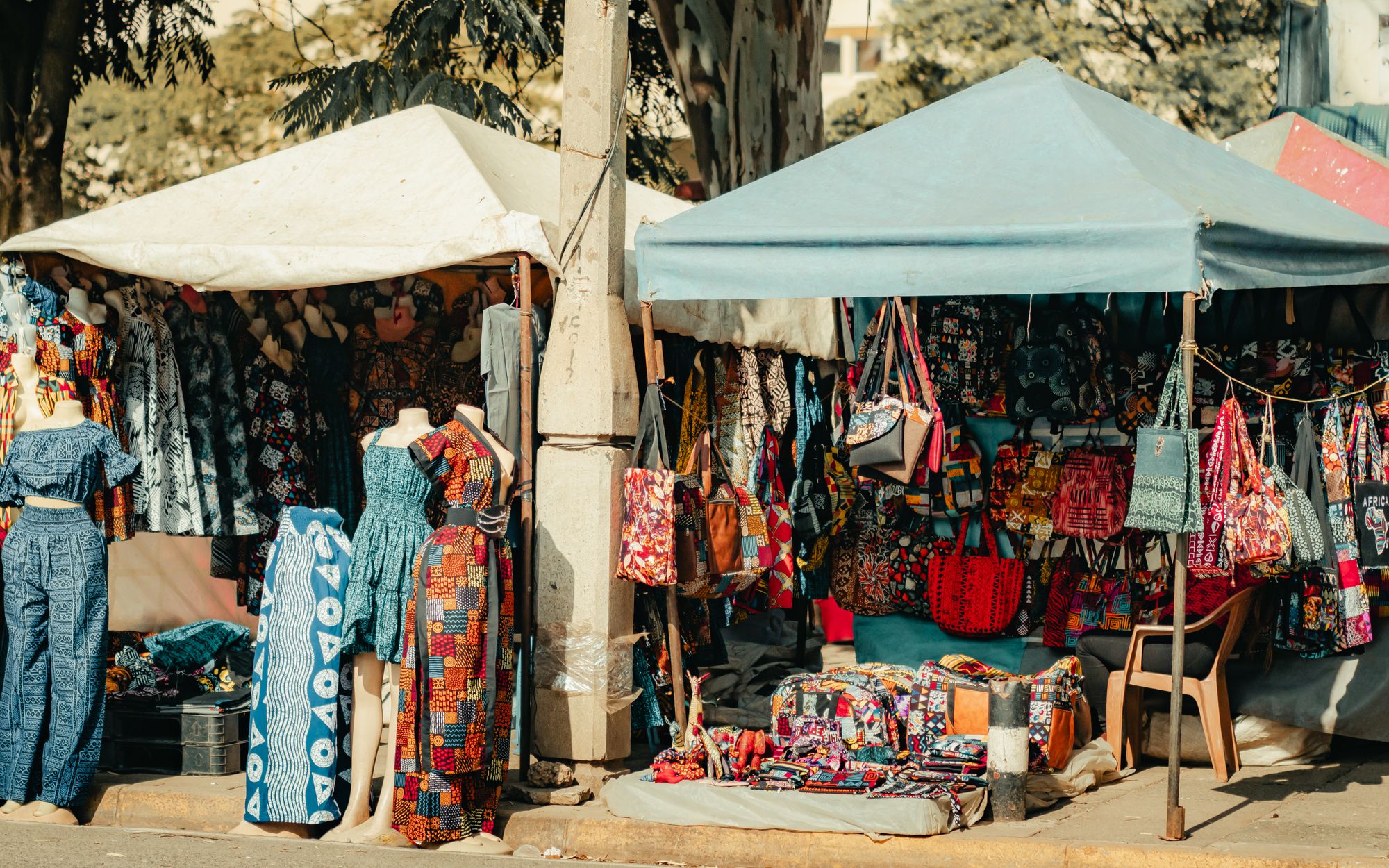
Biashara Street is the oldest retail street in Nairobi still doing what it was built for. Narrow, shaded and lined with single-family shops selling cloth, haberdashery, children’s clothes and fabric by the metre, it is the one place in the centre where the shopfronts are still the width of one business.
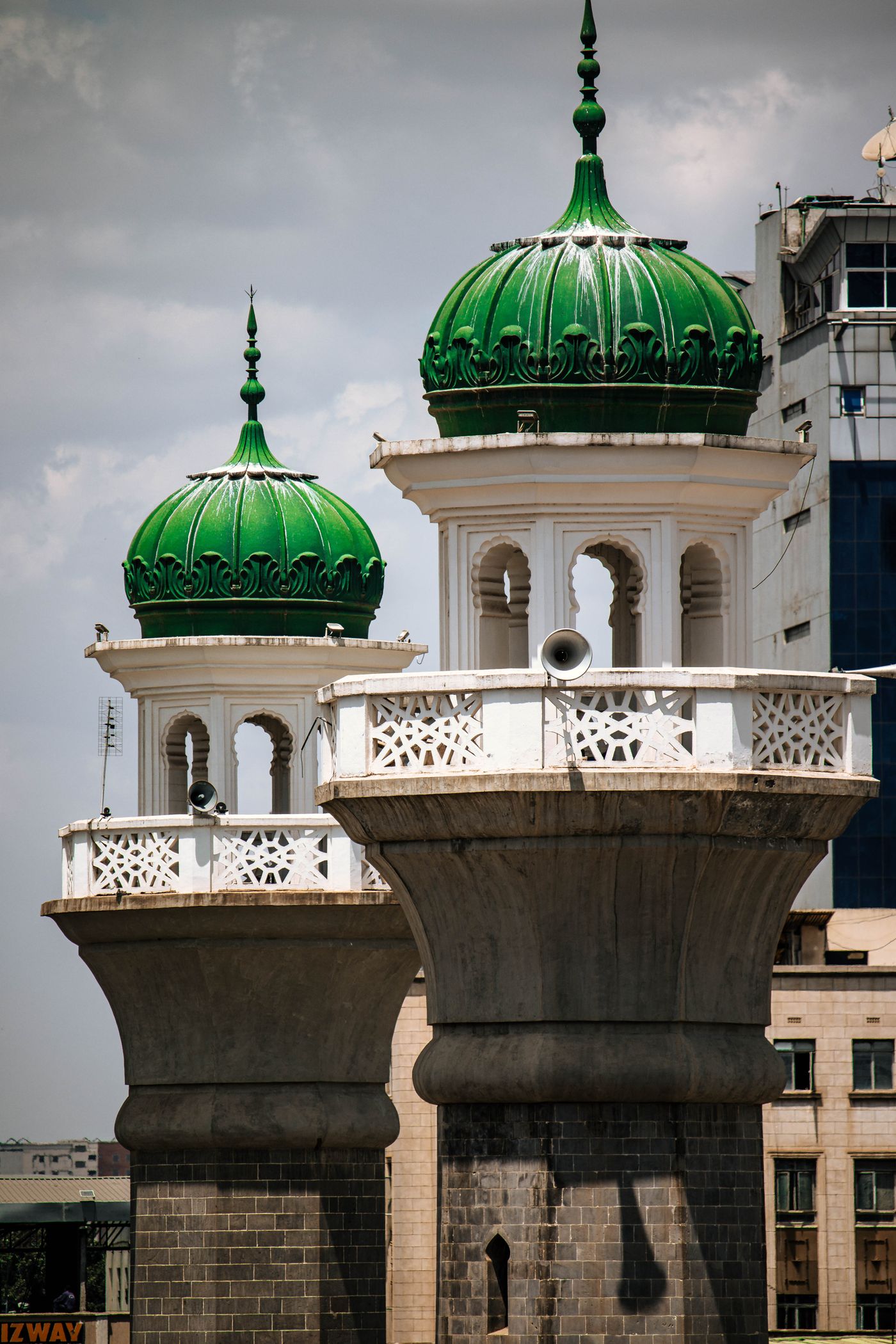
A block away, the City Market hall of 1930s deck-and-arch construction holds flowers at the door, produce and a fish counter in the nave, and a gallery of curio stalls upstairs. Jamia Mosque, with three silver domes and twin minarets, closes the block to the north. Together they make the most walkable, most interesting twenty minutes in the CBD.
01Why base here
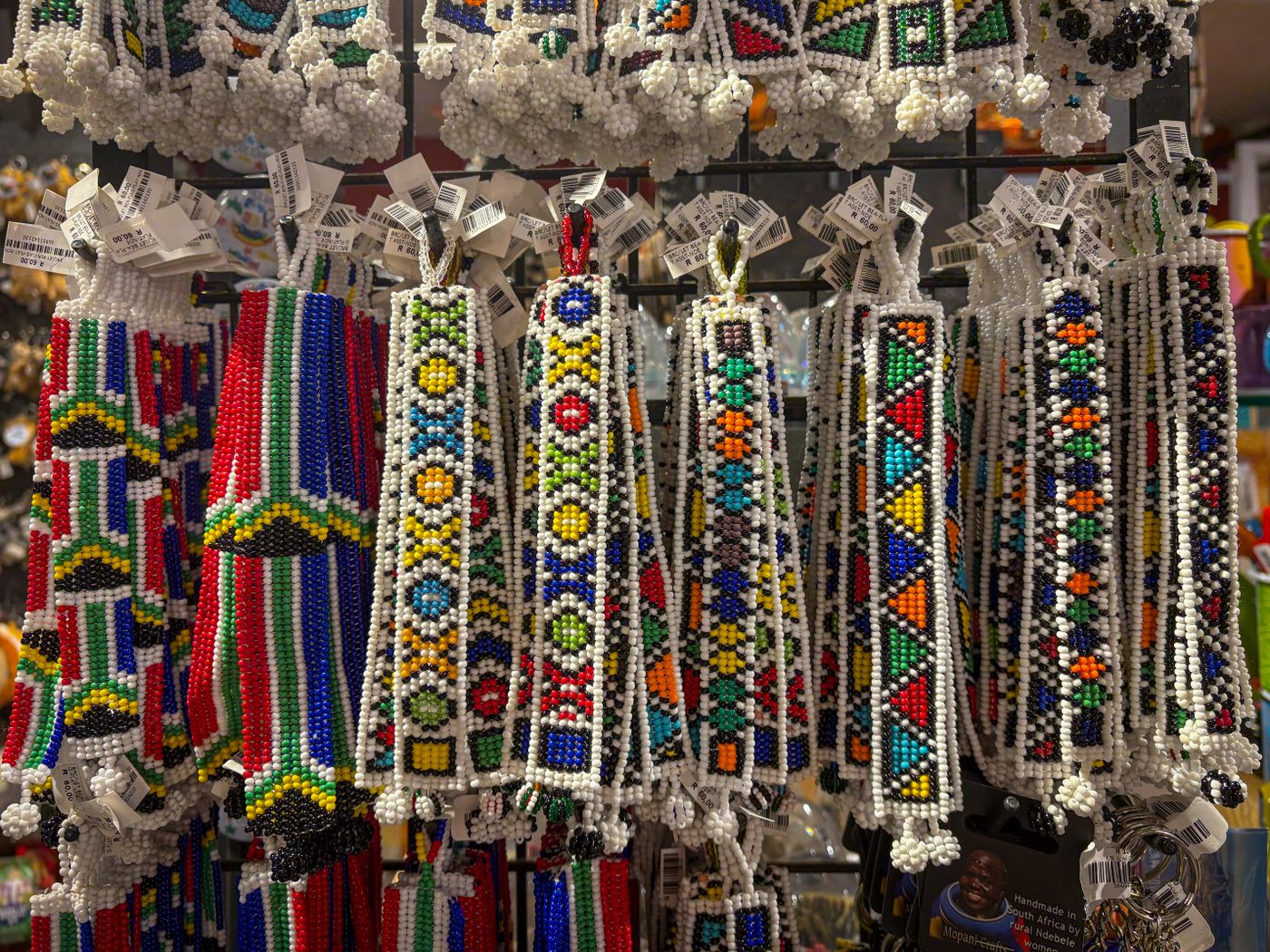
- Cloth: kikoi, kitenge and tailoring at shop prices rather than tour prices.
- City Market for curios, without the markup of the hotel gift counter.
- Jamia Mosque and the McMillan Library are both in this quarter, and both are architecture worth the walk.
- Shaded, narrow streets that stay bearable through the middle of the day.
02The longer view
Biashara Street was Bazaar Street, the retail heart of the Indian commercial town that grew up beside the railway camp, and it is the only part of the centre where the shops are still one family wide. Cloth, haberdashery and hardware traded here for a century before the malls existed, and a good deal of it still does. Muindi Mbingu Street, running north beside it, carries the flower sellers.
Behind both sits the City Market hall, a 1930s art deco shed built as a produce market and now carrying produce at the centre, a fish counter at the back and a gallery of curio stalls around the upper level. Jamia Mosque closes the block to the south with three silver domes and twin minarets. For a quarter that looks incidental on a map, it holds more of the city’s architectural history per hundred metres than anywhere else in the grid.
03The streets
Biashara Street
Fabric, haberdashery and school outfitters, one shop wide each, with tailors upstairs. The Swahili name simply means business, and it has been this street’s business for a century.
Muindi Mbingu Street
The flower sellers at the City Market door and the produce entrance beyond. Busiest mid-morning, when the hotels and offices buy.
Banda Street
Jamia Mosque at one end and the McMillan Memorial Library with its marble lions at the other. The quietest good street in the centre.
Koinange Street
The western edge of the quarter, running up towards the museum road. Offices at the southern end, and calmer than the parallel streets east.
04What to walk to
City Market
Free to enter, open through the day, and closing in the late afternoon. Produce downstairs, curios in the upper gallery, and bargaining expected everywhere.
Jamia Mosque
Built in 1925 and the principal mosque of the city. Visitors are received outside prayer times and modest dress is required; ask at the gate.
McMillan Memorial Library
A 1931 reading room behind marble lions, restored in phases. Check the current opening notice before walking down.
The tailors
Most of the fabric shops can point you upstairs to someone who will make up what you buy. Turnaround is a matter of days, not hours.
05One walk through the quarter
The shortest walk of any quarter on this site and the densest. Shaded, narrow, and best in the middle of the day when the halls are all open.
- 01 Jamia Mosque, from the gate Visitors are received outside prayer times, modestly dressed, and the gate is the place to ask rather than walking in. Friday midday is the wrong time.
- 02 North up Biashara Street Cloth and haberdashery, shop after single shop. The kikoi and kitenge here are bought by people who sew, which is why the range beats the curio stalls.
- 03 The City Market hall Flowers at the door, produce and the fish counter in the nave, curios on the gallery. Bargaining is expected and the first price is a long way from the last.
- 04 Banda Street and the library The marble lions, the 1931 columns and the calmest interior in the centre. Restoration has run in phases, so check the current opening notice.
- 05 Out to Jeevanjee Gardens The small public garden a block east, given to the city in 1906, and the one place in this quarter to sit down.
06How far everything else is
Direct lines from Biashara to the rest of the grid, computed from published coordinates at 4.8 km/h. They are a floor: pavements, crossings and the hour of the day all add to them.
07A short history, in four dates
08Staying here
This is not a hotel quarter: the stock is small and mostly above shops, with a handful of well-reviewed serviced apartments on Koinange Street. Ratings favour the apartments on space and kitchens; the shop-front rooms trade heavily on being able to walk to everything.
No rates on this page
Nightly figures go out of date faster than a page can be rewritten, so this site does not print them. Ratings, review counts and whether a place is walkable to what you came for are the comparison layer. Live availability sits with the booking partner.
09Eating here
The market edge
The stalls around City Market feed the traders, not visitors, which is the recommendation. It runs on a morning and lunchtime rhythm and closes early.
A long Indian commercial history
The quarter’s hundred years of Indian retail left its lunch counters behind, and they are still the most distinctive eating in the centre.
10Practical
Getting here
Two minutes on foot north of Kenyatta Avenue. Driving into this quarter is a mistake: the streets are narrow and parking is street-side and full.
On foot
Narrow pavements, shaded for most of the day, and the shortest distances of any quarter in the centre.
Hours
A daytime quarter. The halls trade roughly from mid-morning to late afternoon and the streets empty with them. Produce is a morning business.
Having cloth made up
The fabric shops will point you to a tailor upstairs or next door. Agree the work and the timeline in the shop, and expect days rather than hours.
11After the offices empty
A daytime quarter in the plainest sense: the halls shut in the late afternoon and the shutters come down street by street. By seven there is nothing open and nothing to stay for. Walk it between ten and four, and sleep on the avenue or the ridge.
12What people get wrong
Paying the first price in the curio gallery
The opening figure and the closing figure are a long way apart, and that is expected rather than rude. Walk, come back, and settle.
Arriving at the market late
Produce trade is a morning business and the hall empties well before the shops on the street do.
Shopping for curios here first
The gallery stalls in City Market are aimed at visitors. The interesting buying in this quarter is cloth, and it is done in the shops at street level.
13Things to do in this area
14Where this page comes from
This page is desk research, not fieldwork. Nobody from this site is claiming to have stood on the corner and timed the walk for you. What follows is where the specifics came from, so you can check any of them.
- Jamia Mosque: Jamia Mosque Committee, visitor guidance.
- City Market: Nairobi City County market information.
- McMillan Memorial Library: Book Bunk restoration programme updates.
- Jamia Mosque: the mosque’s published visitor guidance.
- City Market and McMillan Library: Nairobi City County heritage listings and the library trust’s restoration notices.
- Jeevanjee Gardens: the 1906 gift is in the public record of the city.
Opening hours, ticket arrangements and market days change. Where this page cannot know a current figure it says so instead of printing one. No hotel, operator or agency pays to appear on it.
15Questions
Can non-Muslims visit Jamia Mosque?+
Visitors are generally received outside prayer times, dressed modestly, and by asking at the gate rather than walking in. Friday midday is not the time to try.
Is City Market the same as the Maasai Market?+
No. City Market is a permanent hall on Muindi Mbingu Street. The Maasai Market is an open-air craft market that moves around the city by day of the week.
Where do I get cloth made up?+
The fabric shops on Biashara Street will point you to a tailor upstairs or next door. Agree the work and the timeline in the shop, and expect days rather than hours.
How does this quarter compare with the avenue for staying?+
Better for walking, thinner for hotels. If you want to be able to reach the market halls, the mosque and the library on foot and do not need a full-service hotel, this is the address.
Can non-Muslims visit Jamia Mosque?+
Visitors are received outside prayer times and modestly dressed. Ask at the gate rather than walking in, and avoid Friday midday. Arrangements are the mosque’s to set and they are not published as fixed visiting hours.
Is the McMillan library open?+
It has been restored in phases and the opening position has changed with them, so the honest answer is to check the current notice rather than trust a page. The building is worth the detour when it is open.