01What the City Market hall actually is
City Market is a working municipal market hall on Muindi Mbingu Street, built in the 1930s in art deco and still doing the job it was built for: feeding the centre of Nairobi. The building is the reason it is on this site's list. It is not a mall, not a craft village and not a staged attraction. It is a produce market with a flower trade at the door and a gallery of curio stalls wrapped around the upper level. The halls are free to enter, the trading day runs through daylight, and the whole thing sits a short walk north of Kenyatta Avenue.
What makes the hall worth the detour is the combination. Few buildings in the central business district still hold a daily food trade on the ground floor with a second economy of craft and souvenir stalls above it. The architecture is plain and good: a deck-and-arch roof over an open nave, tall openings, and enough shade that the interior stays usable through the middle of the day. The flower sellers work the street side, the produce trade works the centre, and the fish counter sits at the back.
Treat the hall as one entry on a quarter page rather than a destination on its own. The fabric shops of Biashara Street, Jamia Mosque and the library on Banda Street are all within a few minutes of the market door, and the honest recommendation is to see them together. The market hall is the anchor of the walk, not the whole of it. Allow an hour or two if the curios upstairs interest you, and less if they do not.
02What there is to see inside
Inside, the hall divides clearly. The produce nave is the working heart, laid out in aisles of vegetables, fruit and staples sold by the traders who have held stalls here for years. It is busiest in the morning, when hotels, offices and restaurants buy, and it thins through the afternoon. The aisles are narrow and the floor is often wet, so move through at the pace of the trade rather than against it. This is a market first and a place to look second, and it rewards that reading.
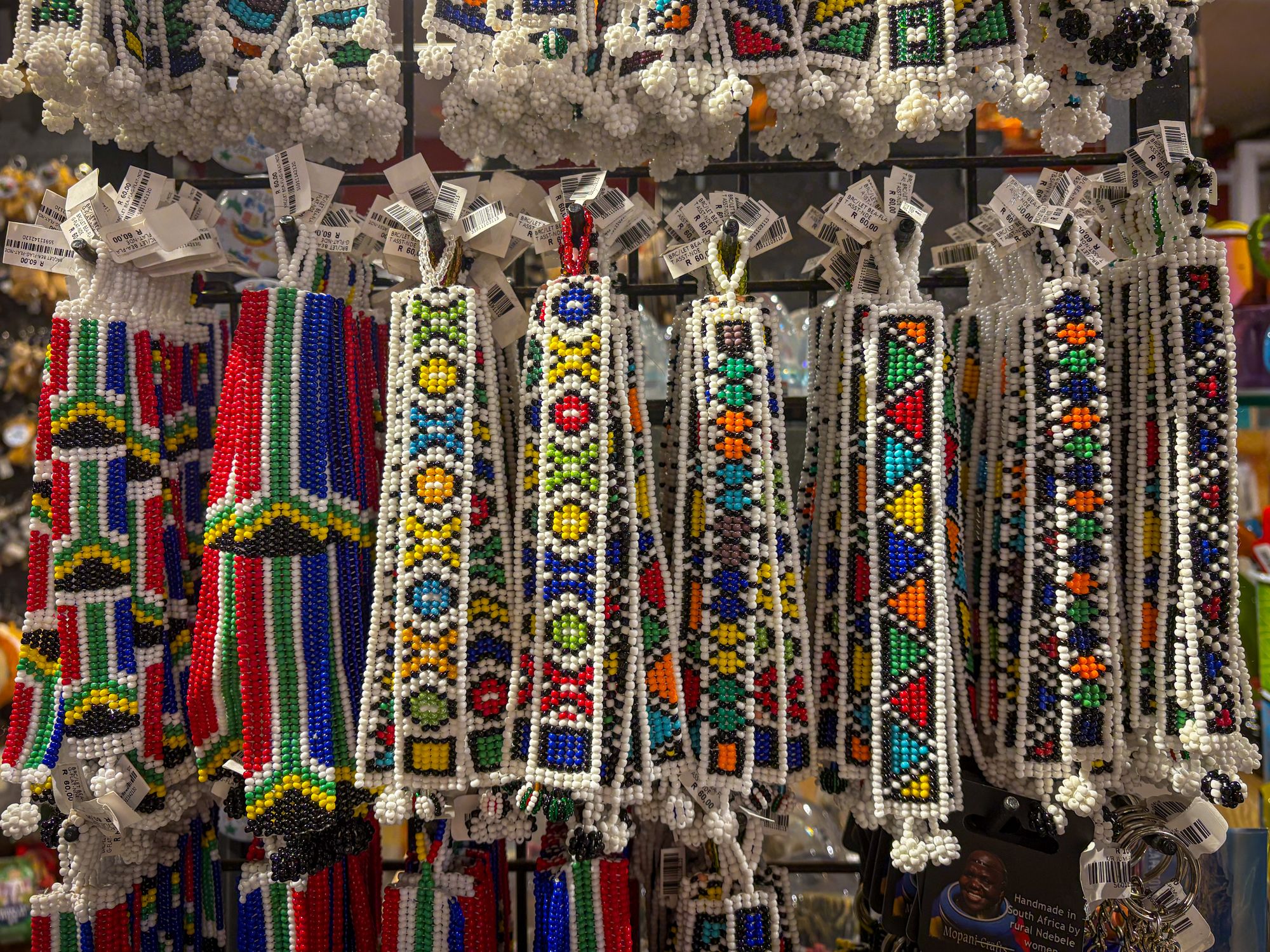
Around the nave the periphery holds the counters that make the hall distinctive. The fish counter at the back is the part most visitors remember, a working wet counter rather than a display. The curio gallery runs around the upper level, reached by stairs from the hall floor, and sells carvings, beadwork, textiles, baskets and the usual range of souvenirs. The two levels feel like different places: the ground floor is provisioning, the gallery is browsing.
The curio stalls are the part where a visitor is most obviously a visitor, and the selling is direct. Bargaining is expected and the first figure is an opening rather than a final offer, so decide what a piece is worth to you before you ask. The range is wide, from small carvings to larger pieces that need packing. Nothing here is priced by this page and nothing should be assumed from the ticket label, which is the operator's own wording rather than a cost.
The flower door
The Muindi Mbingu Street entrance is given over to cut flowers and bouquets. This side is busiest mid-morning, when hotels, offices and event buyers come through. Come earlier if you want room to look.
The produce nave
The main floor is a working produce market: fruit, vegetables and dry goods laid out down the centre of the hall. Traders are selling to the city, not performing for visitors, and the pace reflects that.
The fish counter
A fish counter runs at the back of the hall and is part of the everyday trade. It is not a display case, and the smell and the wet floor are part of what the building is.
The curio gallery
An upper gallery of stalls runs around the hall, selling carvings, beadwork, baskets and cloth. This is the level most visitors come for, and the level where bargaining matters most.
03Reaching it from the grid on foot
The market sits roughly 0.63 km from the Kenyatta Avenue and Moi Avenue junction, which is about an 8 min walk at an ordinary pace. Head north off Kenyatta Avenue into the grid and follow the streets up towards Muindi Mbingu. The pavements are narrow and shaded for most of the day, and this is the shortest set of distances of any quarter in the centre. The walk is flat and easy to follow, and it puts you at the flower door without any need for a vehicle.
Driving into this quarter is a mistake. The streets are narrow, parking is street-side and full, and the time spent finding a space will exceed the walk from the avenue. If you are coming from further out in the central business district, take a matatu or a taxi to the edge of the quarter and walk the last stretch. If you do take a taxi, agree the fare before you get in, and have the driver drop you on Muindi Mbingu rather than attempt the side streets.
The walk itself is part of the entry. Biashara Street, one block over, is the oldest retail street in the city still doing what it was built for, and Banda Street holds Jamia Mosque at one end and the McMillan Memorial Library at the other. Approach from the south and the market arrives as the end of a sequence rather than as an isolated stop. Approach from the north and you lose that build-up, though the hall is no less easy to find.
04Before you go, and one honest caveat
Sort the practical matters before you set out, because the hall is a trading floor and not a visitor centre. Bargaining is normal and expected across the stalls, and the first price quoted is a long way from the last. Keep the small notes separate for the market and the curio gallery, since change for larger denominations is often hard to come by. In the produce nave, keep bags closed and in front of you; the aisles are narrow and the crush is real. Footwear that tolerates a wet floor is worth the thought.
The hours are the thing to confirm on the day. The market sets its own trading pattern, and it shifts with the season and with the produce day, so no opening or closing time is printed here. Ask at the desk or at the gate, or have your hotel confirm the current arrangement before you walk over. Market days and ticketing arrangements are set by the operator and move, and the same caution applies to anything else that changes week to week.
This page is compiled from published information and the site's own checks rather than from a visit. Nobody writing it has stood in the hall, and no claim here rests on having done so. That is why opening arrangements and anything that moves week to week are deliberately left out, and why the ticket label above is the operator's wording rather than a figure. The site prints no price of any kind, and no hotel, stall or operator pays to appear on it. Where a cost matters, agree it at the stall.
- Agree a price before anything is wrapped, and treat the first figure as an opening rather than a final offer.
- Carry small notes for the market and the stalls, since change for larger denominations is often hard to come by.
- Keep bags closed and in front of you in the produce nave, where the aisles are narrow and crowded.
- Check the gate and hall notices on the day, because market hours are set by the operator and shift with the season.
- Wear shoes that tolerate a wet floor, particularly around the fish counter and the produce aisles.
What this page cannot tell you
The market sets its own trading hours, and they move with the season and with the produce day. No opening or closing time is printed here for that reason. Ask at the desk or at the gate, or have the hotel or operator confirm the current pattern before setting out. The ticket label above is the operator's own wording, not a price, and the site prints no figure of any kind.
05Who it suits, and the verdict
The hall suits the traveller who wants the working city rather than a presentation of it, and who is willing to move at the pace of a trading floor. It suits anyone buying cloth on Biashara Street who wants to see the quarter whole, and it suits the visitor with an hour to spend on architecture and a market in the same walk. It suits people comfortable with direct selling, narrow aisles and a wet floor, and it suits anyone pairing the market with Jamia Mosque and the library on Banda Street.
It does not suit the visitor looking for air conditioning, wide walkways, fixed prices or a quiet hour. It does not suit anyone who wants a market arranged for photographs rather than for trade, and it does not suit a family with a pushchair trying to cross the produce nave at the busiest time. Anyone treating the curio gallery as a shopping centre will find it cramped and the selling persistent. The fish counter is a working counter, not a display, and reads as such.
The verdict is straightforward. Go, and go in the morning when the trade is at its height, then walk the quarter: Biashara for cloth, Banda for the mosque and the library, and the market hall in the middle of it. Give it an hour or two with the gallery, less without. Confirm the hours at the gate before setting out, agree every price at the stall, and treat the first figure as an opening. This is the most interesting short walk in the central business district, and the market is where it starts.
Where this page comes from
Desk research, not fieldwork. Nobody writing this stood on the corner with a stopwatch, and a page that implied otherwise would be the least trustworthy thing on the site. The specifics above came from here:
- City Market and McMillan Library: Nairobi City County heritage listings and the library trust’s restoration notices.
- City Market: Nairobi City County market information.
- Street-level guidance: hotel and operator advice, which is specific to the block and worth asking for.
Opening hours, ticketing and market days change. No hotel or operator pays to appear here.
06Questions
Can I bargain in the hall?+
On the upper curio gallery, yes, and it is expected. The first figure named is a long way from the last, so take your time and be willing to walk away. In the produce and fish sections, prices are set by the traders and haggling is not the custom.
How do I get there from Kenyatta Avenue?+
The hall sits roughly two thirds of a kilometre from Kenyatta Avenue at Moi Avenue, which is a short walk north through the grid. Driving into this quarter is a mistake: the streets are narrow and street-side parking fills early. Walk it.
Is there an entry charge?+
The operator lists entry as free to enter, and that is the only cost word this page uses. The site prints no price, fare or fee of any kind. Anything you spend inside is between you and the trader.
What are the opening hours?+
Hours are set by the market and change with the season and the produce day, so none are printed here. Treat the hall as a daytime place: it trades roughly from mid-morning and the streets around it empty in the late afternoon. Confirm the current pattern before you go.
Can I have cloth made up nearby?+
The fabric shops on Biashara Street can usually point you to a tailor upstairs or next door. Agree the work and the timeline in the shop itself rather than through a third party. Turnaround is measured in days, not hours.