01What the railway museum actually is
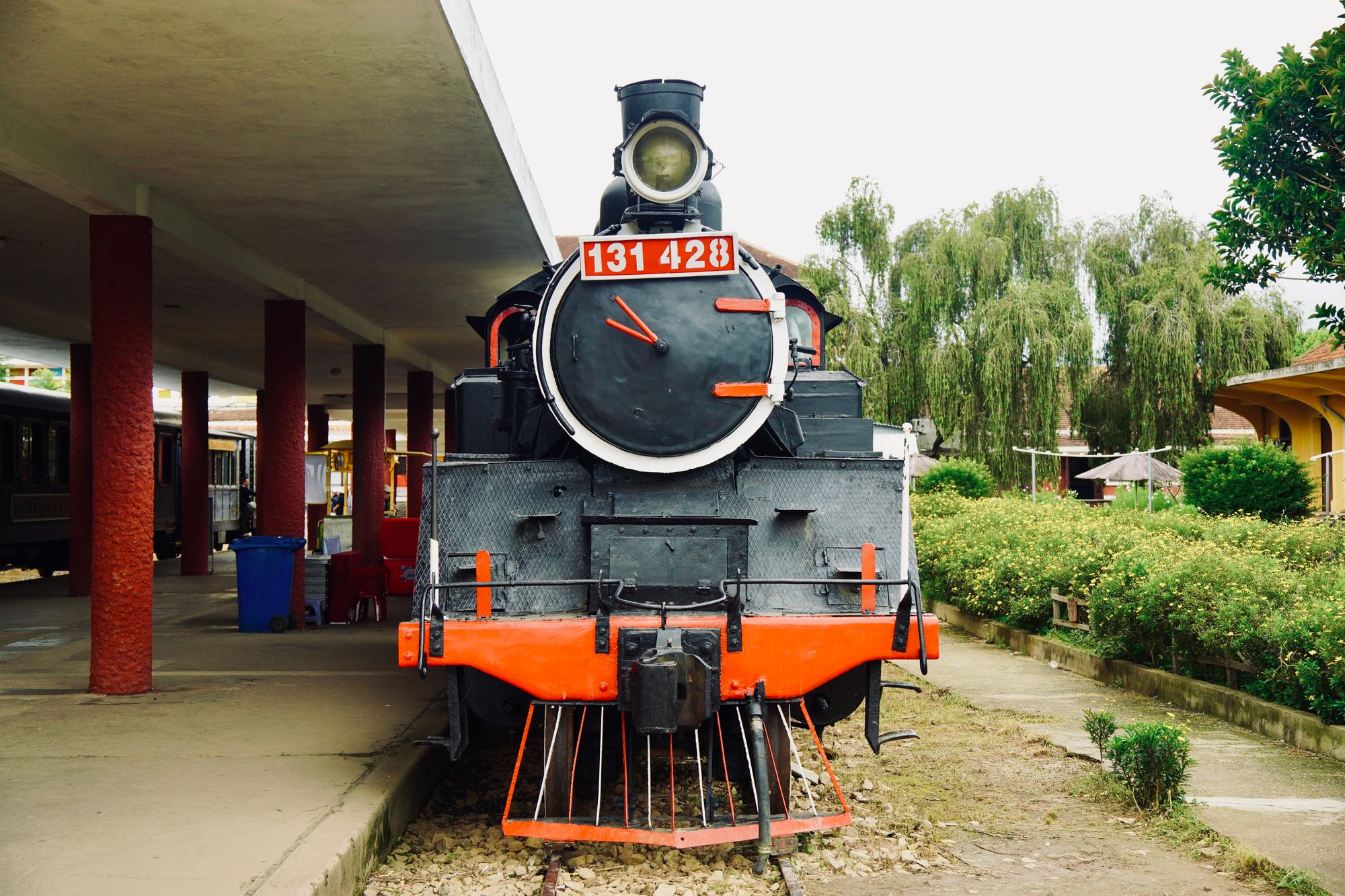
The Nairobi Railway Museum is the yard where the line that created this city keeps its rolling stock. It opened in 1971 beside the 1929 station building, on the southern boundary of the Central Business District, and it has not been tidied since. Locomotives stand outdoors in the open air, carriages sit under corrugated iron, and the whole collection is coated in the dust that comes off the yards. The result is not a polished national museum with labels behind glass. It is working railway land with a ticket desk, and it is the best history in the centre of Nairobi for exactly that reason.
The museum is on this site's list because of what it explains rather than what it displays. Nairobi exists because the Uganda Railway reached this flat ground in 1899 and stopped to gather strength for the climb into the Rift. A depot was pitched to service the works, the depot became a town, and the town became a capital. Every street above the railway was laid out to serve this yard. An hour in the museum does more to make the grid make sense than a day spent walking it, and that is the argument for coming down the hill.
Two facts settle what kind of place this is. Long-distance passenger trains moved to a new terminus outside the city in 2017, so the old station now handles commuter services and the museum keeps the memory of what left. The collection is also outdoors for the most part, which means you visit it in the weather, on gravel, with the sun or the dust doing what it likes. The ticket is bought at the desk. Entry is Ticketed, and an hour covers the yard at an unhurried pace.
02What there is to see in the yard
The collection is larger than the site of it suggests, and it is arranged by what the railway needed rather than by what a visitor might want to see first. The locomotives dominate, the carriages hold the human stories, the station building frames the whole visit, and the sheds at the back show the machinery that kept the line running. You will move between four rough groups of exhibits, usually with a guide who works the yard and knows which engine is which.
It is worth deciding before you arrive what you want from an hour here. The engines reward anyone interested in how the line was built and what it cost. The carriages reward anyone interested in who travelled and under what conditions, including a carriage tied to the Tsavo man-eater story, which is the single exhibit most visitors come for. The station building and the sheds reward anyone who wants to understand how a railway town was organised. No exhibit is behind glass in the manner of a national collection, and several pieces are unrestored.
The honest description is dusty, mechanical and outdoors. Expect gravel underfoot for most of the collection, metal that has spent decades in the open, and a layout that grew rather than being designed. Ask at the desk what the entry covers, because the arrangement is the museum's to set and parts of the yard are working railway land. If you want the history of Nairobi in one place, this is it. If you want an air-conditioned gallery with a lift and a cafe, this is not it, and the rest of the CBD will serve you better.
The locomotives
The collection sits in the open rather than behind glass, which is why it is dusty and why it reads as a working yard. Locomotives from the colonial era and after stand along the tracks.
The carriages
Several carriages are open to climb into, including the coach tied to the Tsavo man-eater story. The fittings are original and unrestored, and the interiors are the closest thing here to the 1929 journey.
The station building
The 1929 station next door still handles commuter services. It is not part of the museum, but it is the same railway and the same yard, and it explains the layout better than any label.
The sheds and yards
Beyond the museum fence, the working railway land carries a century of rolling stock in various states. Visible from the approach. It is operational ground, not an exhibit, and is not open to walk through.
03How to reach it from the grid
The museum sits on the southern boundary of the Central Business District, in the Railway Quarter, and the approach is downhill from the commercial grid. From Kenyatta Avenue at Moi Avenue it is 0.89 km and about 12 min on foot, which places it comfortably inside a morning. The route runs down Haile Selassie Avenue or by the station approach, past the August 7th Memorial Park at the top of the quarter, and the change in character is immediate: office towers give way to sheds, workshops and wide railway land.
On foot is the right way down in daylight. The pavements are usable on the main approaches, the route is legible, and the walk gives you the whole point of the place, because you descend from the grid the railway caused to the yard that caused the grid. What you do not want is to treat the yards themselves as a walking environment. This is industrial land, unlit in stretches, and it empties when the working day ends. Walk down in daylight and take a vehicle back if the return is after the offices close.
If you would rather ride, a taxi or a matatu down Haile Selassie Avenue takes a few minutes and drops you at the station approach. The commuter rail network also uses the 1929 station building, and services run on a timetable set by the operator, so read the current timetable rather than a guide. The museum entrance is by Workshops Road, which is unremarkable to look at and is the reason to be down here. Allow the descent, an hour in the yard, and a short walk back up to the memorial park.
04What to sort out before setting out
The practical business of this visit is short. It is a Ticketed museum with its own desk, its own hours and its own yard rules, and none of that is complicated once you are standing at the gate. What matters is the shape of the day around it: daylight, a descent on foot, an hour inside, and a plan for getting back up the hill that does not depend on finding a vehicle in an empty industrial street after dark. Settle those four things and the museum takes care of itself.
The one honest caveat belongs here. This page is compiled from published information and the site's own checks rather than from a visit, so it does not print opening arrangements, closing times or anything else that moves week to week. The museum sets its own hours and its own ticketing, and both move with the season, with staffing and with the railway's own operations. Ask at the desk, or check with the museum directly, before you build a day around it.
Two further points are worth carrying down the hill. The museum shuts in the mid-afternoon, so an early start is safer than a late one, and a visit slotted after lunch risks arriving to a closed gate. The collection is mostly outdoors, which makes shoes that can take dust and gravel the sensible choice, and makes the weather part of the visit rather than a detail around it. Pair the museum with the memorial park at the top of the quarter, and the whole southern edge of the CBD reads as one afternoon rather than two errands.
- Buy the ticket at the museum desk rather than from anyone outside the gate, and ask there what the entry covers.
- Walk down in daylight on Haile Selassie Avenue or the station approach, and take a vehicle back if the return is after the offices close.
- Wear shoes that can take dust and gravel, because most of the collection stands outdoors in the yard.
- Ask at the desk how long the yard stays open that day, as the museum sets its own hours and shuts in the mid-afternoon.
- Pair the visit with the August 7th Memorial Park at the top of the quarter, which is a short walk back up towards Haile Selassie Avenue.
Why no hours are printed
The museum sets its own opening hours and its own ticketing, and both move with the season, with staffing and with the railway's own operations. This page does not print a clock time, a closing hour or an entry price, because a printed figure would be wrong within months and the site never prints a price. The arrangement is the museum's to state. Check with the museum directly, or with the desk on arrival, before you build a day around it.
05Who it suits, and the verdict
This suits anyone who wants to understand why Nairobi is where it is. The railway stopped here in 1899, the town followed the depot, and the grid above the railway was laid out to serve the yard. An hour among the locomotives and carriages makes that sequence visible in a way no plaque on Kenyatta Avenue manages. It also suits travellers with a spare afternoon and an interest in industrial history, and anyone who has heard the Tsavo man-eater story and wants to see the carriage tied to it.
It does not suit everyone. Anyone who wants polished galleries, air conditioning, a lift and a cafe will do better in the middle of the grid. Anyone travelling with small children should weigh a dusty outdoor yard and unrestored machinery, though the locomotives tend to carry the day. Anyone whose only free hours fall after the offices close should not attempt the descent at all, because the quarter is industrial, unlit in stretches and best left alone after dark. This is a daylight visit or no visit.
The verdict is straightforward. The Nairobi Railway Museum is the best history in the Central Business District, it is unrestored in the way that matters, and it is the single thing to do that explains the rest of the city. Go down in daylight, buy the ticket at the desk, ask what the entry covers and how long the yard stays open that day, give it an hour, and walk back up to the memorial park. Skip it and the grid above remains a grid. Take it in and the whole layout of central Nairobi starts to make sense.
Where this page comes from
Desk research, not fieldwork. Nobody writing this stood on the corner with a stopwatch, and a page that implied otherwise would be the least trustworthy thing on the site. The specifics above came from here:
- Nairobi Railway Museum: Kenya Railways, museum information.
- Nairobi Railway Museum: the museum’s own visitor information.
- Commuter and standard gauge services: Kenya Railways published timetables.
Opening hours, ticketing and market days change. No hotel or operator pays to appear here.
06Questions
Can I get a ticket at the gate?+
The ticket is bought at the museum desk, and the desk is the right place to confirm what the entry covers. Ticketing is the museum's to arrange, and it is not printed here. Ask on arrival rather than relying on a guide.
Is the walk down from Kenyatta Avenue safe?+
The main approaches are fine in daylight and the distance is short, under a kilometre from the Moi Avenue junction. The industrial land around the yards is not a walking environment after the working day. Go down in daylight and take a vehicle back if it is late.
How much of the museum is outdoors?+
Most of it. Locomotives and carriages stand in the open yard, so dust, sun and rain all reach the collection. Allow an hour, and dress for ground that is uneven and unpaved.
Does the museum cover the Tsavo man-eater story?+
The carriage associated with the Tsavo man-eaters is part of the collection, and it is the single exhibit most people come for. The story belongs to the Uganda Railway's construction years in the 1890s. The museum's own labels carry the detail.
Is this worth an afternoon if I am not interested in trains?+
Only if the city's own history interests you, because this is where that history starts. In 1899 the railway stopped at this swamp and the depot became Nairobi. Anyone trying to understand why the grid sits where it does will get more here than from any viewpoint.