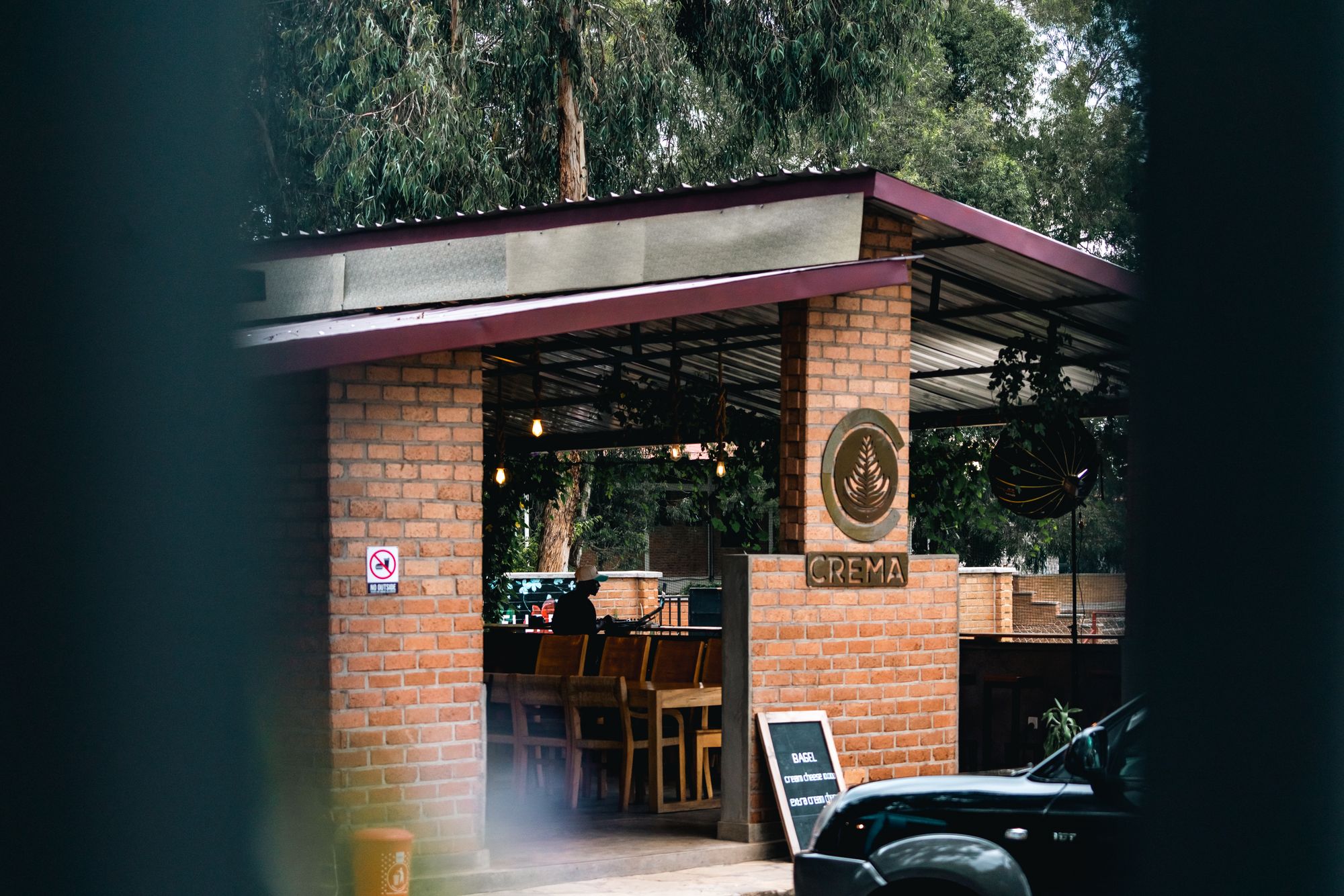
01What this stop actually is
This stop is a cup of coffee made from Kenyan beans, drunk in the district that trades them. Kenya grows some of the most sought-after coffee on earth and for most of a century drank almost none of it, and the fact sits at the centre of the page. The CBD roasteries now cup their own lots, and will brew you the AA they used to ship. That reversal is the whole reason the stop is on the list. It is not a monument, not a museum case, not a plaque. It is a counter, a grinder and a pot, and the thing you are buying is the chance to taste grade that normally leaves on a boat.
The stop earns its place because the district is where the trade was organised. The auction and the exporters worked from these blocks, the banks on the avenue financed the crop, and the coffee houses of Kimathi Street served the people who moved it. A cup in the centre is a short walk from the ledgers that paid for it. Nothing else on the list closes that loop. A gallery shows you the city's collection. The coffee stop shows you what the city sells to the world, poured in front of you, and then lets you drink it.
Understand the shape of the visit before you go looking. These are working cafes, not tastings laid on for visitors, and the counter serves the office trade from the moment the doors open. You order at the bar, you take the cup, and you drink it standing or at a small table. A single origin brewed by a method the barista picks is a short stop, and the point. Treat the stop as one item in a morning on the avenue rather than the destination of a trip, and it gives you exactly what it promises.
02What there is to do here
The stop is a small cluster of things done in one place, and the order matters less than doing them while the counter is calm. Four are worth naming, and each takes minutes rather than an afternoon. The district supports all four within a short walk of each other, which is why no single address is fixed as the one. Move between counters if the first is full. The lunch trade takes the tables after the offices break, so the earlier half of a working day is the better half for sitting rather than standing.
Order a single origin. Kenya grades its best coffee by bean size, and the AA lot is the one the export market asks for. Ask what is pouring, let the counter choose the brewing method, and take it black first if the bar wants to show the cup. A milk drink hides the acidity that makes the grade worth buying, and the default order in a busy cafe is usually the milk drink. Watch the cupping if a session is running. It is the trade's own tasting method, a table of bowls, a spoon, and a lot of slurping, and a roastery will usually let a customer stand at the edge of one.
Buy beans to carry. A bag from a CBD roaster travels well, keeps its character for weeks if it is sealed, and is the one souvenir of the district that weighs nothing and is useful. The walk itself is the fourth thing. Kimathi Street one block north, the bank halls, the planted median on the avenue: the short loop between counters is the pleasantest stretch of pavement in the centre, and the stop gives it a purpose. Do all four and the morning fills without any single item taking long.
Order a single origin
Ask for a single origin and let the staff choose the method. Kenyan lots are graded by bean size, so the letters on the board are worth asking about rather than guessing at.
Watch the cupping
Roasteries on and around Kimathi Street cup their own lots, usually in the working day. Ask when the next cupping is and whether you can stand at the edge of it.
Buy beans to carry
Retail bags are sold at the counter, roasted in the same week. Ask for the roast date rather than the best before date, and say if the beans are going into a suitcase.
The walk itself
The avenue is a straight line with a planted median and the deepest pavements in the centre. Pair the cup with a look at the bank halls on the way back.
03How you reach it from the grid
Hold Kenyatta Avenue and you will find the coffee. The counters sit within the blocks around the avenue and on Kimathi Street one block north, the strip the city has used for coffee houses for decades. Coming from the west, both the airport road and the expressway drop onto Uhuru Highway at the west end of the avenue, and the roasteries begin a few minutes in on foot. From the east, the Moi Avenue junction is the natural entry, and the avenue's own pavements carry you west towards the bank halls. The distance from the avenue at Moi Avenue to the quarter's centre is short, and the walk is level.
On foot is the right way to do it. Signalled crossings sit at every major junction, and the pavements here are the widest in the centre, deep enough to walk three abreast without stepping into the gutter. The hawker pressure common further east is not an issue on this stretch. Cross at the signals rather than mid-block, keep to the north side for the afternoon shade, and use Kimathi Street as your parallel line. If you are coming from the market streets one block north, walk south and you will meet the avenue; if from City Square or the KICC tower, walk north and you will do the same.
By car or by taxi, the approach is the same: Uhuru Highway at the west end, then east along the avenue. The avenue is a working street and parking is contested during office hours, so agree the fare or the drop-off point before you set out, and expect the driver to want a side street rather than the kerb outside. Matatus run on the streets north of the avenue and will put you within a short walk. Nothing about the approach is difficult. The one thing worth doing is deciding which end of the avenue you are entering from before you start, because the grid is easy to hold once you have chosen a line.
04What to sort out before you go
The practical half of this stop is small, and most of it is settled at the counter. Know what you want to drink before you reach the front of the queue, because the trade behind you is brisk and the barista will not have time to talk you through the whole board. Ask for a single origin and let the counter choose the brewing method, rather than ordering the default milk drink. If a cupping is what you came for, confirm whether the roastery cups on the day you are in the centre, since cupping sessions are working-day events and move. Ask for the roast date on any bag you buy, because coffee sold in the CBD is not always roasted the same week.
Carry small notes and expect to pay at the counter. Card machines fail and change runs short late in the day, and a coffee stop is not the place to discover that. Treat the seat as a short stop, since these are working cafes and the lunch trade takes the tables after the offices break. If you want the room to yourself, come earlier in the working day. If you want the atmosphere of the district at full volume, come when the offices empty for lunch and accept that you will stand. Either is a fair way to take the stop, but decide which before you arrive.
One honest caveat, and it is the site's rule rather than a warning about this particular counter. This page is compiled from published information and the site's own checks, not from a visit, so nobody writing it has stood at these bars or timed the walk. Roastery and cafe opening hours are set by each operator and change without notice, so this page prints none, and no price of any kind appears here either. Anything that moves week to week, from which lot is pouring to when the next cupping runs, is not printed here for the same reason. Ask at the counter what is pouring, what the cup costs, and when the next session is. That question answered on the day beats any page.
- Ask for a single origin and let the counter choose the brewing method, rather than ordering the default milk drink.
- Confirm whether the roastery cups on the day you are in the centre, since cupping sessions are working-day events and move.
- Ask for the roast date on any bag you buy, because coffee sold in the CBD is not always roasted the same week.
- Carry small notes and expect to pay at the counter, as card machines fail and change runs short late in the day.
- Treat the seat as a short stop, since these are working cafes and the lunch trade takes the tables after the offices break.
On hours and on cost
Roastery and cafe opening hours are set by each operator and change without notice, so this page prints none, and no price of any kind appears here either. Ask at the counter what is pouring, what the cup costs, and when the next cupping runs. A dozen steps in any direction turns up another counter doing the same thing, which is the honest reason no single address is named as the one.
05Who it suits, and the verdict
This suits the traveller who wants to taste a thing where it is traded rather than where it is grown, and who is willing to stand at a bar for a few minutes to do it. It suits anyone with a spare hour in the centre between other stops, because the coffee counters sit inside the same blocks as the galleries and the bank halls and cost no travel of their own. It suits the person who already drinks Kenyan coffee at home and wants to know which lot they have been buying. And it suits the walker, because the loop between counters on Kenyatta Avenue and Kimathi Street is the most pleasant pavement in the district, shade included.
It does not suit a visitor looking for a seated, guided tasting with a host and a printed menu, because that is not what a working roastery is. It does not suit anyone who wants a long lunch, because the tables go to the office trade and the seat is a short stop by design. It does not suit the traveller who needs a single fixed address to aim at before setting out, because there is no one counter to name and the honest advice is to walk the strip. And it does not suit anyone who will be in the centre only on a Sunday, when the offices are empty and the quarter is quiet.
The verdict is straightforward. Make the stop, order a single origin, and take it black before you take it with milk. Judge the cup rather than the room, because the room is a working cafe and the cup is the point. Do it early in a working day if you want a table and at the lunch break if you want the district at full volume. The site would put the coffee stop inside a first walk down Kenyatta Avenue, after the bank halls and before the gallery, because it explains the avenue better than the avenue explains itself. Kenya exports this coffee. In the centre, you can drink it.
Where this page comes from
Desk research, not fieldwork. Nobody writing this stood on the corner with a stopwatch, and a page that implied otherwise would be the least trustworthy thing on the site. The specifics above came from here:
- Distances: computed from published coordinates, direct line from Kenyatta Avenue at Moi Avenue.
- CBD office relocation: published commercial property research on the ridge and Westlands.
- Banking hall interiors: the buildings are in continuous use; no interior detail here is claimed beyond what is visible from the public hall.
Opening hours, ticketing and market days change. No hotel or operator pays to appear here.
06Questions
Can I buy Kenyan coffee in the centre if the country exports most of it?+
Yes. The roasteries and cafes in the Kenyatta Avenue quarter cup and sell local lots, including the graded beans that historically went abroad. Bags are usually sold at the same counter where the coffee is brewed, roasted within the past week or so. Ask for the roast date.
Do I need to book a tasting or a cupping session?+
Cupping is a working-day activity at most roasteries rather than a scheduled visitor attraction, so it depends on the house. Ask at the counter when the next session runs and whether a place is open. Nothing here should be treated as a fixed timetable, because these move with the roastery's own week.
Is the coffee stop worth it if I only have an hour in the city?+
It works as a short stop because it sits on the avenue itself at around 0.31 km and 4 min from the Kenyatta Avenue and Moi Avenue junction. A cup and a look round the room fit inside an hour without rushing. Anything longer starts eating into the rest of the quarter.
What should I order if I do not know Kenyan coffee?+
Ask for a single origin and let the staff pick the method, which is the fastest way to taste what the grade actually is. The size grading on the board is worth asking about rather than guessing, and the answer costs nothing. Milk drinks are fine, but they hide the cup.
Where does the stop sit in relation to the rest of the CBD?+
It sits in the Kenyatta Avenue quarter, the financial spine of the centre, with banks and airline offices on both sides and the market streets a block north. Kimathi Street, parallel and one block up, holds the older coffee addresses. Both are inside the same short walk.