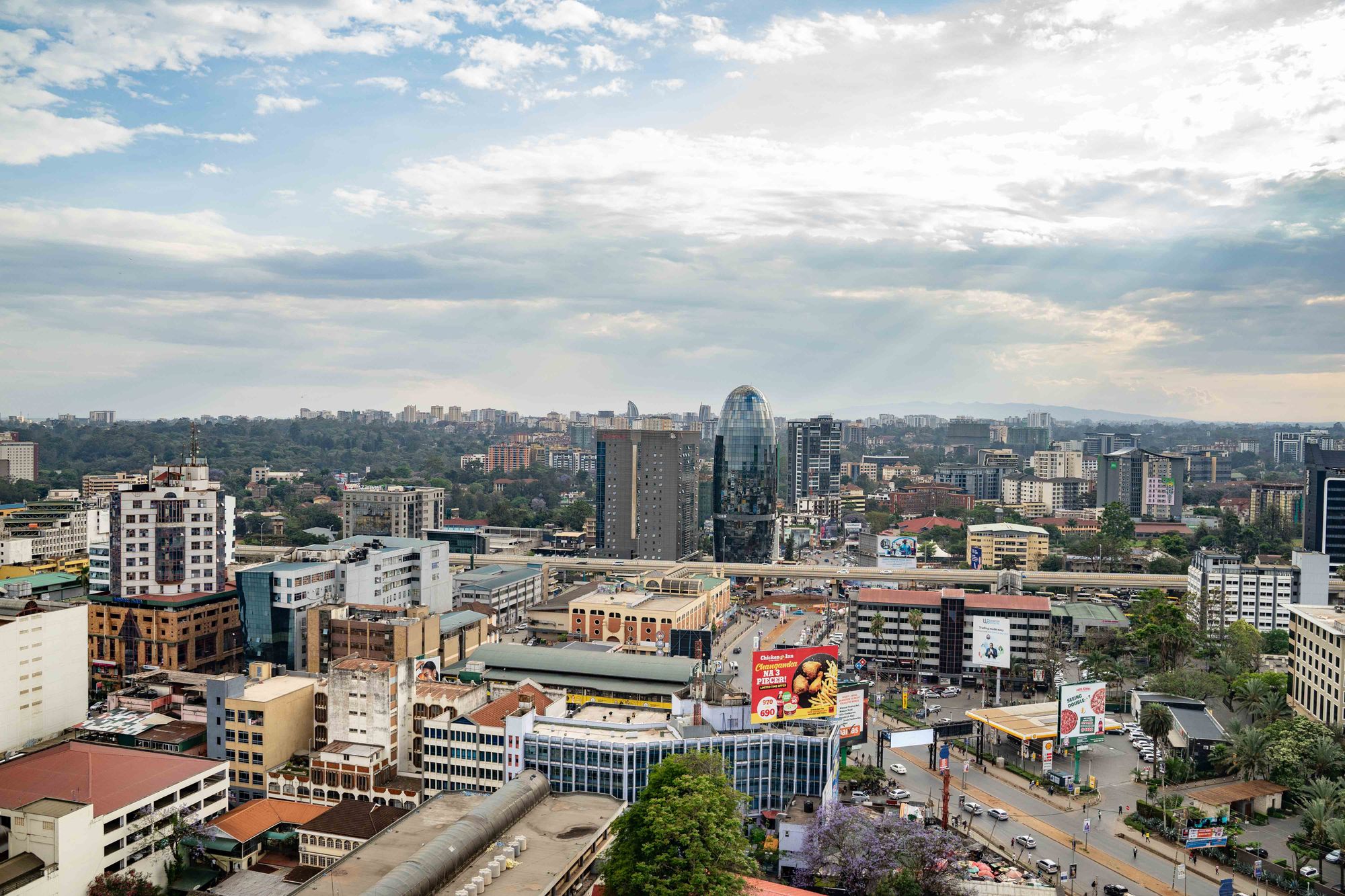
01What the grid stops at
The Central Business District does not fade into the suburbs, it stops. The grid of streets between Uhuru Highway, the railway and Ngara runs out at four hard edges: a highway, a railway, a roundabout and a market. This page marks those edges, describes what changes beyond them in plain terms, and does not walk back through the row list or the bullet list that appear elsewhere on the page. It is written for a visitor who wants to understand the shape of the centre rather than to be told what to do. The four edges are physical and unmistakable once you are standing at them.
Two of the edges can be crossed comfortably on foot in the middle of the day. The other two demand daylight, and one of them demands the small hours. Each edge has a different character and a different argument for crossing it. The aim here is to give you that argument in substance, not to gloss it. The city's commercial core is not a circle that blends outward; it is a rectangle with walls made of traffic, rail land, a roundabout and a produce market. Once you accept that, the layout makes sense and your walking plans improve.
Why does this deserve a page? Because most descriptions of Nairobi treat the centre as a general area and then move on to the suburbs. That leaves a blank where the boundary should be. The boundary is where the CBD's logic is most visible. The fruit market at the northern hinge trades before the offices open. The wholesale market at the eastern edge feeds the hotel kitchens and the street stalls that appear in the centre later. The railway quarter explains why the city is here at all. The parks give the skyline something to stand in. Each edge says something the middle cannot.
The verdict of this page is simple. Approach the CBD as a bounded district, learn its four edges, and use them to orient yourself. Do not expect the centre to merge gently into surrounding neighbourhoods, because it does not. The transition is abrupt on all four sides, and that abruptness is useful. It tells you where you are and what kind of errand you are on. The sections that follow take the four edges in turn, say what sits beyond each one, and then set out the limits of what any published page can honestly tell you about them.
02The four edges, one by one
The northern hinge is the Globe Cinema roundabout, with its flyover carrying traffic towards the roads north. The grid loosens here and the land rises to Museum Hill. The fruit market beside the roundabout trades from the small hours and is finished before the working day begins. Cross on foot for the museum and the botanic garden behind it, or by car for the market at its early peak. Beyond the roundabout the streets are residential and market in character. The transition from office blocks to flats and produce stalls happens within a block or two, and it happens quickly.
The eastern edge is the wholesale market at Muthurwa, where the country bus termini push up against railway land. This is where the city's vegetables change hands before first light, moved by handcart through aisles that have no room for a visitor with a shoulder bag. Come in the small hours or do not come. The trade ends by the early morning and the quarter empties. Beyond it the land is railway property and the road out to the eastern estates. There is no lunch trade and no evening trade. This is the least visited edge and the most purely functional one.
The southern edge is the Railway Quarter, where Nairobi began when the Uganda Railway stopped to gather strength for the climb into the Rift. The 1929 station, the yards and the railway museum sit along the foot of the grid, downhill from Kenyatta Avenue. The museum is ticketed and its arrangement belongs to its operator. Walk down in the morning and be back on the avenue before the light goes. The approach roads are industrial, unlit in stretches, and not a walking environment after the working day. The old station handles commuter services; intercity departures use a terminus outside the city.
The green edge is the pair of parks along Uhuru Highway, the only proper recreational walking in the centre. Lawns, a boating lake and paved paths give the towers something to stand behind, and the skyline photograph is taken from the eastern bank of the lake. Freedom Corner at the northern end is the city's protest ground, saved from development by the campaign against a tower complex on the park. The parks close at dusk and that rule is enforced. Cross the highway by the footbridges only. Aim for the last two hours of light and then go inside.
The northern hinge
The Globe roundabout carries the roads north and up to Museum Hill. Beyond the flyover the grid loosens into Ngara, and the National Museum is the reason to cross on foot. The fruit market beside the roundabout trades before the offices open.
The wholesale edge
Muthurwa market and the country bus termini push against railway land at the eastern foot of the grid. Produce for the whole centre passes through here, mostly moved by handcart. The trade is finished long before lunch.
Where the city began
The railway reached this flat in 1899 and the depot became a capital. The 1929 station, the yards and the Railway Museum sit on the southern boundary, ten minutes downhill from Kenyatta Avenue. Passenger traffic has largely moved on.
The green edge
Uhuru Park and Central Park run along the western side and give the skyline its photograph. Freedom Corner is where the city gathers to protest, and the park had to be defended to survive. Gates close at dusk.
03What this page cannot tell you
This page is compiled from published information and the site's own checks rather than from a visit. Nobody writing it has stood at the Globe roundabout or walked the market aisles, and the page does not pretend otherwise. That means it cannot tell you what a crossing feels like at a particular hour, how long a queue is, or whether a pavement is blocked on the day you read this. It can tell you the shape of the district and the logic of its edges, and it does. Anything that moves week to week is not printed here. Opening arrangements, ticketing and market days are left to the operators.
The bullet list elsewhere on the page carries the practical points: use the footbridges over Uhuru Highway rather than crossing at grade, reach the fruit market before the working day starts, keep hands free and carry small notes at the wholesale market, and treat the Railway Quarter as a daylight errand. Those are the fixed constraints. Everything around them is variable. The numbering of bus stands, the internal layout of the produce market, the boating arrangement on the park lake and any event closure of the parks are all set by others and revised without notice to any guide.
The callout explains why no hours are printed. Opening hours, ticketing and market days belong to the operator and move. The National Museums of Kenya, Kenya Railways, the county markets and the park authorities each set their own arrangements. Check with the operator on the day rather than trusting any listing, including this one, and ask at the desk about tickets. If a page tells you a museum opens at a fixed hour, treat it as a claim about the past, not a promise about your morning. The same applies to the trading window at the wholesale market, which follows the harvest and the season as much as the clock.
What this page will not do is invent a figure to sound authoritative. No fare, no ticket price, no opening hour and no closing hour is printed, because none of them belong to this page. Distances and walking times given elsewhere are straight-line figures from a fixed origin, not turn-by-turn routes. A straight line across a six-lane highway is not a walk. Use the numbers as scale, not as directions. The honest position is that a careful visitor with a phone and a question at the desk will do better than any static description, and this page is built to be read alongside that habit.
- Cross Uhuru Highway by the footbridges rather than at grade: six lanes offer no gaps.
- Reach the fruit market before the working day starts, because the trade ends by the early morning.
- Keep hands free and carry small notes at Muthurwa, and do not walk the market aisles with a shoulder bag.
- Treat the Railway Quarter as a daylight errand: the approach roads empty and lose their light quickly.
Why no hours are printed
Every time on this page is given in words because opening hours, ticketing and market days belong to the operator and move. The National Museums of Kenya, Kenya Railways, the county markets and the park authorities each set their own arrangements and revise them. Check with the operator on the day rather than trusting any listing, including this one, and ask at the desk about tickets.
04How to use the edges
Start by fixing the grid in your head. The CBD runs from Kenyatta Avenue at Moi Avenue, which is the reference point used throughout the rest of the site, out to the four edges described above. If you know where the Globe roundabout sits, where the wholesale market sits, where the railway station sits and where the parks begin, you can place any address in the centre within a block or two. That is the practical value of learning the edges. They are more useful as landmarks than any list of streets, because each one is unmistakable in character and impossible to confuse with the others.
Cross the northern hinge on foot if you are going to the museum, and take a car if you are going to the fruit market before the working day begins. Cross the eastern edge only in the small hours and only with someone who knows the ground. Cross the southern edge in the morning and be back up the hill by mid-afternoon. Cross the green edge by the footbridges and treat the parks as a daylight errand that ends when the gates close. Those four decisions cover almost every trip a visitor makes to the boundary of the centre.
Do not try to walk the whole perimeter in one go. The eastern and southern edges do not connect comfortably on foot: one is a working market and the other is railway land, and the link between them is not a promenade. Treat the edges as separate errands, paired with what sits beyond them. A museum morning pairs with the railway quarter or the northern hinge. A park afternoon stands alone. A pre-dawn market visit is its own trip and its own alarm. Grouping two edges into one walk produces a long, hot and largely functional route with little to see at the joins.
The verdict is to pick one edge per outing and accept the district as bounded. The centre rewards that approach because it is dense, walkable in the middle and abrupt at the rim. Use the edges to orient, use the middle for everything practical, and leave the rim for the two or three errands that justify crossing it. If you do that, the map of the CBD stops being a blur of streets and becomes a rectangle you can hold in your head. The page has done its job if the four boundaries are now nouns rather than abstractions.
Where this page comes from
Desk research, not fieldwork. Nobody writing this stood on the corner with a stopwatch, and a page that implied otherwise would be the least trustworthy thing on the site. The specifics above came from here:
- Market trading hours: Nairobi City County market information.
- Muthurwa market: Nairobi City County records of the 2008 relocation.
- Uganda Railway dates and the 1929 station: published railway histories and the National Archives record.
Opening hours, ticketing and market days change. No hotel or operator pays to appear here.
05Questions
Can I walk the whole edge of the district in one go?+
In daylight, yes, though the eastern and southern edges are working land rather than walking ground. The northern roundabout and the park side are comfortable on foot. The market quarter is real work and the railway side empties early. Break it into two days if the plan includes a pre-dawn start.
Which edge is worth crossing first?+
The railway quarter explains the rest of the city, since the grid was laid out to serve the depot below it. The museum there is small and unrestored and takes about an hour. Pair it with the memorial park at the top of the quarter and walk back up before the afternoon.
Is the park safe after dark?+
No. The parks close at dusk and the rule is enforced. After dark the western edge becomes a traffic corridor, and the footbridges over the highway are not places to linger. Walk the paths in the last two hours of light and be back on the avenue before the gates shut.
Do market days change?+
Trading days and volumes move with the season and the harvest, and stand allocation at the termini is reorganised periodically. The early-morning window itself does not move. Ask on the day, or ask someone who trades there, rather than relying on a plan.