01Where the grid loosens and the roads north begin
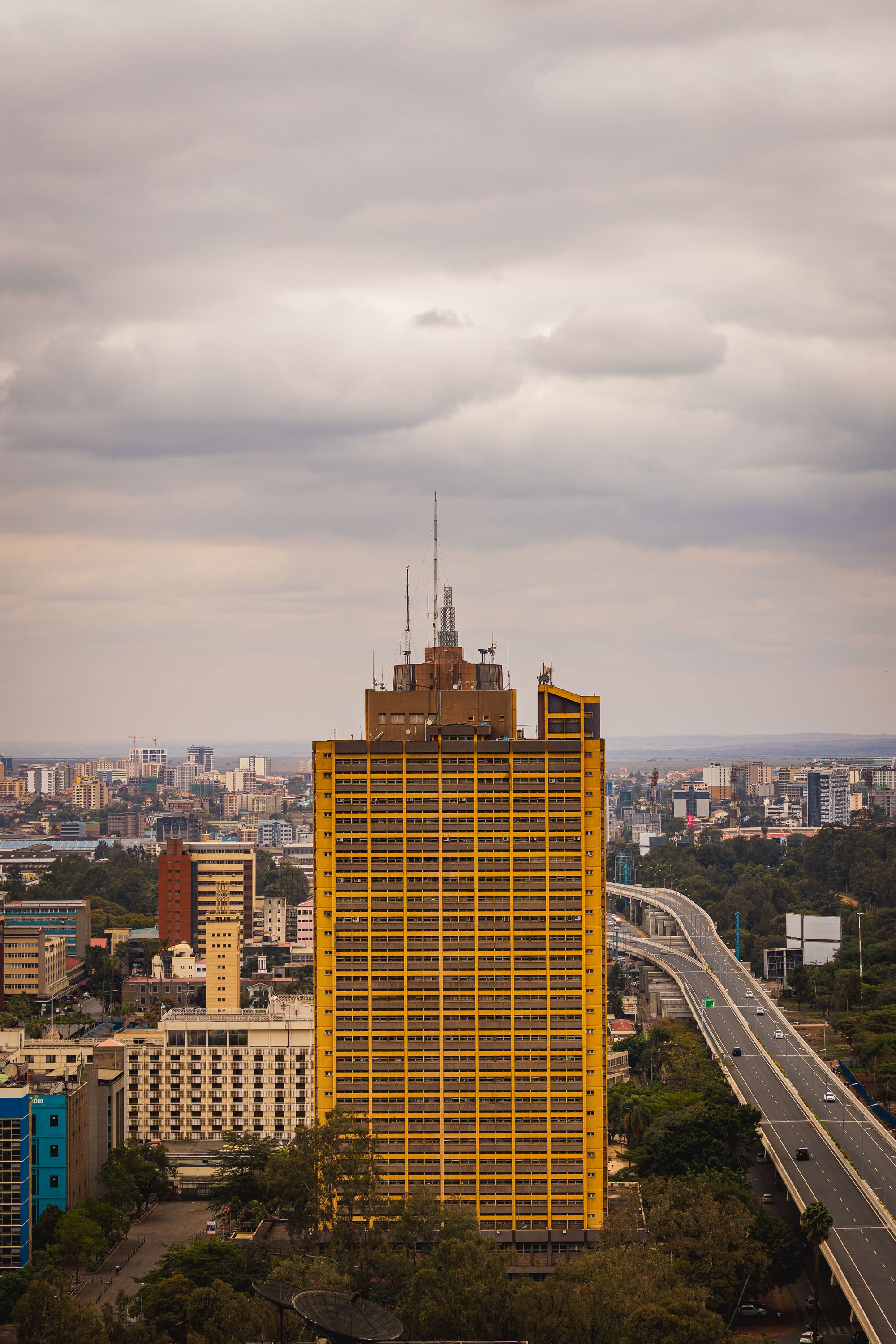
The Globe roundabout is the northern hinge of the district. It is where the ordered grid of the commercial core gives up and the roads north take over. The flyover carries traffic bound for Thika and beyond, while the roundabout itself handles the turning movements between the centre and the residential and market streets behind Ngara Road. For a traveller, this is less a destination than a junction, a place where the city stops being a set of blocks and becomes a set of routes out. The page is worth reading because the northern edge is the part of the centre most often misread, treated either as a nothing or as a shortcut.
What makes the roundabout significant is not the roundabout itself but the two working reasons to cross it on foot. The first is the fruit and vegetable market beside it, which trades in the dark and is finished before the offices open. The second is the walk up Museum Hill to the National Museum, on ground it has occupied since 1930. Between those two points, the edge becomes a practical corridor for visitors who want the earliest working hour in the city or the best museum in the country. The roundabout is the hinge between them, and the road layout around it is built for vehicles rather than people.
This page settles what the Globe roundabout is for. It is for the movement of traffic north, not for lingering. It is for the pre-dawn trade that spills from Ngara Road, not for a late breakfast. It is for the indirect pedestrian route up the hill, not for a direct stroll. Approaching it with the right expectation makes the area work. Approaching it as a plaza or a meeting point will disappoint. The roundabout is a piece of infrastructure with a market beside it and a museum above it, and that is entirely enough.
Kijabe Street connects the roundabout back down into the market quarter, past the hospital and older flats, and it is the obvious link for anyone walking between the centre and the northern edge. The distance from Kenyatta Avenue at Moi Avenue to the roundabout is 0.81 km, about 11 min on foot. That is short enough to walk, and long enough that the change in atmosphere is clear. By the time you reach the roundabout, the grid is behind you. The roads ahead go north to Thika and north west up Museum Hill. The page is for the traveller who wants to know what that change means in practice.
02What is actually at the roundabout
The roundabout itself is a flyover and a junction. Traffic moves in the way junctions do, and pedestrians are accommodated by crossings rather than by design. The Globe Cinema is the name that fixes the spot, but the working life of the edge is in the market and the museum walk. There is no square to sit in, no row of cafes facing the traffic, and no reason to stand at the kerb. What there is, is a set of functions that serve people going somewhere else. Understanding that is the key to using the northern edge well.
The fruit and vegetable market beside the roundabout is the earliest working hour in the city that a visitor can see. It trades from around four in the morning until well before the offices open. The stalls are wholesale and local, and the activity is over before most of the district has woken. If you arrive at the market at nine, it is finished. The market is not a sight in the conventional sense, but it is a working place with a rhythm that repays an early alarm. Small notes and someone who knows the place make the visit easier. The window does not move much, but the trading days and volumes shift with the season and the harvest.
Museum Hill is the next rise beyond the roundabout, and it holds the National Museum, the snake park and the botanic garden. The museum is ticketed, and a visit of two to three hours is reasonable. The human-origins gallery is the reason to come and deserves an hour on its own. The snake park is across the museum grounds and is included in most ticket options; it is short and reliable with children. The botanic garden behind the museum along the river is quiet, shaded and nearly empty on weekday mornings. All three sit on the same hill and share the same awkward approach from the roundabout.
Kijabe Street is the connection back down into the market quarter, past the hospital and the older flats. It is a working street rather than a scenic one, and it is the obvious link for anyone walking between the centre and the northern edge. The streets behind Ngara Road hold everyday kitchens serving the dense residential area, working on a normal daytime rhythm. Ngara has long carried Indian and, more recently, Somali commercial life, and the eating along its main roads reflects both. That food is the most distinct on the northern edge of the centre, and it is a reason to walk the quarter rather than pass through it.
The Globe roundabout
Flyover above, traffic below. It is the practical northern limit of the centre on foot, built as a road interchange rather than a place to linger.
Ngara fruit market
Beside the roundabout, trading from before first light and finished before the offices open. Small notes, an early alarm, and someone who knows the stalls.
Museum Hill
The land rises past the roundabout to the National Museum and its grounds. The road is fast and the pedestrian route is indirect, so follow the crossings.
Kijabe Street
The way back down into the market quarter, past the hospital and the older flats. It connects the northern edge to the streets below.
03What this page cannot tell you
This page is compiled from published information and the site's own checks, not from a visit. Opening arrangements and anything that moves week to week are not printed here. The market window is not an opening hour; the wholesale trade sets its own pattern and it moves with the season and the harvest. What holds is the dark: the market works before first light and is finished early. For a given day, ask at the stalls or check with Nairobi City County market information. The museum keeps separate hours and ticketing, both set by the National Museums of Kenya. Those are the only reliable sources, and they are not this page.
The northern edge has real drawbacks. The junctions are built for vehicles, and the pedestrian route around Museum Hill is indirect. The road is fast, and the shortest line is usually the wrong one. After dark, the roundabout is a transport edge rather than an evening quarter: the market is finished, the traffic is all vehicles, and crossings that are awkward by day are worse in the dark. Crossing by car after sunset makes sense. There is also no cluster of hotels or restaurants at the roundabout itself; the well-reviewed budget hotels around it trade on the museum walk and the transport links, and reviews mention traffic noise from the flyover more than anything else.
The list of things this page cannot fix is short but important. The market is over well before the offices open, so a late start wastes the trip. The museum keeps its own hours and ticketing, and neither is printed here because they are set by the National Museums of Kenya. The roundabout is not a place to spend an evening. The approach to the museum is not a direct walk. Each of these is a limit on what the northern edge can do for you, and the page would rather state them plainly than let you discover them at the kerb.
For the museum, check the National Museum's own hours and ticketing with the National Museums of Kenya before setting out up the hill. For the market, ask at the stalls or check with Nairobi City County market information, because the wholesale trade moves with the season and the harvest. For the roundabout itself, the practical advice is simple: treat it as a junction and keep moving. The page offers no opening hour, no fare and no timetable, because those things change and the operators own them. What it offers instead is a clear picture of what the northern edge is for, so that your own enquiries start in the right place.
- Follow the crossings around Museum Hill rather than the shortest line, even where the pavement route doubles the distance.
- Reach the fruit market before first light, since the trade there is over well before the offices open.
- Cross the roundabout by car after dark, when the junctions that are awkward by day become worse.
- Check the National Museum's own hours and ticketing with the National Museums of Kenya before setting out up the hill.
What the market window is not
No opening hour is printed here because the wholesale trade sets its own pattern and it moves with the season and the harvest. What holds is the dark: the market works before first light and is finished early. For a given day, ask at the stalls or check with Nairobi City County market information. The museum keeps separate hours and ticketing, both set by the National Museums of Kenya.
04What to do with the northern edge
The northern edge is best used as a corridor, not a destination. Walk up from the centre for the market before first light, or walk up later for the museum. Link the two only if you have an early start and a full day. Reach the fruit market before first light, since the trade there is over well before the offices open. Follow the crossings around Museum Hill rather than the shortest line, even where the pavement route doubles the distance. Cross the roundabout by car after dark, when the junctions that are awkward by day become worse. Those three habits will make the edge work.
If the museum is the goal, the walk from the centre is practical but the final approach needs care. Use the crossings and accept the indirect route. The distance from Kenyatta Avenue at Moi Avenue to the roundabout is 0.81 km, about 11 min on foot, and the hill adds more. A car for the museum does not save much, because the awkward part is the pedestrian approach rather than the road. A car for a pre-dawn market visit does make sense. Decide which of the two reasons you are crossing for, and plan the transport around that.
For eating, the quarter rewards a little exploration. Breakfast at the market is the best in the area and gone by mid-morning. Around the roundabout are everyday kitchens serving the dense residential streets behind Ngara Road. The Indian and Somali kitchens along the main roads of Ngara are the most distinct food on the northern edge of the centre. None of these are destinations in themselves, but together they give the edge a working character that the centre proper does not have. Walk Kijabe Street back down into the market quarter and the connection is obvious.
The verdict is straightforward. The Globe roundabout is a hinge, and its value is in what it connects: the pre-dawn market, the museum hill, and the roads north. It is not a place to spend an evening and not a place to linger at the kerb. Use it to cross, use it to reach the two good reasons on either side, and treat the awkward junctions as the price of the northern edge. This page does not print opening hours, fares or timetables, because those belong to the operators and they change. Check with the National Museums of Kenya for the museum and with the market itself for the trade. The northern edge is worth crossing. It is not worth standing still in.
Where this page comes from
Desk research, not fieldwork. Nobody writing this stood on the corner with a stopwatch, and a page that implied otherwise would be the least trustworthy thing on the site. The specifics above came from here:
- Market hours: the published trading pattern of the Ngara wholesale market.
- Ngara market trading hours: Nairobi City County market information.
- Distances: computed from published coordinates.
Opening hours, ticketing and market days change. No hotel or operator pays to appear here.
05Questions
Can I walk from the centre to the National Museum?+
Yes, but the route is indirect. The road up Museum Hill is fast and built for vehicles, so follow the crossings and the pavement rather than the shortest line on a map. Allow more time than the distance suggests.
What time should I go to the fruit market?+
Before first light. The wholesale trade works in the dark and is finished early, so a mid-morning arrival finds it over. Carry small notes and go with someone who knows the stalls.
Is the roundabout somewhere to spend an evening?+
No. This is a transport edge rather than an evening quarter. By the time the market is done the roundabout is all vehicles, and the crossings are worse after dark. Cross it by car.
Do I need a car for the museum?+
It saves little for the museum itself, since the walk up the hill is the point of the route. A car makes more sense for a pre-dawn market visit, when the streets are quiet and the transport is thin.