01Why the airport run decides the booking
The airport run decides more hotel bookings in central Nairobi than any other single factor, and it is worth being honest about why. A business traveller with a morning flight is not choosing a neighbourhood on the strength of its architecture or its restaurants. That traveller is choosing the address that produces the least uncertain drive to the terminal before dawn. Everything else about the booking follows from that one calculation, and hotels on the ridge know it.
What makes the run uncertain is not distance. The airport road out of the centre is a known quantity. What moves is the traffic on it, and the traffic has two distinct personalities depending on the hour. Before dawn it is empty and the run is short. From the middle of the morning until well after the offices close it can double or worse, and no hotel address can change that.
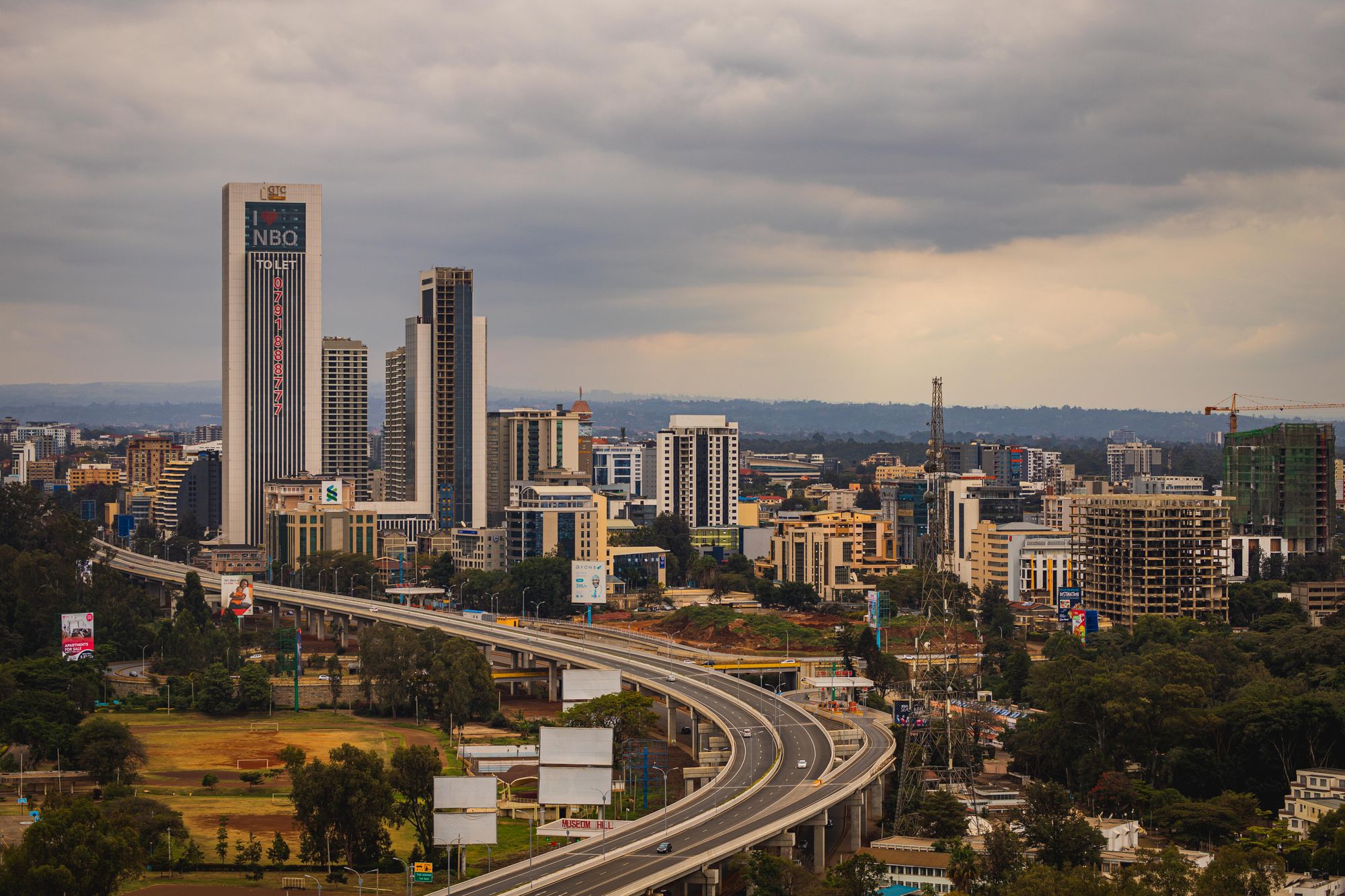
The expressway did change the maths of it. The toll road is a grade separated carriageway with its own ramps, and a vehicle that gets onto it early is no longer competing with the surface traffic on Mombasa Road. That is a genuine improvement for addresses close to a ramp. It is not a cure for congestion, and it does not help an address that cannot reach the ramp without crossing the same clogged junctions.
So the question a traveller should actually ask is narrower than whether a hotel is close to the airport. It is whether that hotel's run uses the expressway, and at what hour the drive is being quoted. This page sets out what the toll road did and did not fix, why some addresses can promise a short transfer and others cannot, and what to check before booking on the strength of a transfer time that names no hour.
02What the expressway changed, quarter by quarter
The toll road changed one thing cleanly: it gave the western ridge a direct link to the airport road that the grid does not have. Upper Hill, the ridge immediately above the centre, sits beside a ramp. A vehicle leaving a tower hotel there can be on the toll road quickly and stay on it. The run from that quarter on a clear morning is in a different category from the same run launched out of the middle of the grid.
The grid itself, the commercial core around Kenyatta Avenue and Moi Avenue, is a different proposition. An address on the avenue is a short walk from everything a visitor wants in the daytime, and it is further from the ramp. Any vehicle leaving it has to work through the centre first. That is where the promises start to diverge, and it is why two hotels a short walk apart can quote very different transfer times.
The hours that defeat it are the ordinary ones. The expressway is only fast when the rest of the traffic is not on it, and that means the toll road earns its keep before dawn and loses much of the advantage in the rush. An early departure benefits enormously. A mid-afternoon departure gets less than the road suggests, and the barrier does not care which one you are.
The row list above sets this out as four separate things: the ridge ramp, the grid address, the toll road, and the hours that defeat it. Read them together and the pattern is plain. The expressway is a real advantage attached to specific ramps and specific hours, not a general property of staying anywhere central. Treat it as an address feature rather than a city feature.
The ridge ramp
Upper Hill has its own expressway ramp, which is the whole reason some hotels advertise a short transfer. From the ridge the run to the airport avoids the grid entirely. The trade is a dull evening: the ridge is built for cars and conference rooms.
The grid address
A hotel on Kenyatta Avenue or the market streets puts you inside the walking city, which is the point of staying in the CBD. The same trip to the airport starts with a crawl out of the centre. Book the grid for the daytime, not the transfer.
The toll road
The Nairobi Expressway is a toll road on a raised alignment with ramps serving the centre and the ridge. It is the single biggest change to the airport run since the airport was built. The toll is set by the operator and paid at the barrier.
The hours that defeat it
The expressway is fast on a clear morning and slow when the whole city is moving. There are roughly two hours a day when nothing moves, and they are not fixed to a season. Build the buffer into the day rather than trusting the road.
03What this page cannot tell you about the run
This page is compiled from published information and the site's own checks rather than from a visit. Nobody writing it has driven these roads or stood at these barriers. Opening arrangements, ramp access and anything that moves week to week are not printed here, because they belong to the operator and they change. What is fixed is the road and the ramps; what moves is everything about how you use them on a given day.
The toll is set by the expressway operator and collected at the barrier, and it is not printed on this site. No price of any kind appears anywhere in this guide, in any currency, whether as a fare, a rate or a barrier charge. The same applies to transfers, taxi fares and hotel rates. Those are live figures belonging to the operator or the booking partner, and the right way to get them is to ask.
The four points below are what to do with that. They are deliberately practical and they assume nothing about which quarter you have chosen. Ask which ramp a hotel uses before you book on the strength of a transfer, agree the fare and the route with the driver before you get in, leave a wider margin than the road suggests, and treat any quoted transfer time with suspicion unless it names the hour of the day.
What this page cannot do is tell you how long the run will take on the morning you travel. Nobody can, and any page that prints a single figure for it is guessing. The honest position is that the route is known, the ramps are published, the toll is collected at the barrier, and the variable is the traffic, which is different at seven in the morning and at four in the afternoon. Plan around that variable rather than around a number.
- Ask the hotel which ramp it uses before you book on the strength of the transfer, because a ridge address and a grid address are not the same run.
- Agree the fare and the route with the driver before you get in, and say plainly whether the toll road is included or the barrier is yours to pay.
- Leave a wider margin than the road suggests for any fixed departure, because the expressway is only fast when the rest of the traffic is not on it.
- Treat any quoted transfer time with suspicion unless it names the hour of the day, since the same road is a different road at seven in the morning and at four.
What this page does not print
The toll is set by the expressway operator and collected at the barrier, and it is not printed here: this site prints no price of any kind, in any currency. The same goes for transfers, taxi fares and hotel rates, all of which are live figures belonging to the operator or the booking partner. Ask what the barrier charges and whether the quoted transfer includes it. The route itself is fixed and the ramps are published.
04How to use this when you book
Use the transfer as a filter, not a headline. When a hotel advertises a short run to the airport, ask which road it uses and which ramp it joins. A ridge address with its own ramp access is making a different promise from a grid address that has to cross the centre first. If the answer is vague, assume the slower option and plan accordingly. That single question will do more for a tight departure than any review score.
Decide what the trip is actually for before you choose between the ridge and the grid. A stay built around meetings, a hospital appointment or an early flight suits the ridge, where the newest hotel stock sits and the ramp is close. A stay built around walking the centre in daylight suits the grid, where the pavements are wide and the landmarks are on foot. Both are reasonable, and they are not interchangeable.
For any fixed departure, build in more margin than the road suggests. The expressway is quick when the traffic is light and unremarkable when it is not, and the difference between those two states is not something a booking page can predict. An early flight is the case where the toll road genuinely pays, because the hours that defeat it are the business hours and an early departure is ahead of them.
Finally, agree the practical details with the driver before the wheels move. Confirm the fare, confirm the route, and say plainly whether the toll road is included or whether the barrier is yours to pay. Ask what the barrier charges if you are paying it yourself. None of that requires a price to be printed anywhere, and all of it prevents the argument that otherwise happens at the far end of the run.
Where this page comes from
Desk research, not fieldwork. Nobody writing this stood on the corner with a stopwatch, and a page that implied otherwise would be the least trustworthy thing on the site. The specifics above came from here:
- Expressway ramp locations: Nairobi Expressway operator information.
- Expressway ramps and tolling: Nairobi Expressway operator information.
- Distances: computed from published coordinates, direct line from Kenyatta Avenue at Moi Avenue.
Opening hours, ticketing and market days change. No hotel or operator pays to appear here.
05Questions
Does the expressway make the airport run predictable?+
It makes it faster on a clear morning and no better at rush hour, because the bottleneck at either end is ordinary city traffic rather than the toll road. The expressway removes the grid crawl, not the queue. Build in a buffer for any fixed departure and treat the road as an advantage rather than a guarantee.
Why can some hotels promise a short transfer and others not?+
It is about which ramp the address feeds onto. A hotel on the ridge above the CBD can reach the expressway without crossing the centre, so the run starts on the toll road. A hotel in the grid has to get out of the grid first, and that is where the time goes. Ask which ramp before booking on the strength of the transfer.
Is the toll included in a quoted transfer?+
Sometimes, and the answer is set by the operator and the driver rather than by any page here. The toll is a live figure collected at the barrier, and this site prints no price of any kind. Ask before you get in: say whether the quoted fare includes the barrier or whether the toll is yours to pay, and agree it plainly.
Is the ridge or the grid the better place to stay for a flight?+
The ridge wins on the transfer and loses on the evening, because there is very little to walk to after the offices close. The grid wins on daytime walking and loses on the exit. If the trip is built around a flight, the ridge is the practical answer. If it is built around the city on foot, take the grid and allow for the crawl.