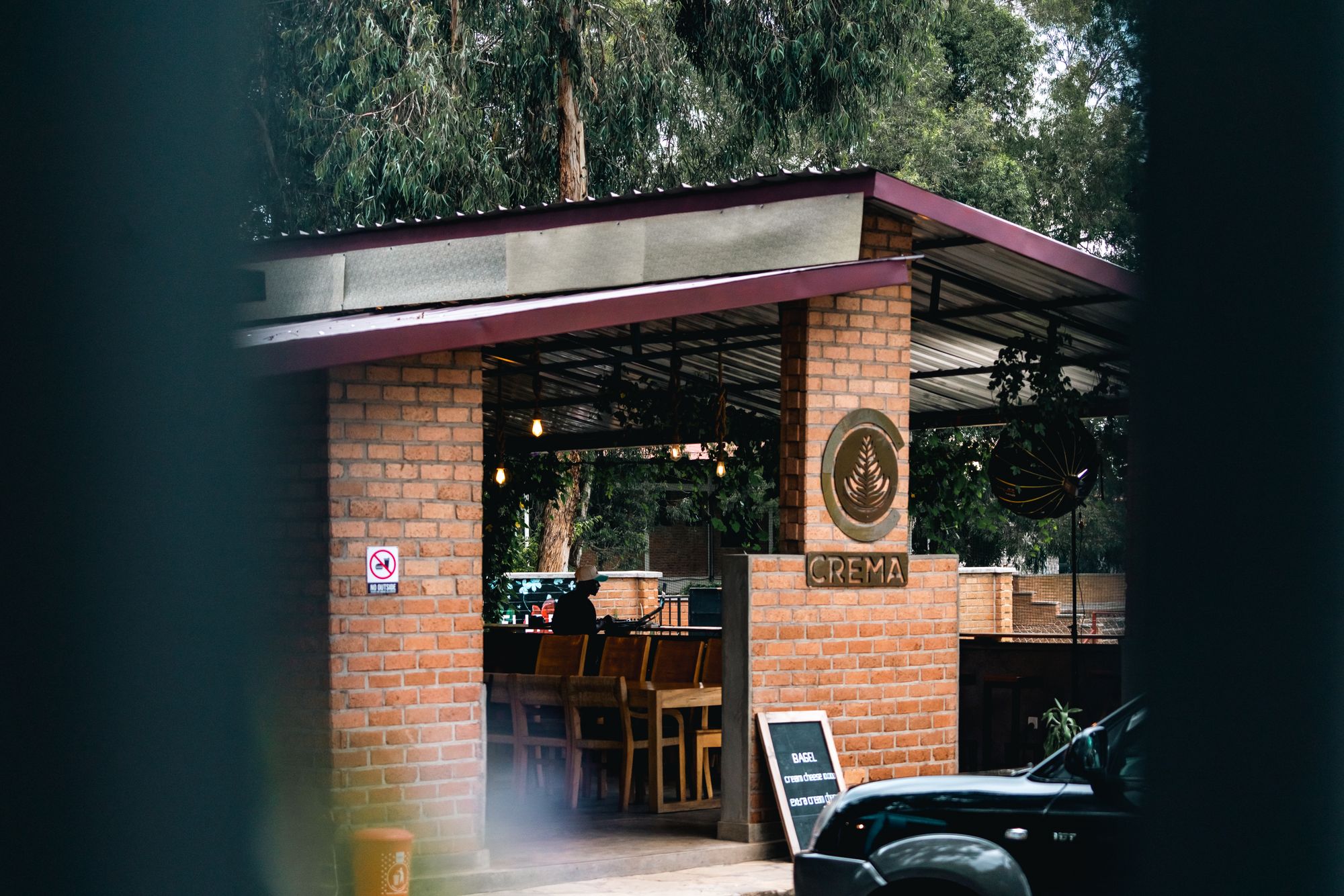
01Why the centre now drinks its own grade
Kenya has grown coffee that the world bids for since the colonial era, and for most of a century almost none of it was drunk in the country that grew it. The best lots were auctioned, graded, bagged and shipped, and the cup on a Nairobi counter was more likely to be instant or a dark roasted blend than anything from the auctions. That arrangement is the whole subject of this page. What changed is not the coffee but the distance between the person who grows it and the person who drinks it, and the CBD sits at the end of that shorter line.
The shift runs through the centre because that is where the trade always was. The auction, the brokers, the export offices and the old coffee houses were all within a few blocks of Kenyatta Avenue, and the people who bought and sold Kenyan coffee for a living knew exactly what they were shipping and how little of it stayed. When roasteries began opening counters in the same blocks, they were not introducing a new appetite. They were serving an old one, to the same trade, in the same quarter, a short walk from where the lots change hands.
What a visitor meets now is a centre that cups its own grade. The roasteries around Kimathi Street and the market quarter buy lots, roast them on site and brew what they roast, which means the coffee on the counter and the coffee in the export bag can be the same coffee. That is a recent arrangement and it is not settled. Some counters are serious about origin and some use the language loosely, and the difference is usually visible in how much a place will tell you about the lot rather than in what it says on the board.
This page treats that change as the subject, not the cafes. There is no list of rooms to sit in, no ranking of cups and no claim about which counter is best. What follows is where in the centre the shift is visible, what this page cannot establish at a distance, and how to use the page on the day. The verdict is simple enough: the centre is now the right place in Nairobi to drink what the country ships, and the way to read a counter is to ask about the lot.
02The quarters where the shift is visible
Kenyatta Avenue is where the trade meets the drink in its most orderly form. Six lanes, a planted median and the widest pavements in the centre give the avenue its formal face, and the bank halls along it are the oldest continuously used interiors in the city. The coffee is in the same buildings and on the cross streets beside them: counters inside the older office blocks, roasteries with their own doors, and places that cup and pour in the same room. This is the tidiest tenth of the CBD and the easiest place to start. Treat the avenue as orientation and the side streets as the destination.
Kimathi Street is the shortest good walk in the centre and the clearest place to see the change. One block north of the avenue and parallel to it, it holds the old Stanley corner and a run of coffee houses, roasteries and tailors whose shopfronts still face the street. The density is the point. Within a few minutes of pavement you pass more than one operation that roasts what it sells, and you can compare what two counters do with lots from the same growing regions. Go at midday when the doors are open and the machines are running, not in the quiet hours when a counter is a room with a chair in it.
Biashara Street and the market quarter show the older trade that the coffee sits beside. Biashara is the oldest retail street in Nairobi still doing what it was built for, one shop wide, and City Market behind it is a 1930s hall of produce, a fish counter and a curio gallery, free to enter and closing in the late afternoon. Coffee counters here tend to be small and attached to something else, a shop or a stall, and the cup is often simpler. The quarter is worth the walk for the architecture and the cloth, and the coffee is one more thing on a street that has been selling things for a century.
City Market and Banda are the far end of the same story. Banda Street runs between Jamia Mosque, built in the city in the 1920s, and the McMillan Memorial Library with its marble lions, and the pavements there are among the quietest in the centre. Counters near the market edge keep the traders' rhythm, which means a morning and lunchtime trade and an early close, rather than an all day cafe. If a first visit has time for one route, this page would send it down Kimathi Street for the roasteries and then west to Kenyatta Avenue for the trade that made them possible.
Kenyatta Avenue
Six lanes and a planted median, with the head offices of most of the country's banks on either side. The tidiest walk in the centre, and its pavements are the widest, which makes it the easiest line to hold on to.
Kimathi Street
One block north and parallel: the old Stanley corner, coffee houses and the tailors. The most pleasant short walk in the CBD, and the street where the cupping counters are closest together.
Biashara Street
The oldest retail street still doing what it was built for, one shop wide each, with tailors upstairs. Cloth, haberdashery and suitings, and a century of Indian commercial history behind the counters.
City Market and Banda
The 1930s market hall holds produce, a fish counter and a curio gallery, with Jamia Mosque closing the block and the McMillan Memorial Library behind its marble lions along Banda Street. Free to enter the hall.
03What this page cannot tell you
The honest caveat comes first. This page is compiled from published information and the site's own checks, not from a visit. Nobody writing it has stood at a counter in the centre, timed a roast, watched a cupping or compared two cups. Everything here is the sort of thing that can be established at a distance and checked against a public record, and anything that moves week to week is deliberately not printed. That includes counter hours, roasting days, cupping sessions, market days and what any counter currently has on. Confirm the day before you travel, and confirm again at the door.
There is a second limit, and it is about coffee itself. A lot changes as it moves, and a counter can be serious about origin and still be brewing something other than what its board suggests. Grading language is used loosely in the centre. A counter that will tell you the growing region, the lot and the roast date is doing something different from one that will not, and no page written at a distance can tell you which is which on the day. The only reliable test is to ask, plainly, and to notice whether the answer is specific.
Some of the practical edges of a day are also outside what this page will state. Bank and bureau hours, gallery ticketing and market days are set by the operator and move, so none are claimed here, and the same goes for anything with a figure attached. The bullet list alongside this section sets out the few things that can be said safely: the lunch trade on the office streets, agreeing a fare before getting into any taxi or matatu, settling tailoring work and its timeline inside the shop, and checking anything time bound on the day. Treat those as the page's usable rules and the rest as background.
The callout beside this section carries the sourcing position in full. No price of any kind appears on this page in any currency or in words, and no opening or closing hour is claimed. Counter hours, cupping sessions and market days belong to the operators, and live availability and current pricing belong to the operator and the booking partner. Where a figure matters to a day, the answer is at the counter or the desk, asked on arrival. A page that prints none of it is more useful than one that prints a number that has already moved.
- Treat the lunch trade as the real signal: Standard Street and Mama Ngina Street fill from about half past twelve with the office crowd, and the canteens turn over fast.
- Agree the fare before you get into any taxi or matatu, and take a car back after dark rather than walking the office streets.
- If you want cloth made up, settle the work and the timeline inside the shop, and expect days rather than hours for the finish.
- Bank and bureau hours, gallery ticketing and market days are set by the operator and move, so check the day you go rather than trusting any page, including this one.
What this page will not print
No price of any kind appears here, in any currency or in words, and no opening or closing hour is claimed. Counter hours, cupping sessions and market days are set by the operator and move with the trade. Live availability and current pricing belong to the operator and the booking partner. If a figure matters to your day, ask at the counter or the desk when you arrive, and confirm the day before you travel.
04What to do with this page
Use it as a map of a change, not as an itinerary. The work of the page is to place the coffee in the centre of the city, and the centre can be walked. Take Kimathi Street first, one block north of Kenyatta Avenue, because that short stretch carries the density of counters where the shift is easiest to see. Then take the avenue itself for the bank halls and the formal face of the trade, and finish in the market quarter if the day still has light. Three parts of the CBD, all within a short walk of each other, and none of them requiring a car.
Ask the one question that separates a counter from a shopfront. What lot is this, where was it grown and when was it roasted. A counter with an answer is worth a second cup. A counter without one is a place to sit rather than a place to learn anything, which is a fine thing to be and simply not the subject of this page. Order what the counter actually roasts rather than what the board illustrates, and if two counters are close together, take the same kind of cup from both and compare. That is a better use of an hour than any ranked list.
Fit the day around the rhythms the quarter already keeps. The market halls trade from mid morning and close in the late afternoon, produce is a morning business and the curio gallery is a bargaining one. The office streets fill from about half past twelve with the lunch crowd and turn over fast. The centre closes with the offices, and after dark a car back is the sensible choice rather than a walk through empty office streets. A morning start and an afternoon finish covers everything described here without hurrying.
Finally, hold the page loosely. The coffee trade in the centre is young and the counters move, open and close and change hands faster than any page can follow. Nothing here is a promise about a particular door. If a place named in the surrounding text has gone, the quarter has not: the shift is in the blocks, not in any one business, and a walk down Kimathi Street or across the market will show it. Read the page before the day, check the details on the day, and let the cup in front of you have the last word.
Where this page comes from
Desk research, not fieldwork. Nobody writing this stood on the corner with a stopwatch, and a page that implied otherwise would be the least trustworthy thing on the site. The specifics above came from here:
- Street naming and the colonial grid: Nairobi City County and National Archives published histories.
- Opening arrangements: the National Museums of Kenya, Kenya National Archives, KICC and Jamia Mosque visitor information.
- Distances: computed from published coordinates, direct line from Kenyatta Avenue at Moi Avenue.
Opening hours, ticketing and market days change. No hotel or operator pays to appear here.
05Questions
Can I change money on the avenue?+
Banks and bureaux line Kenyatta Avenue and the streets off it, and several of the banking halls keep their original interiors. Hours are set by each operator and vary between branches. Check the notice at the door on the day rather than relying on any listing, and look up at the ceiling while you wait.
Where do I actually drink the coffee?+
The coffee houses and roasteries cluster around Kimathi Street, one block north of and parallel to Kenyatta Avenue. The market quarter is a separate daytime trade with its own counters. Both are working streets, so the rhythm follows the offices rather than the visitor.
Is the market quarter a daytime place?+
Yes, in the plainest sense. The halls shut in the late afternoon and the shutters come down street by street, and produce is a morning business. Walk it between mid-morning and late afternoon. By early evening there is little open and little to stay for.
Should I bargain in the curio gallery?+
The opening figure and the closing figure in the upper gallery of City Market are a long way apart, and that is expected rather than rude. Walk, come back, and settle. It is the ordinary way the hall trades, not an insult to either side.