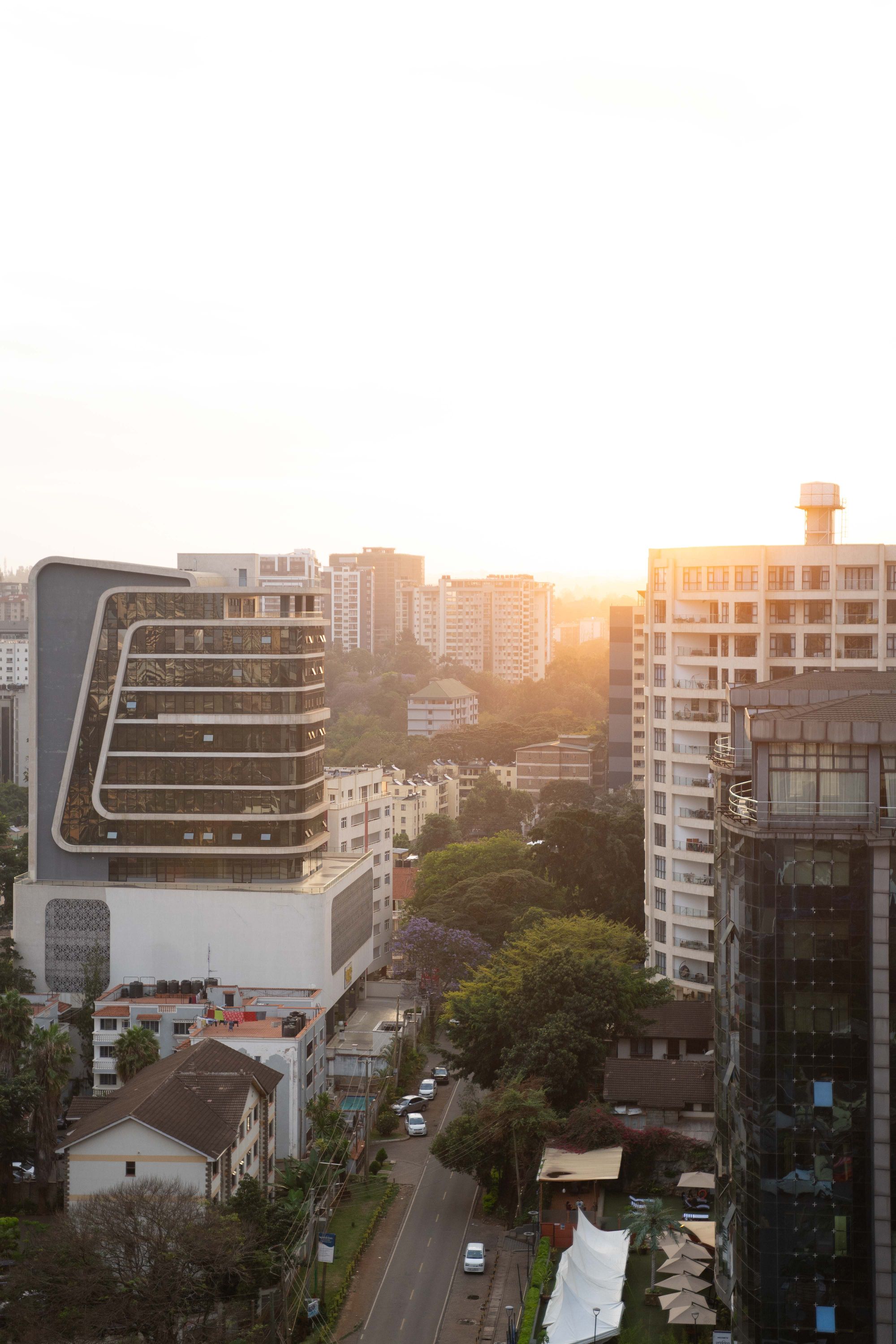
01What the altitude does to a day
Kenyatta Avenue runs at about 1,795 metres, and that figure does more to shape a day in the centre than the equator does. Visitors arrive braced for tropical heat and meet something closer to a highland town: thin air, fast weather and a sun that bites hardest when the sky is clearest. The altitude is the single fact worth holding on to, because it explains almost every surprise the first hours bring, in both directions.
The cold comes first. Mornings after dawn in the CBD are genuinely cold, not merely cool, and the effect is sharpest in the dry middle of the year, when the sky stays clear overnight and the ground loses its heat. Office workers on the pavement at the start of the day are in jackets. Anyone who steps out of a hotel in shirtsleeves because the city is on the equator will regret the decision within a block.
By the middle of the day the same altitude turns. The sun stands almost directly overhead, the ultraviolet is strong, and pale skin burns faster here than at sea level. Shade, a hat and water are the practical response, and they belong on you before the burn rather than after it. The heat is rarely oppressive in the way a coast city is oppressive, but the light is fierce and the exposure is real.
So the day swings. Cold in the first hours, hot and bright through the middle, mild again towards the end of the afternoon, which is why the centre is at its most walkable at the cooler ends of it. Nothing here is comfortable all day. A light layer, sun protection and a plan that keeps the hottest hours for interiors will carry you through, and the altitude will do the rest.
This is worth a page because the altitude is invisible and the penalties for ignoring it are small but constant: a morning spent shivering, an afternoon spent burnt. Neither ruins a trip. Both are avoidable, and both come from the same single fact about where the city sits. Treat the height as the weather, not the latitude, and the centre reads correctly from the first morning.
02How the year divides by weather
The year in the centre divides less by temperature than by rain and cloud, and the divisions move from year to year. Roughly, there is a dry middle of the year, a long rains season, and a shorter wet spell later, with the dry stretch giving the clearest skies and the coldest mornings. Because the city sits at about 1,795 metres almost exactly on the equator, the sun is high all year and the seasons are wet and dry rather than warm and cold.
Mornings after dawn in the dry middle of the year are the coldest the centre gets, and they are also the clearest. The overnight loss of heat under a cloudless sky is what produces the chill, and the same clear sky delivers the strong midday light a few hours later. The dry months are the best walking weather in the CBD, provided the walk happens at either end of the day and not under the overhead sun.
The middle of the day behaves the same way all year. At this altitude the sun is close to vertical, shade is scarce on the wide avenues, and the ultraviolet does not need warmth to do damage. Cloud does not stop it. A grey midday can still burn, which catches people out because it feels mild. Shade, a hat and water remain the answer regardless of what the sky looks like.
The long rains arrive as afternoon and evening downpours, heavy, brief and often followed by clear sky. Pavements in the centre drain unevenly, and a walk planned for the middle of the afternoon in the wet season is a walk planned for a soaking. The rains shift, so the honest position is that no chart survives contact with a particular year, and the published outlook is the only thing worth checking.
The practical reading is simple. Cold mornings, a burn in the middle of the day, and rain as the wild card. Plan the walking for the cooler ends, keep the middle hours indoors, carry a light layer and something for rain, and let the season decide the rest. The centre is walkable in every month. It is only comfortable at certain hours of the day, and those hours do not change with the season.
Mornings after dawn
The city can be genuinely cold in the first hours, particularly in the dry middle of the year. Thin air loses heat fast once the sun is down, so a jacket at breakfast is not excessive.
The middle of the day
Sun at this altitude burns quickly and the rays come from almost overhead. Shade, a hat and water matter more than the temperature alone suggests, and the burn arrives before the heat does.
The dry middle of the year
The cooler, clearer stretch is also the most comfortable for walking the centre. Days are mild rather than hot, mornings are cold, and the light is steady from early until late afternoon.
The long rains
Afternoon downpours arrive with the wet seasons and can empty the pavements within minutes. Carry something waterproof and treat a heavy sky over the towers as a warning, not decoration.
03What this page cannot tell you
This page is compiled from published information and the site's own checks, not from a visit. Nobody writing it has stood on Kenyatta Avenue at dawn or crossed the centre at midday, and it does not pretend otherwise. That matters here more than on most subjects, because the thing a reader most wants is the felt temperature, and felt temperature is not something a page assembled at a distance can supply.
It also means no figure here is a forecast. Rainfall, cloud and the exact arrival of the long and short rains move from year to year, and the Kenya Meteorological Department publishes the current outlook rather than a fixed calendar. No temperature, no month-by-month chart and no hour-by-hour pattern appears on this page, because none of it would stay true beyond the week it was written.
Opening arrangements and anything that moves week to week are not printed here either. Where a walk, a market or an event depends on a gate being open, a boat operating or a stall trading, those arrangements are the operator's and they change. This page states the shape of the day and leaves the current facts to the bodies that set them.
The bullet list alongside is the whole of the practical advice that survives that caveat. A light layer for early morning, respect for the overhead sun, long walks at the cooler ends, and a question asked at a hotel or a tour desk about the season. Everything else on this subject is either an invention or a snapshot that has already expired.
So treat what follows as orientation rather than instruction. It tells you what kind of day to expect and how the centre behaves in it. For the conditions on a given week, the meteorological outlook and the people on the ground are the sources that count, and a page like this one is where you go to know what to ask them.
- Carry a light layer for the first hours after dawn, even when the day is forecast mild, because the cold goes quickly but it does go.
- Treat the overhead midday sun as the real hazard at this altitude, and take shade, a hat and water before the burn rather than after it.
- Plan any long walk in the centre for the cooler ends of the day, and keep the hotter middle hours for interiors, lobbies and galleries.
- Ask at the hotel or a tour desk for the current seasonal pattern rather than trusting any printed chart, because the rains shift from year to year.
What nobody can tell you
No figure here is a forecast. Rainfall, cloud and the exact arrival of the long and short rains move from year to year, and the Kenya Meteorological Department publishes the current outlook rather than a fixed calendar. This page prints no temperature, no month-by-month chart and no hour-by-hour pattern, because none of it would stay true. Check the published outlook for the weeks you are travelling, and pack for cold mornings and a strong midday sun at the same time.
04What to do with all of it
Pack for two different days at once. A light layer that comes off by mid-morning and something for rain if the season is wet. Sun protection that does not depend on feeling warm, because at this altitude a grey midday still burns. That combination covers the centre in every month of the year and takes almost no space in a bag.
Then arrange the day around the sun rather than the clock. Mornings after dawn are cold and clear, which makes them the best hours for a first walk along Kenyatta Avenue or down to the parks. The middle of the day belongs indoors: banking halls, lobbies, the gallery, a long lunch on Standard Street. The end of the afternoon is the second good window, and the light is best then.
For a first visit, this site would put the long walks at the cooler ends and keep the hot middle for interiors and errands. The grid is compact and the pavements on the avenue are the widest in the centre, so the walking itself is easy once the hours are right. What defeats people is not distance. It is standing in overhead sun on a wide, shadeless street at the wrong time of day.
Ask about the season rather than assuming it. The hotel desk, a tour operator or the published meteorological outlook will tell you what the current weeks look like, and the answer changes from year to year, which is exactly why it is worth asking instead of reading a chart. Agree what you need to know, ask it, and plan around the answer.
Finally, do not let the altitude talk you out of the centre. Cold mornings are not a reason to stay in a lobby, and a strong midday sun is not a reason to skip the market streets. They are a reason to walk early, sit out the middle, and go back out when the light softens. That rhythm is the honest way to spend a day here, and it is the same rhythm the city itself keeps.
Where this page comes from
Desk research, not fieldwork. Nobody writing this stood on the corner with a stopwatch, and a page that implied otherwise would be the least trustworthy thing on the site. The specifics above came from here:
- Altitude and climate: Kenya Meteorological Department published data for Nairobi.
- Nothing on this page is a measurement or a first-hand account.
- Distances: computed from published coordinates, direct line from Kenyatta Avenue at Moi Avenue.
Opening hours, ticketing and market days change. No hotel or operator pays to appear here.
05Questions
Why is Nairobi cold in the morning if it is on the equator?+
Altitude, not latitude, drives it. The city sits at about 1,795 metres, and thin air at that height loses heat quickly overnight. Dawn can feel cold even in the dry season, and the day warms fast once the sun is properly up.
When is the most comfortable time of year to walk the centre?+
The dry middle of the year tends to bring milder, clearer weeks with cold mornings and pleasant days. The wet seasons bring heavy afternoon rain that clears the pavements. Ask locally for the current pattern, because the rains shift.
Do I need sun protection at this altitude?+
Yes. The sun is near overhead and the air is thin, so burning happens faster than the temperature suggests. A hat, shade and water at midday are practical necessities rather than precautions for the sensitive.
Where should a traveller check the current weather outlook?+
The Kenya Meteorological Department publishes seasonal and shorter-range outlooks, and hotels and tour desks in the centre can confirm what the coming weeks look like. This page prints no forecast or temperature, because the pattern changes and a printed chart would mislead.