01Why the northern edge earns a page
The northern edge of the central business district is not a destination in the way that Kenyatta Avenue or the streets around the law courts are. It is a working frontier where the ordered grid of the centre comes apart into a roundabout, a flyover and a market that runs on its own clock. That clock starts long before the offices unlock their doors and finishes while the first commuters are still finding their desks. It is the earliest commercial hour a visitor to the central business district can witness, and it belongs to the district because it sits just beyond its formal boundary, at the point where the city centre hands over to the roads north.
Ngara and the Globe roundabout mark this edge. The Globe Cinema roundabout is the northern hinge of the central grid, and the fruit and vegetable market beside it is the reason to cross the roundabout before sunrise. The trade there is not staged for visitors. It is produce moving from growers and wholesalers to the retailers and kitchens of the city, and it happens in the dark because that is when the lorries arrive and when the stock must be in place for the day's trade. The hour itself is the attraction: the market working at speed, the breakfast stalls feeding the traders at the end of their night, and the walk back down into the centre as the city begins its ordinary day.
The page exists because this hour is easy to miss and easy to get wrong. Turn up at nine in the morning and the market is over. Turn up alone and without a sense of the routes and the trading floor and you are a spectator in a place that has no interest in spectators. The argument here is that the northern edge repays a deliberate early start, that the breakfast around the market is the best in that quarter, and that the whole thing is a walk best done with someone who knows it. This is not a tourist attraction with a gate and a ticket desk. It is a working market at its busiest, and the page treats it that way.
What this page does not do is turn the market into a coach stop. It gives the shape of the hour, the reason the hour exists, and the plain practical conditions that make a visit work: company, small notes, a plan for getting back, and clothing that can take an unpaved working floor before dawn. The next section sets out what the market hour actually gives you. Later sections are honest about what cannot be promised and what this page will not print, and the last one says what to do with the hour. Read it as a briefing for an early start, not as an itinerary that someone else has already walked for you.
02What the market hour gives you
The market hour gives you the city at work before the city is awake. The produce arrives, the stalls fill, the buyers move through, and the whole thing has a rhythm and a purpose that is entirely its own. You are not there to browse. You are there to watch a supply chain do its daily job, and the stalls around the market edge are there to feed the people doing it. The breakfast is plain and built for people who have been on their feet since the small hours: it is why the eating stalls around the fruit market are the best breakfast in that quarter, and why they are gone by mid-morning.
The trading window is the first thing to understand. The market trades before the light, and it is finished before the offices open. That window is the whole reason the hour is worth the alarm. Arrive inside it and you see the market at full pitch. Arrive after it and you see a cleared floor and a few people packing up. The produce on sale is the ordinary fruit and vegetable trade of a city market, sold in volume to people who will sell it on or cook it that day. This is not a craft market and it is not aimed at you. That is the point.
The breakfast stalls are the second thing, and they are the reason the hour has a social life as well as an economic one. They serve the traders at the end of the working night, so they run on that schedule and not on a visitor's. The food is the kind that sustains heavy work: hot, filling and quick. It is not a leisurely meal and it is not presented for photographs. If the market is the reason to cross the roundabout before dawn, the stalls are the reason to stay for a while afterwards, because they are where the working night ends and the ordinary day begins.
Getting in and out is the third. The roundabout and its flyover are a transport edge, and the routes in and out are not obvious to a first-time visitor. That is why the row list on this page puts the market in the context of the northern edge as a whole: the Globe Cinema roundabout is the hinge, and the market sits beside it. The walk back down into the central grid is your return to the city you came from. Plan that return before you arrive, not after, because when the market finishes the edge belongs to vehicles, and the crossings that are awkward by day are worse before full light.
The trading window
Trade starts before light and is over by the time the offices open. Stallholders move with the harvest, and the four to seven pattern is the part that holds. Everything else about the morning depends on what came down from the farms.
What is sold
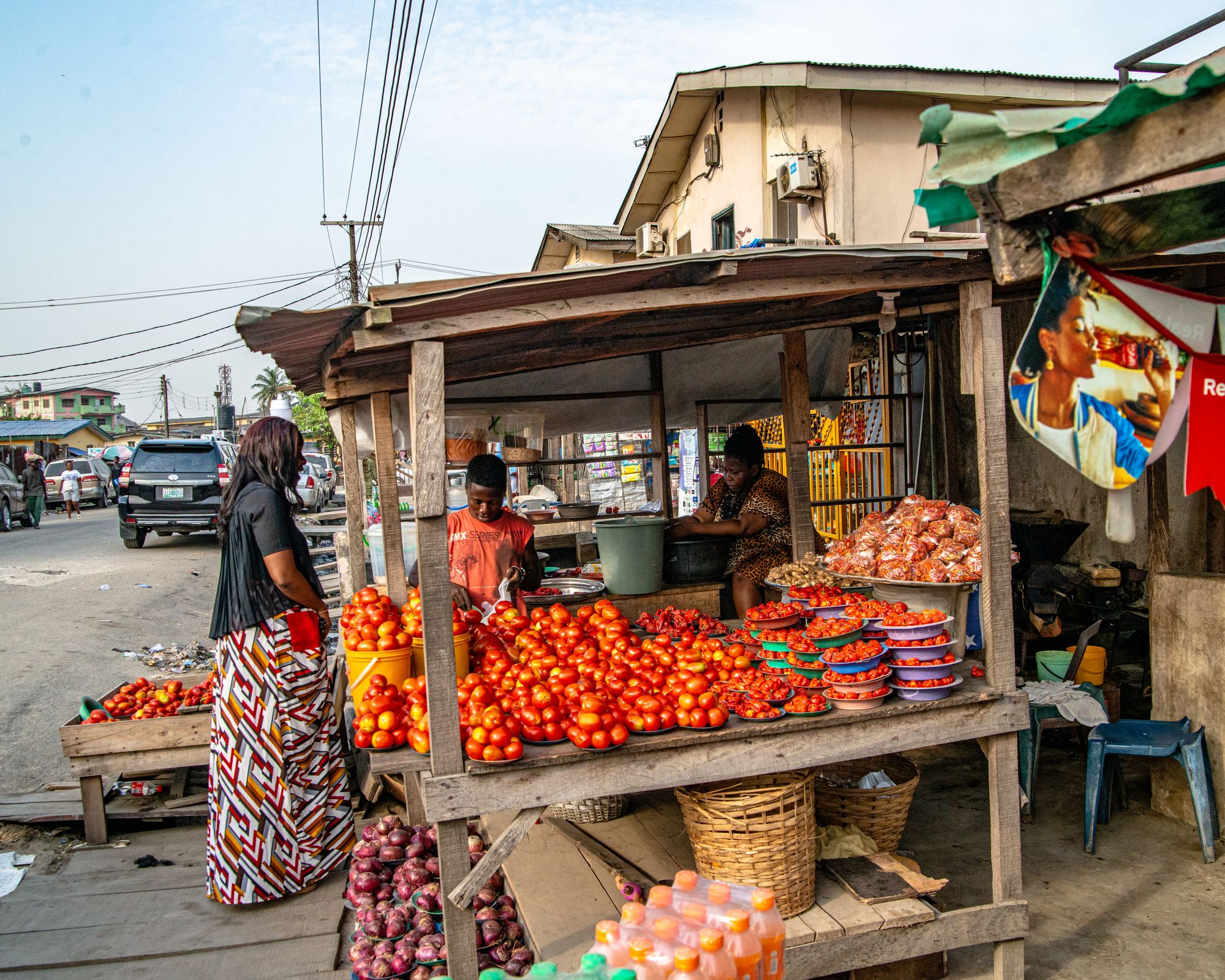
Fruit and vegetables for the city's kitchens, bought by the sack and the crate rather than the single piece. It is a working wholesale trade, and the people on the ground are there to buy stock, not to browse.
The breakfast stalls
Around the market edge, kitchens feed the traders at the end of their working night. This is the best food in the quarter and the least convenient to reach. It thins out through the morning and is gone by mid-morning.
Getting in and out
The market sits at the northern edge of the CBD near the Globe roundabout. Crossings and pavements exist but the junctions are built for vehicles. Your own way back, agreed in advance, is the sensible plan.
03What this page cannot promise
The honest half starts here. This page cannot promise that the market will be trading on the morning you choose, that the produce will be plentiful, that the stalls will be in the same places, or that the breakfast stands will be open. Trading days, produce volumes, stall positions and the breakfast stands themselves move with the season, the harvest and the county's running of the site. The callout on this page says the same thing at more length, and it is the most important thing on the page. No opening hour is printed here and no daily rhythm is claimed, because the operator sets both and neither is fixed far ahead. Check the current picture with the county market office or with someone who trades there, and treat any hour you are given as the start of a conversation rather than a schedule.
The sourcing caveat applies to the whole page. This is compiled from published information and the site's own checks, not from a visit. Nobody writing this has stood on that floor before dawn. Opening arrangements, trading days, stall layouts and anything else that moves week to week are not printed here for that reason. What is printed is the shape of the thing, which survives every change: it begins before the light and ends before the offices open. The bullet list on this page exists because the practical conditions around that shape are what a reader can rely on, and they are conditions rather than schedules. Company, small notes, an agreed return and sensible clothing do not change with the harvest.
The other limitation is that this page will not name a stall, a trader, a kitchen or a hotel, and will not print a price of any kind. That is a site rule and it is also the right call here. The market is not a fixed set of businesses that can be listed and reviewed. It is a shifting floor of people doing a day's trade, and the stands that feed them change with it. If you want a specific recommendation for a specific morning, the only reliable source is someone who trades there or the county market office. This page gives you the frame. It cannot give you the contents of a particular Tuesday.
There is also the limitation of the reader's own morning. The market hour is early by design, and the page will not pretend that a late start can be made to work. If you cannot be at the northern edge inside the trading window, the market is not for you on that day, and the better use of the northern edge is the walk up to Museum Hill later in the day. That is not a consolation prize. It is the other good reason to cross the roundabout, and it keeps its own hours and its own ticketing arrangements, both set by the National Museums of Kenya. The market asks for the early start. The museum does not.
- Go with someone who knows the market, the routes in and the way the trading floor works, because a first morning alone here is a poor idea.
- Take small notes and keep the amount you carry modest; negotiating large ones in the dark at a wholesale stand is a needless complication.
- Agree your return, whether that is a driver waiting, a taxi called from the market edge, or a companion walking you back to the avenue.
- Dress for the cold before dawn and for standing on unpaved ground, and leave anything you would not want splashed in a working market at home.
The hour this page cannot print
Market trading days, produce volumes, stall positions and the breakfast stands themselves move with the season, the harvest and the county's running of the site. No opening hour is printed here, and no daily rhythm is claimed, because the operator sets both and neither is fixed far ahead. Check the current picture with the county market office or with someone who trades there, and treat any hour you are given as the start of a conversation rather than a schedule. What survives every change is the shape of the thing: it begins before the light and ends before the offices open.
04How to use this hour
Use this hour by deciding first that you are going to do it properly or not at all. The half-measure, turning up at nine and hoping, is the one thing this page argues against. If you are going, go early, go with someone who knows the market, the routes in and the way the trading floor works, and treat the breakfast stalls as part of the visit rather than an afterthought. The hour is the whole of it. Everything else about the northern edge, the roundabout, the walk to the museum, the ordinary kitchens along Ngara Road, works on a normal daytime rhythm and can be done another day.
The practical conditions in the bullet list are the ones that matter. Carry small notes and keep the amount modest. Agree your return before you go, whether that is a driver waiting, a taxi called from the market edge, or a companion walking you back to the avenue. Dress for the cold before dawn and for standing on unpaved ground. Leave anything you would not want splashed in a working market at home. None of this is complicated, and all of it is easier to arrange the day before than at the edge in the dark. If you are staying in the central grid, the walk down from Kenyatta Avenue to the roundabout is short, and a car for a pre-dawn market visit is the more sensible choice for the outward leg at least.
The verdict is that the northern market breakfast is worth one early start, and not more than one for most visitors. It is a working market, not an attraction, and the pleasure is in seeing it work. If that appeals, the page has done its job: it tells you the shape of the hour and the conditions that make it go well. If it does not appeal, the northern edge still earns its place in a central business district itinerary through the walk to the National Museum, which is the best museum in the country and sits on the same rise above the same roundabout. Either way, the northern edge is a crossing rather than a destination, and it is honest about that.
Finally, treat this page as a briefing that will need updating on the ground. Ask at the county market office, ask someone who trades there, and ask the person driving you. The questions to ask are simple: is the market trading on the morning you plan, and is the route in the one you think it is. The answers will change. The shape of the hour will not: it starts before the light and it is over before the offices open. Plan around that shape rather than around any schedule, and the northern edge will give you the earliest and plainest working hour the central business district has to offer.
Where this page comes from
Desk research, not fieldwork. Nobody writing this stood on the corner with a stopwatch, and a page that implied otherwise would be the least trustworthy thing on the site. The specifics above came from here:
- Ngara market trading hours: Nairobi City County market information.
- Market hours: the published trading pattern of the Ngara wholesale market.
- Distances: computed from published coordinates, direct line from Kenyatta Avenue at Moi Avenue.
Opening hours, ticketing and market days change. No hotel or operator pays to appear here.
05Questions
Can I turn up at the market on my own?+
It is a working trade in the dark, so going alone is a poor idea. Go with someone who knows the market and can read the room. That is not a formality; it is the difference between a good hour and a wasted one.
How do I get there from the central grid?+
The market sits on the northern edge of the CBD near the Globe roundabout, a walk from the avenue. The direct line from Kenyatta Avenue at Moi Avenue is about eleven minutes at an easy pace, but the road layout at the roundabout is built for vehicles, so follow the crossings rather than the shortest line.
Is the breakfast worth the early start?+
The stalls around the market feed the traders at the end of their working night, and this is the best food in the quarter. It is also the least convenient to reach and the first thing to disappear. Ask locally for where the stands are on the day.
What time should I plan to arrive?+
Trade is under way before light and finished before the offices open. No opening hour is printed here because the operator sets it and it shifts with the harvest. Ask the county market office, or whoever is taking you, for the current pattern and arrive with slack in the morning.