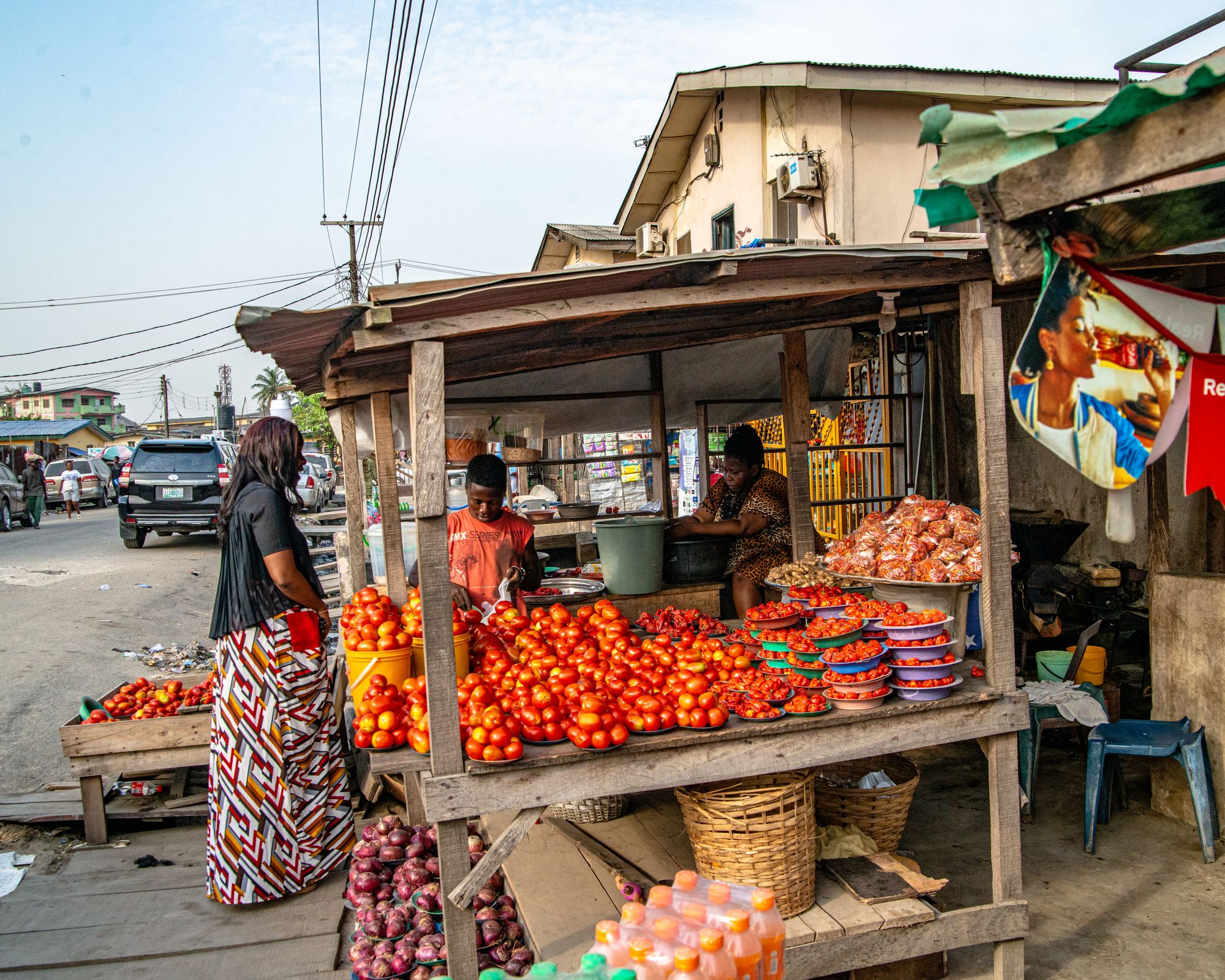
01What the Ngara fruit market actually is
Ngara fruit market is a wholesale produce trade that runs in the dark, not a sightseeing stop with a gate and an opening hour. It sits beside the Globe roundabout on the CBD's northern edge, where the streets of the centre loosen and the roads north begin. The trade is fruit and vegetables by the crate, moved between growers, wholesalers and the kitchens and stalls that will sell them the same day. It is the earliest working hour in the centre that a visitor can watch, and that is exactly why it is on this list.
What you are looking at is a working floor, not a market built for browsing. Crates arrive, are sorted, priced in conversation, and carried away. The people around you are traders, porters, cooks and drivers who have been at it since before the light. That is the point of coming: not to shop at leisure but to see a trade that is finished before the offices on Kenyatta Avenue have opened their doors. The reward is the activity itself, and a breakfast at the edge when the trade thins.
This is not a leisure market of the kind found in a tourist quarter. There are no fixed stalls with souvenirs, no card readers, no café seating in the middle of the floor. The produce is the product, and it is sold in quantities and at speeds that assume you know what you are doing. Come expecting to stand clear, watch, and ask before touching anything. Come knowing that the market's rhythm belongs to the traders, not to a visitor timetable, and that the four-to-seven window is a pattern rather than a promise.
02What there is to see and do
The market rewards attention rather than participation. You are there to watch a trade at its busiest, and the best thing to do is to stand at the edge of the floor, keep out of the loading line, and let the movement happen around you. The produce itself is the main event: fruit and vegetables arriving by the crate, sorted and passed hand to hand in the half-light. Look at how the crates are stacked and how quickly the floor clears. That clearing is the thing to witness, because it is the market's whole character.
Breakfast at the edge is the second reason to come. The stalls around the fruit market feed the traders at the end of their working night, which makes the food plain, fast and suited to people who have been on their feet for hours. This is not a leisurely meal and it is not a menu to study. It is the kind of eating that happens alongside a working trade, and it is gone by mid-morning. If you eat, eat where the traders eat, and treat the stall as part of the market rather than a separate attraction.
The surrounding streets give the visit its shape. Ngara Road runs from the fruit and vegetable trade at its southern end into shops and flats beyond, busy from before dawn. The Globe roundabout is the quarter's northern hinge, a flyover above and traffic below, and it marks the practical northern limit of the centre on foot. Between the market floor and the roundabout there is enough to fill the hour, and the walk between them is where you see how the trade sits inside a residential district rather than beside it.
The produce itself
Mangoes and other fruit by the crate, sold wholesale to traders who take it back out into the city. This is a working trade floor rather than a stall market laid on for visitors, and the volume moves with the harvest.
Breakfast at the edge
The stalls around the market feed the traders at the end of their working night. It is the best breakfast in the quarter and it is gone by mid-morning, so it belongs to the same early alarm as the market.
Ngara Road and the flats
Beyond the produce trade the road turns into shops and dense residential blocks. Ngara has long carried Indian and, more recently, Somali commercial life, which shows in the eating along its main roads.
The Globe roundabout
The flyover above and the traffic below mark the northern limit of the CBD on foot. The roundabout is the hinge between the market quarter and the roads heading north, and it is a road interchange before it is a place.
03Reaching it from the grid
The market is on the northern edge of the CBD, at the Globe roundabout, and the approach from the centre is straightforward on foot until the junctions. From Kenyatta Avenue at Moi Avenue the distance is 0.81 km, about 11 min of walking in ordinary conditions. That number assumes you stay on the pavement and take the crossings as they come. The route runs north through the grid, past the market quarter, and the character changes as you go: shops and offices give way to denser residential streets and then to the roundabout itself.
The junctions are the part to take seriously. The Globe roundabout and Ngara Road are built for vehicles, and the traffic does not slow for pedestrians. Cross by the marked crossings rather than the shortest line, even where the shortest line looks obvious. The pavements exist, but this is a transport edge rather than a walking quarter, and the last stretch is where that becomes clear. A pre-dawn visit is easier by car, because the streets are dark and the crossings are harder to read; a car for the museum up the hill saves less than it seems.
If you are coming for the market's early hours, arrange the ride rather than improvising one. Public transport along the northern roads runs, but the market's own rhythm begins before the ordinary commuter day, and the return is the part people underestimate: by the time the trade is finished, the centre is starting its own morning and the roads are filling. Agree the fare before you get in, and agree the meeting point for the return before you leave the vehicle. The walk back down into the grid is easy enough in daylight, and the crossings are the same ones you used on the way up.
04Before you go, and the honest caveat
Sort out the practical things before you set an alarm. Go with someone who knows the market, and carry small notes only: there are no card readers and no cash machine on the produce floor. Agree what you are buying and how much before money changes hands, rather than after the crate is already in your hands. The market is a working trade floor, so keep clear of the loading and the crates, and ask before pointing a camera at anyone. The four-to-seven window is the market's own rhythm; confirm current trading days and volumes, which move with the season and the harvest. Cross the Globe roundabout and Ngara Road by the marked crossings, not the shortest line: the junctions are built for vehicles and the traffic does not slow for pedestrians.
What this page will not print: no opening hour, no closing hour and no price appears here. The market's trading window is set by the traders and shifts with the season, the harvest and the day of the week, and any figure printed for produce would be out of date before it was read. Ask at the market, or ask whoever is taking you, and treat the four-to-seven window as a pattern rather than a timetable. That is not caution for its own sake. It is the only honest way to describe a trade floor whose hours belong to the people working on it.
This page is compiled from published information and the site's own checks rather than from a visit. Nothing here was timed, counted or measured on the ground by anyone writing it, and no writer has stood on the produce floor. Opening arrangements and anything that moves week to week are not printed here, because they are set by the operators and the traders and they change. What is printed is the shape of the place and the questions worth asking before you go. Treat the details you find on arrival as the current ones, and treat anything that looks like a fixed schedule as something to confirm.
- Go with someone who knows the market, and carry small notes only: there are no card readers and no cash machine on the produce floor.
- Agree what you are buying and how much before money changes hands, rather than after the crate is already in your hands.
- The market is a working trade floor, so keep clear of the loading and the crates, and ask before pointing a camera at anyone.
- The four-to-seven window is the market's own rhythm; confirm current trading days and volumes, which move with the season and the harvest.
- Cross the Globe roundabout and Ngara Road by the marked crossings, not the shortest line: the junctions are built for vehicles and the traffic does not slow for pedestrians.
What this page will not print
No opening hour, no closing hour and no price appears here. The market's trading window is set by the traders and shifts with the season, the harvest and the day of the week, and any figure printed for produce would be out of date before it was read. Ask at the market, or ask whoever is taking you, and treat the four-to-seven window as a pattern rather than a timetable.
05Who it suits, and the verdict
This suits early risers who want to see a working trade rather than a curated attraction. It suits travellers who are content to stand at the edge of something and watch it function, and who will accept that the reward is the activity itself rather than a display put on for them. It suits anyone staying in the centre who wants one honest hour in the northern edge before the day begins, and who is willing to go with someone who knows the market. If the appeal of a market is browsing at leisure, this is not that market.
It does not suit late risers, and it does not suit anyone hoping to turn up alone and be guided through. There is no visitor desk, no interpretation board and no route marked out for you. It does not suit a family outing built around shopping, because the trade is wholesale and the floor is a working one. It does not suit anyone who needs a printed timetable to commit, because the market's window belongs to the traders and moves with the season and the harvest. And it does not suit a visit made without cash, since the produce floor has no card readers and no machine.
The verdict is that this is worth the alarm if you accept it on its own terms. Go with someone who knows the market, carry small notes, keep clear of the loading, and treat the four-to-seven window as a pattern rather than a timetable. Get the crossings right at the Globe roundabout and Ngara Road, and confirm the current trading days before you commit. This site would send a first visit to the market floor and then to breakfast at the edge, and would send anyone who wants a gentler northern-edge morning up Museum Hill instead. The market is the earliest working hour in the centre, and it is best seen as exactly that.
Where this page comes from
Desk research, not fieldwork. Nobody writing this stood on the corner with a stopwatch, and a page that implied otherwise would be the least trustworthy thing on the site. The specifics above came from here:
- Market hours: the published trading pattern of the Ngara wholesale market.
- Ngara market trading hours: Nairobi City County market information.
- Distances and walking minutes: computed from published coordinates, direct line at 4.8 km/h.
Opening hours, ticketing and market days change. No hotel or operator pays to appear here.
06Questions
Can I just turn up at the market on my own?+
You can, but the site's own guidance is to go with someone who knows it. The trade is wholesale, conducted quickly and in the dark, and a first visit without a familiar face is a poor introduction. If nobody in your party knows Ngara, arrange a guide or tag along with a trader.
What time of day should I aim for?+
Trading starts in the dark and the market is finished before the offices open, so the visit belongs to an early alarm rather than a morning out. This page does not print an opening hour because the market sets its own and it moves. Confirm the current pattern locally the day before.
Is there anything to eat there?+
Yes, and it is the reason many people rate the quarter. The stalls around the edge of the market feed the traders as their working night ends, which makes for the best breakfast in Ngara. They wind up by mid-morning, so eat early or not at all.
How do I get there from the centre?+
It is 0.81 km from Kenyatta Avenue at Moi Avenue, about 11 min on the direct line, and the Globe roundabout is the practical northern limit of the CBD on foot. Before dawn a car makes more sense than the walk. The pedestrian route is indirect, so use the crossings.
Should I carry cash?+
Carry small notes and nothing larger than you are willing to lose. This is a cash trade floor with no card readers and no cash machine, and change for a large note is a problem rather than a convenience. Keep the rest of your money out of sight.