01What the basilica actually is
Holy Family Basilica is the Catholic cathedral of Nairobi, the seat of the archbishop and the parish church of the city centre. It stands on the north side of City Square, facing the open paving and the Kenyatta International Convention Centre, and it belongs to that set piece rather than to the tourist circuit. This is not a monument kept behind a rope: it is a working church with a congregation that fills it several times over on a Sunday, and the building has to serve that before it serves anyone with a camera. That dual role is the first thing to understand, because it explains almost everything about how the place behaves through the week.
The present building is a 1960s hall, raised on the site of an earlier church and completed to serve a growing city. The date matters because it fixes the style: this is concrete modernism at its most confident and least decorative, shaped by the same moment that produced the conference centre opposite. Where a European cathedral of the same rank would carry centuries of accumulated chapels, tombs and side altars, Holy Family carries one big idea carried through at scale. It holds roughly four thousand people, which makes it one of the largest covered interiors in the central business district and the only one you can walk into without an appointment.
So why is it on this list at all? Because it is free, it is central, and it offers something the surrounding civic buildings do not: a large, quiet, airy interior that anyone can enter. The Parliament Buildings need an arrangement, the Supreme Court keeps its own visiting rules, and the KICC deck depends on weather and state events. The basilica asks only that you are not interrupting worship. For a district made of offices, courts and conference halls, that is a rare thing, and it sits within a short walk of the avenue at the middle of the grid.
It also completes the square. The paving, the flags, the mausoleum and the cathedral were placed together and read together. Treat the basilica as the indoor half of the City Square outing and the quarter makes more sense: you look at the tower, you look at the state buildings, and then you step out of the glare into the one civic interior that admits you. That is the case for the visit, and it is a strong one, provided you accept that you are a guest in a parish rather than a ticket holder at an attraction.
02What to look at once inside
The reward is the volume. From the doors, the nave opens as a single concrete envelope with no forest of columns to break it up, and that is the effect the architects were after. Everything else in the building is subordinate to it. Light comes in high and along the sides, so the interior shifts through the day without ever becoming dark. Do not rush the first thirty seconds: stand at the back and let the scale land, because that is the one thing no photograph of the exterior prepares you for.
The side aisles and chapels are where the parish life shows. This is where you find the smaller altars, the devotional corners and the notices that tell you what is actually happening that week. They are also where the building is most human: a cathedral this size can feel institutional in the nave and domestic at the edges, and the edges are worth the walk. If a mass or a funeral is under way in a chapel, give it a wide berth and come back; the main hall may be free while a side space is not.
The concrete itself repays attention. This is a period piece, and the finish, the window openings and the way the roof meets the walls are all of their moment. A visitor interested in twentieth century church building will find more here than a visitor looking for gold leaf, and there is no shame in that: the honesty of the material is the decoration. Look up at the ceiling, look at how daylight is admitted, and look at the plainness of the sanctuary, which is deliberate rather than unfinished.
The square outside is the last part of the visit and in some ways the easiest. Photography is more comfortable there than in the nave, the light is better for most of the day, and the view back at the cathedral with the conference centre above it is the shot that explains the quarter. The square is also where the building reads as architecture rather than as interior, and the arrangement of paving, steps and frontage is clearer from the far side of the open space than from the doors. Finish outside, not inside.
The main hall
A single pale volume under a high ceiling, seating several thousand. Empty on a weekday afternoon it reads as enormous; the proportions are the point, not the furnishings.
Light and concrete
The 1960s handling of concrete and daylight is the reason architecture-minded visitors come. Look at how the ceiling meets the walls and where the light lands.
Chapels and side aisles
Smaller spaces run alongside the main hall for private prayer. Keep to the routes that are open and stay quiet where people are praying.
The square outside
The basilica faces the open paving of City Square, with the KICC tower directly above. Step back across the square to see the frontage as a whole.
03Reaching it on foot from the grid
The approach is short. From the junction of Kenyatta Avenue and Moi Avenue the basilica stands a little over half a kilometre away, which on the flat is around seven minutes at an ordinary pace. That is the route to take, because the last stretch crosses the square itself, which is closed to through traffic and has the best walking surface in the centre. You come off the avenue, head towards the civic block, and the cathedral frontage appears on the far side of the paving with the tower behind it. Nothing about the walk is difficult, and the whole of it is on pavement.
If you are coming from further east, or from the railway side, the sensible thing is to aim for Kenyatta Avenue first and then follow it west towards the square. That keeps you on the main commercial street and avoids the awkward crossings around the law courts. From the west, along Uhuru Highway, Parliament Road is the quieter way in but is fenced for much of its length, so it gives you distance rather than access. Whichever direction you arrive from, the square is the destination: once you are standing on the open paving you have effectively arrived.
Taxis and matatus will drop at the edges of the block rather than at the doors, because vehicles are kept off the square. Agree the fare before you get on, and be clear that the drop is City Square rather than the convention centre entrance, which are close but not the same point. For most people arriving in the district, walking is faster than any ride over the last stretch, and the district is compact enough that the decision is easy. Save the vehicle for the rain, and even then expect to walk the final few minutes.
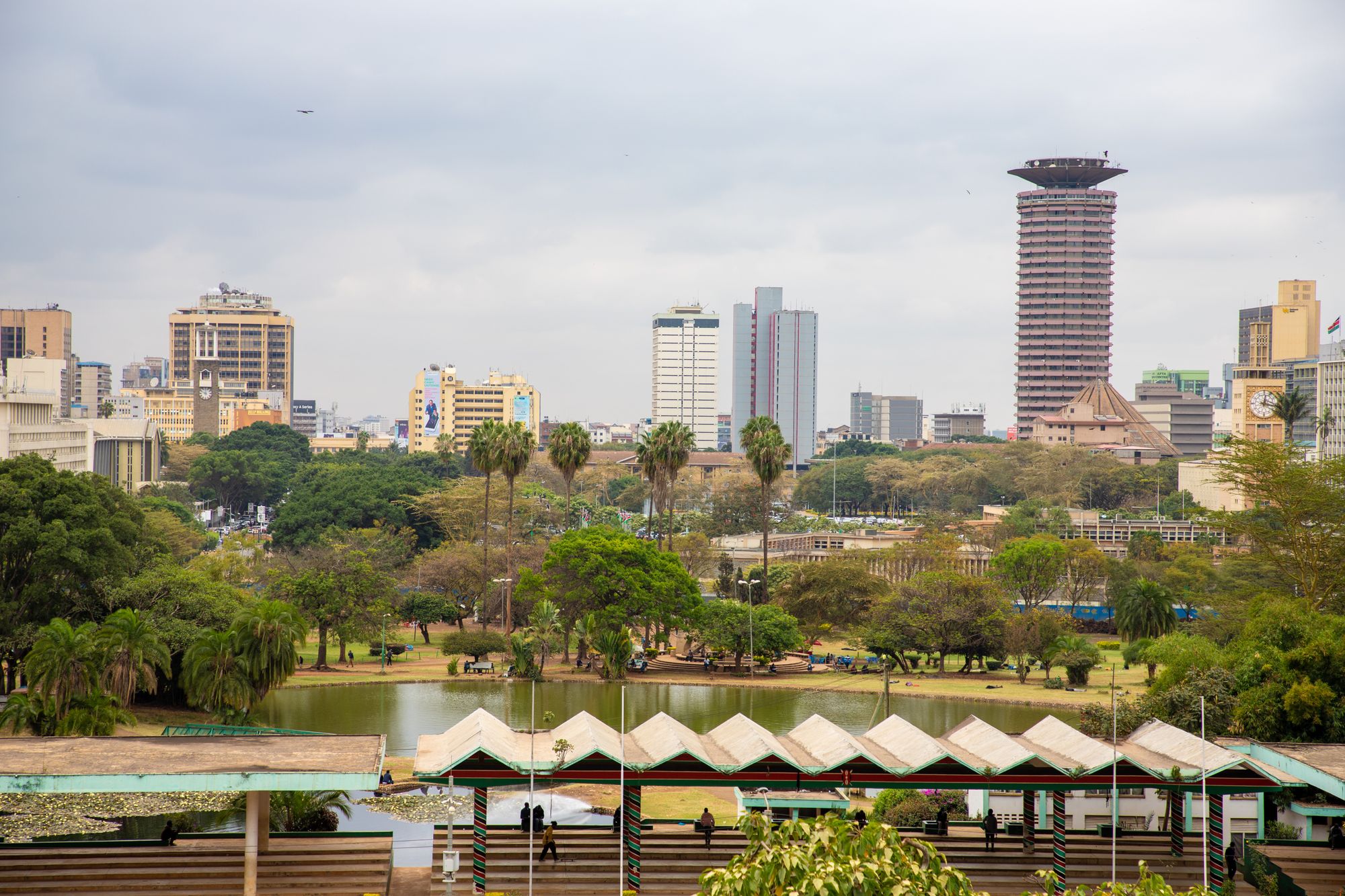
The walk is worth doing for its own sake. This is the one part of the central business district that was planned as a set piece, and the sequence, tower, flagpoles, state buildings, cathedral, is designed to be experienced on foot in that order. Approaching from the avenue you get the whole composition rather than a single facade, and the cathedral benefits from the approach because it is the closing element on the north side. Take the walk. A ride to the door would skip the part of the quarter that actually works.
04Sorting the visit before you go
There is very little to arrange in advance, and that is part of the appeal. No ticket desk, no booking, no slot to reserve. The label on this page is Free, and it means what it says: you walk in, provided the doors are open and nothing is being held. What you cannot do is turn up at a set hour and assume the building is yours, because the calendar is a parish calendar and it moves. A wedding at midday will close the nave as firmly as a locked door, and no printed timetable survives contact with a real week in a busy city parish.
The practical points are few and worth taking seriously. Dress modestly, because this is an active Catholic parish rather than a heritage site with a turnstile, and the congregation will notice. Keep the camera for the square unless the interior is genuinely quiet and nobody is at prayer. If a service is starting, wait outside or come back later; a building this size empties and refills quickly, so the wait is rarely long. If the KICC deck is part of the same outing, carry identification, because the lift desk asks for it and the two visits pair naturally.
This page is compiled from published information and the site's own checks rather than from a visit, and opening arrangements and anything that moves week to week are not printed here. That is a deliberate limit. Service times, funeral schedules and archdiocese events all change, and a printed hour would be wrong within weeks. Check the parish notice board or the archdiocese listing for the day, and treat the middle of a weekday afternoon as the likeliest quiet window between services. That is the honest answer, and it is more useful than a timetable that lies.
For anything that does move, the notice board at the church and the archdiocese listing are the two sources that actually know. Ask there rather than relying on any page, including this one. If you are planning around a specific occasion, a weekday mass, a Sunday, a funeral, the safest approach is to arrive without a fixed expectation and adapt: if the main hall is occupied, the square, the chapels and the rest of the civic block will absorb the time, and the cathedral will still be there when the service ends.
- Services take priority over sightseeing: if one is starting, wait, or come back another time.
- Dress modestly, since this is an active Catholic parish and not a heritage site with a turnstile.
- Check the parish notice board or the archdiocese listing for that day's service times before setting out.
- Photograph the interior only if it is quiet and nobody is at prayer; the square outside is easier.
- Carry identification if the KICC deck is part of the same outing, since the lift desk asks for it.
Why no hours are printed
The basilica is a working parish, so its doors follow mass, funerals, weddings and the archdiocese's calendar rather than a visitor timetable. Opening and closing times therefore change, and a printed hour would be wrong within weeks. Check the parish notice board or the archdiocese listing on the day, and treat the middle of a weekday afternoon as the likeliest quiet window between services.
05Who it suits, and the verdict
This suits the traveller already in the centre with an hour to spare and an interest in buildings, and it suits anyone combining the civic landmarks into one walk. It suits people who want a large, calm interior without paying or booking, and it suits visitors who understand that a working church is not a museum and are content to be quiet guests. It does not suit anyone treating it as a ticketed attraction with a fixed tour, and it does not suit a group needing guaranteed access at a guaranteed time. If you need certainty, the KICC deck, with its desk and its lift, is the more predictable stop in the quarter.
The verdict is straightforward: go, and go on a weekday afternoon if you can. The building is free, central and genuinely rewarding, and the contrast between the concrete hall and the surrounding state architecture is the thing worth seeing. The one condition is behaviour, not timing. Treat the visit as an interruption of the parish's day rather than a fixture on yours, and the basilica gives you the best interior in the central business district for the cost of a short walk. Few places in the centre are that generous.
Pair it, and the day stands up. The KICC rooftop deck is steps away and gives the view; Parliament, the Supreme Court and City Hall give the institutional circuit; the mausoleum is looked at from outside the railing. The whole block is walkable in an afternoon, and Holy Family is the natural pause in the middle of it. If the conference centre is busy or the weather has closed the deck, the basilica is the reliable half of the outing, and it is the half that costs nothing but attention. That is the recommendation.
The one thing not to do is treat it as a quick photo stop between two other stops. The exterior is modest and the reward is inside, and the inside asks for a few minutes of stillness. Give it thirty minutes and it pays back; give it two and you have seen a concrete frontage and nothing else. The site would send a first visit here only after the tower, because the tower is the reason people come to City Square, but it would send them here without hesitation, and it would send them on foot.
Where this page comes from
Desk research, not fieldwork. Nobody writing this stood on the corner with a stopwatch, and a page that implied otherwise would be the least trustworthy thing on the site. The specifics above came from here:
- Holy Family Basilica: Archdiocese of Nairobi parish information.
- Basilica and mausoleum dates: published architectural histories of the square.
- Distances and walking minutes: computed from published coordinates, direct line at 4.8 km/h.
Opening hours, ticketing and market days change. No hotel or operator pays to appear here.
06Questions
Can I go inside if I am not Catholic?+
Yes, as a visitor, provided you respect the space and any service in progress. Entry is by the door facing the square, and the same modest dress expected in any active church applies. If mass is under way, sit at the back or return later.
Is there a ticket or an entry fee?+
No ticket desk sells admission to the basilica; it is listed here as Free. If a collection is taken during a service, that is a congregation's offering rather than an entrance charge. Anything relating to a parish event is arranged with the parish directly.
How do I get there from Kenyatta Avenue?+
Walk towards City Square; the basilica fronts the open paving, a short walk of roughly 7 min and about 0.53 km from the avenue at Moi Avenue. Vehicles are kept off the square itself, so the approach is on foot. Keep the KICC cylinder in view as your landmark.
When is it quietest?+
A weekday afternoon between services is the emptiest the hall gets. Sunday mornings are full, and any wedding or funeral will fill it at short notice. The parish notice board and the archdiocese listing are the reliable source for what is on that day.
What else is close by?+
The KICC rooftop deck, Parliament Buildings, the Supreme Court and the Kenyatta mausoleum all sit around the same square. The basilica works as one stop on a short civic walk rather than a destination on its own. Allow the rest of the morning or afternoon for the rest of the block.