01What happened
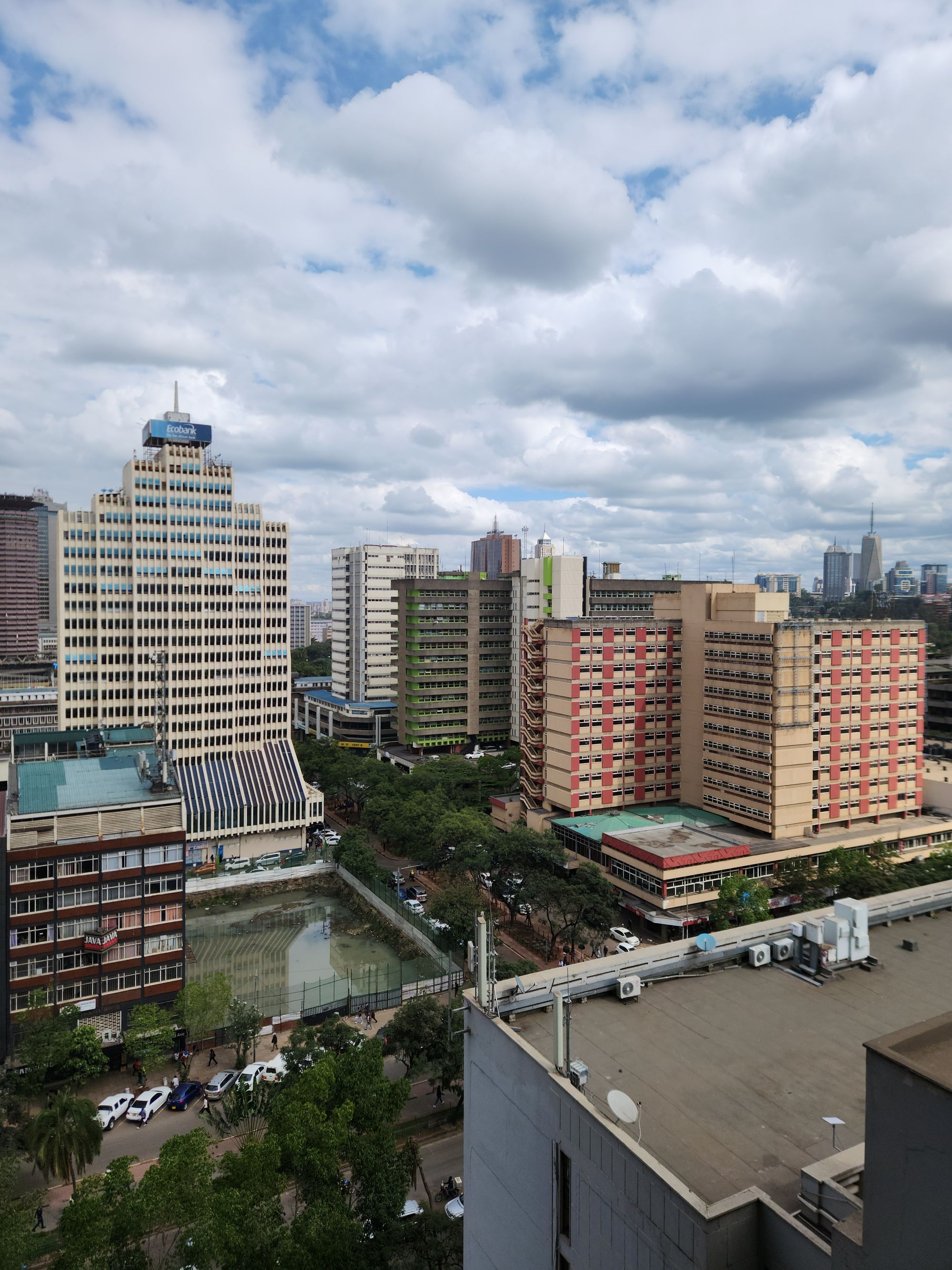
For most of the twentieth century the CBD was the only address in Nairobi that mattered: the banks, the ministries, the airlines and the corporations were all inside the grid, and the grid was built for them. From the early 2000s, new office construction moved decisively to the ridge at Upper Hill and then west to Westlands, and the tenants followed.
The reasons are unglamorous and mostly about cars. New towers on the ridge could be built with basement parking at a scale the old grid cannot retrofit. They had floorplates that suited modern office layouts. And they sat closer to the expressway ramps and to where senior staff actually live, which is west and north of the centre rather than east of it.
02What that left in the grid
Retail, at volume
Ground floors that once held bank branches and airline desks now hold phone shops, pharmacies, tailors and salons. The density of small business at street level in the CBD is higher than it has ever been.
Older hotel stock
The full-service hotels built for the business traveller are still on and around Kenyatta Avenue, now competing with newer towers on the ridge. Their location remains the strongest thing about them.
Government, unmoved
Parliament, the courts, City Hall and the ministries are all still in the grid and are not going anywhere, which keeps the civic quarter working.
An evening vacuum
With the office population commuting out and no residential base commuting in, the centre empties at seven. This is the single thing a visitor notices most.
03What comes next
The counter-move that most large cities eventually make is residential: converting office floors to flats so that the centre has a population in the evening. In Nairobi that conversation is underway rather than resolved, and the constraint is the same one that pushed the offices out, which is that the grid was not built for the way people now arrive and park.
For anyone reading this in order to book a room, the practical summary is short. The CBD is the best place in Nairobi to spend a day on foot and one of the quietest places in it to spend an evening, and both of those facts have the same cause.
Sourcing note
The pattern described here is drawn from published commercial property research and from the public record of where new towers were built and when. No figure in this post is a measurement of anybody’s rent roll.
04What the ridge offered that the grid could not
A developer deciding between the grid and the ridge is weighing three things that have nothing to do with the view. The first is floorplate. A modern tenant wants a column-free span deep enough to fit a trading floor or an open-plan office, and a service core that does not eat the lettable area. Buildings put up in the grid between the 1950s and the 1980s were designed around cellular offices and light wells, and their structural grids cannot be widened without taking the building down. On the ridge a developer starts from an empty plot, sets the column grid to what the market now wants, and clears the ceiling height for the raised floors and the ducting that a bank or a call centre needs.
The second is the car, and it is the decisive one. The old grid was laid out when the number of vehicles in the centre was counted in the hundreds and parking happened on the street. Basement parking cannot be retrofitted under buildings whose foundations were never cut for it, and the plots are too small and too hemmed in to excavate beneath. On the ridge there is rock and open land, and a tower can be given several basement levels, a ramp wide enough for two-way traffic and a drop-off loop clear of the road. A tenant with a head office on the ridge can offer its staff and its visitors parking as part of the lease.
The third is the airport and the region. Upper Hill and Westlands sit against the expressway and its ramps, which puts the international airport and the northern suburbs on a plausible run, and they sit closer to where senior staff actually live: the western and northern neighbourhoods, not the east of the centre. The grid's advantage was that everyone was already there. Once the decision-makers had moved out to the western suburbs, an office in the grid meant a cross-city commute for the people whose time is priced highest. The expressway converted that geography into a hard commercial fact rather than a preference.
None of this was a judgement on the CBD as a place. It was a judgement on a building stock that could not be moved, on plots that could not be enlarged and on roads that could not be widened. The offices went where the concrete, the parking and the geography allowed, and the grid kept the tenants that value a counter, a licence and a walk-in trade more than they value a basement bay. That distinction is what explains everything that has happened to the ground floors since, and it is the reason the district did not empty when the head offices left.
05What moved into the ground floors
What a departing bank leaves behind is a hall with a high ceiling, a strong floor, a shop window onto a main street and a position at a junction that the whole city passes. That is a very good retail unit, and the market has treated it as one. Where a single tenant once had a banking hall, there are now several: a phone dealer, a pharmacy, a bureau de change, a tailor, an insurance agent selling from a counter by the door, and a stairwell arcade above them splitting the upper floors into smaller and smaller offices. The CBD ran out of ground floor before it ran out of demand for it.
The effect on footfall is cumulative. Each of those units generates its own visits, and the visits are much more frequent than the ones the bank generated. A bank branch brought a customer once a month and made them queue. A phone shop, a chemist and a money changer bring the same person in several times a month, and often on foot from a bus stop four streets away. Multiply that across the blocks between Moi Avenue and Kenyatta Avenue and the pavements carry a volume of pedestrians that the district did not see when the ground floors were bank halls with a doorman.
Commercial rent follows the footfall. The office floors above have gone soft, with vacancies absorbed slowly and leases signed shorter, while the ground floors have held and in places firmed, because the businesses that want them are trading on cash and cannot function anywhere else in the city. That is why the district looks busier at eye level than it did twenty years ago while the upper floors look quieter. The two facts are not in tension. They are the same fact seen at two heights.
The trade is also more varied than the banking era allowed. Money transfer agents, phone repair, tailoring, fabric, cosmetics, stationery and cooked food all cluster where they can share the walk-in traffic. The Indian retail and lunch-counter tradition along these streets survived the change and in places grew with it. The reason the district's street trade is denser now is not that it reinvented itself: it is that the ground floor was freed up at scale, cheaply, in the one part of the city where pedestrians were already guaranteed.
06What this means for choosing where to sleep
The office move is why the CBD's hotel stock is what it is. The large full-service hotels in the grid were built for the banking and government trade and were not replaced when that trade thinned. They have large rooms, deep service and low rates for the standard on offer, and their reviews say the same two things repeatedly: the service and the position hold up, the rooms read as a decade older than the price suggests. A traveller who values a central address and a reliable breakfast is getting the better half of that trade.
The consequence for an evening is the part that catches people out. The pavements that are fullest in the country in daylight are among the emptiest in the centre after the offices close, and the restaurants attached to the older hotels are often the only lit rooms on the block. That is not a warning, it is a fact about where the customers went. If an evening out is part of the trip, the grid is the wrong base and the ridge or Westlands is the right one, and the fix is a booked ride in both directions rather than a stroll.
For a work trip the calculation is usually the reverse. If the day is meetings in the grid, a room in the grid removes a commute and puts the Archives, the KICC deck, the memorial park and the market quarter inside a walk. If the day is a conference on the ridge, the ridge wins outright and the CBD becomes a place to visit rather than to sleep. Booking the wrong one for the itinerary costs more time than the difference in room quality ever returns.
Two practical points decide the rest. Ask about street noise, because the units that face the busy avenues carry it late, and a courtyard or high-floor room changes the night. Ask where you will eat in the evening and how you will get back, and book the ride rather than relying on finding one. Then treat the district as the daytime city it now is: the whole grid is walkable in a morning, and the office exodus is precisely what made its pavements so easy to use.
Work meetings in the grid
Stay in the grid and walk to them. The older full-service hotels put the banks and ministries on your doorstep and take the commute out of the day.
A conference on the ridge
Base on the ridge instead. The grid becomes a half-day visit, and the expressway ramp is the reason the airport run is faster from up there.
An evening out matters
Base west, in Westlands or on the ridge. The CBD empties with the offices and the ride back matters more than the venue.
A day of central sightseeing
The CBD works well. The Archives, the KICC deck and the memorial park sit inside a short walk of one another in daylight.
Where this page comes from
Desk research, not fieldwork. Nobody writing this stood on the corner with a stopwatch, and a page that implied otherwise would be the least trustworthy thing on the site. The specifics above came from here:
- Office market shift: published Nairobi commercial property research from the major agencies.
- Construction dates and locations: the public building record.
- Expressway ramps: Nairobi Expressway operator information.
- Office market shift: published Nairobi commercial property research from the major agencies.
- CBD office relocation: published commercial property research on the ridge and Westlands.
Opening hours, ticketing and market days change. No hotel or operator pays to appear here.
07Questions
Does this make the CBD a worse place to stay?+
It makes it a quieter one in the evening and a cheaper one relative to the ridge. For a daytime-walking trip it is still the best address in the city.
Is the CBD in decline?+
Its office role is diminished and its retail role is larger than ever. Decline is the wrong word for a district with that much street-level trade.
Where would a work trip stay instead?+
Upper Hill, for the towers, the meeting floors and the expressway ramp.
Why are the CBD's pavements busier than they were when the banks were here?+
Because a bank branch brought one customer on a slow errand and a phone shop, chemist or money changer brings the same person back several times a month. Freeing the ground floors created many small walk-in businesses where there had been a few large ones, and their footfall compounds along the same blocks.
Should a first-time visitor stay in the CBD or on the ridge?+
The honest answer depends on the day you are booking around. If the work is in the grid, staying in the grid removes a commute and puts the sights within a walk. If the work is on the ridge, staying there saves more time than anything the centre adds, and the CBD becomes a daytime visit.