01Where the office crowd eats
Standard Street and Mama Ngina Street are the two short connectors between the bank towers where the centre's lunch trade concentrates. In the middle of the day they fill with office workers, and the kitchens along them turn over fast. This page sorts the easiest hot lunch in the centre to walk into by kind rather than by name, because the names move with the office leases and a page that clings to them dates badly. The point is to give you a way to read the two streets on the day you are there, not a list to tick off. The queue tells you more than any printed recommendation can, and it changes by the week.
The lunch trade here is a working trade, not a leisure one. People eat quickly, close to the desk, and go back. That shapes everything about the two streets: the counters are built for volume, the seating is tight, and the pace is set by the offices rather than by the kitchen. What that means for a visitor is simple: the food is reliable and the experience is not leisurely. If you want a long lunch with table service, this is the wrong quarter and the hotels are the honest answer. If you want to see the centre actually working, stand on Standard Street at the busiest part of the day.
The two streets sit between Kenyatta Avenue and the blocks to the south, so they are easy to fold into a walk that already includes the bank halls and the old Stanley corner. They are not destinations in themselves, which is exactly why they are worth ten minutes of your time. The office crowd is the best evidence of what the centre is for, and the lunch hour is when that evidence is on the pavement rather than behind glass. Come with no fixed idea of where you will eat, and let the queue and the smell from the grill decide.
One verdict before the detail: treat the middle of the day on these two streets as the most straightforward hot lunch in the CBD, and treat everything about it as provisional. Kitchens open and close with the tenants around them. A place that was full last month can be a shuttered shopfront now. The kinds of lunch below are stable; the particular counter is not. Read the street, not this page, when you get there.
02The kinds of lunch you can walk into
The canteen counter is the fastest option and the one most tied to the office day. It serves a set plate from a steam table or a pot, usually one or two main dishes with a starch, and it is built for people who need to be back at a desk. You will find these on the ground floors and in the basements of the blocks along both streets. They are not set up to break large notes, so carry small ones. The food is plain, hot and consistent, which is the whole point. Ask what the plate is before you take it, because what is cooking changes daily and there is no board to read.
The street grill is the option with the most visible theatre. A grill or a brazier is set up on the pavement, meat or maize is cooked to order, and the smoke does the advertising. This is the kind of lunch to take when you want to eat standing or on the move. Agree the price before the plate is served: at a grill the price is spoken, not displayed, and the figure can shift with the cut. The grill trades on foot traffic, so it appears and disappears with the office crowd and with the weather. It is the least formal and often the quickest thing on the two streets.
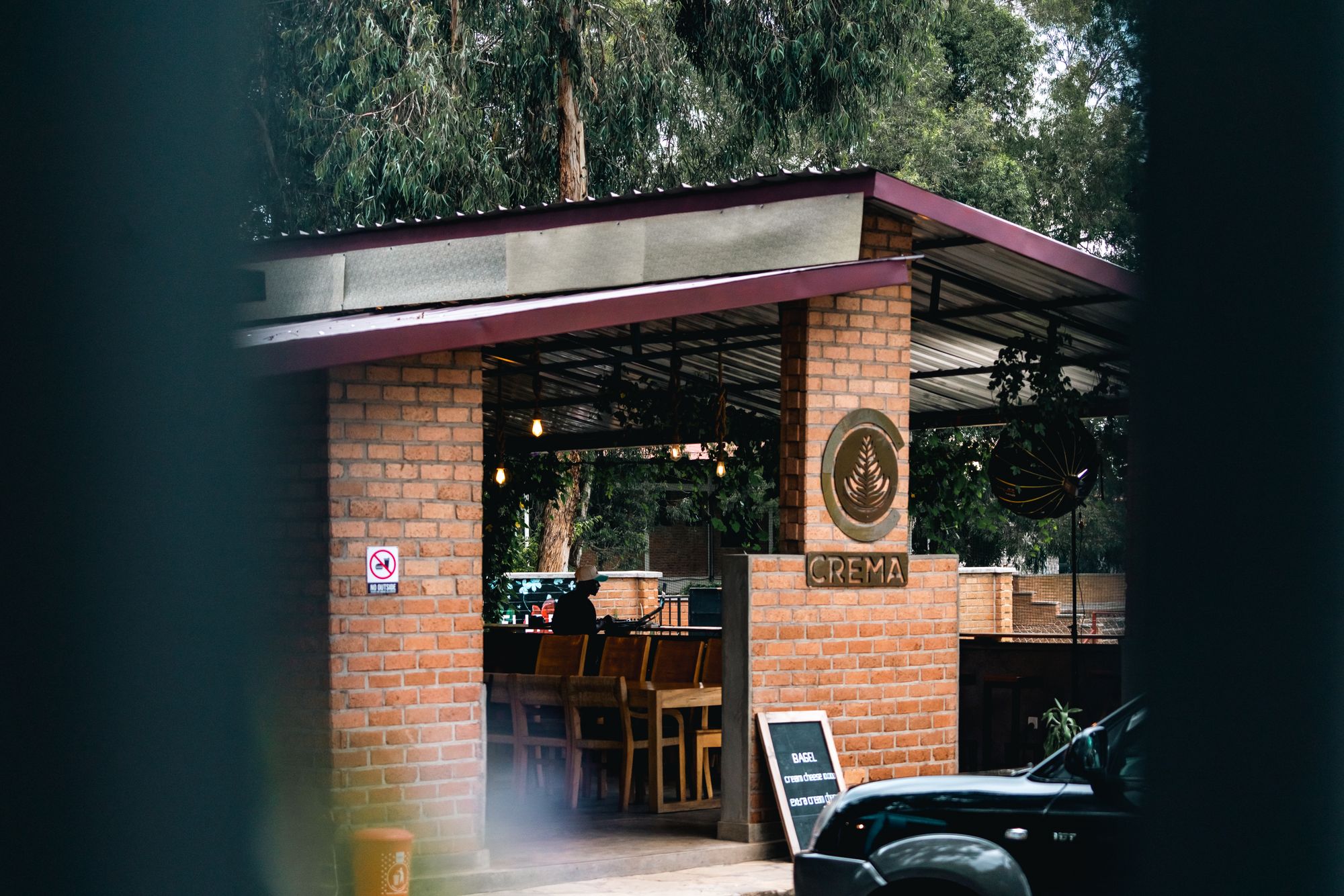
The coffee house is the slower option and the one that suits a sit-down break rather than a meal. The roasteries and coffee houses around Kimathi Street and the connectors cup their own lots and will brew you the grade the country used to ship. Food here tends to be lighter: pastries, sandwiches, a small hot dish. It is the right choice if you want a table, a socket and a little quiet in the middle of the day. It is also the most likely to be full when the offices empty for lunch, so the timing advice below matters most here.
The hotel dining room is the fallback when the streets are at their worst. The older full-service hotels in the centre keep restaurants that serve through the lunch hour with table service, air conditioning and space. It is not where the office crowd eats, and it is not the cheapest, but it is the option that does not depend on a queue or a spoken price. Use it when the connectors are impossibly full, when it is raining, or when you want a proper table. It is the one kind of lunch on this page that you can plan around rather than read off the street.
The canteen counter
The buffet-style counters behind the bank towers serve a set hot plate and move the queue quickly. This is the fastest sit-down lunch in the centre, and the one most likely to be full by half past twelve.
The street grill
Small grills along the connectors cook meat to order and hand it over in paper. Standing room mostly, and best before the office crowd arrives rather than after it.
The coffee house
The roasteries around Kimathi Street brew Kenyan grades that were long exported rather than drunk here. Lighter food, a table, and the only kind of lunch in the centre that is unhurried.
The hotel dining room
The older full-service hotels keep restaurants open through the lunch hour for delegates. The quietest room, the slowest service, and the option when the street is at its fullest.
03What this page cannot tell you
This page is compiled from published information and the site's own checks rather than from a visit. Nobody writing it has stood on Standard Street at the lunch hour or eaten at any of the counters described. Opening arrangements and anything that moves week to week are not printed here, because they move: which kitchen is trading, which grill is on the pavement, and which hotel restaurant is open to non-residents all change with the tenants and the season. The kinds of lunch are stable; the particular place is not. That is the honest limit of a page like this, and it is why no name and no price appears below.
The queue is the only reliable guide you will have on the day, and a page cannot read it for you. Go before the office crowd does, since the connectors fill in the middle of the day and the queue is longest then. Agree what you are paying before the plate is served at a street grill, where the price is spoken rather than displayed. Carry small notes for the canteen counters, which turn over quickly and are not set up to break large ones. Ask at your hotel desk which block is quiet that week, because the lunch trade shifts with the offices and not with any published list.
What follows is the page's own judgement, written impersonally. This site would send a first lunch to a canteen counter on one of the two streets, because it is the quickest way to eat where the centre eats. It would not send anyone to a street grill without agreeing the price first, and it would not promise any particular kitchen is still trading. The advice is about method, not about a venue. Read the street, ask the question, and make the decision on the pavement. That is the only approach that survives the churn of office leases.
No names, no prices. This page does not name a single cafe or canteen. Kitchens open and close with the office leases around them, and a name that was good when a page was written can be a shuttered shopfront by the time you arrive. No price is printed either, because the site has no price field and the plate is priced by whoever is cooking it that day. Walk the two streets, read the queue, and ask what a plate costs before you sit down.
- Go before the office crowd does, since the connectors fill in the middle of the day and the queue is longest then.
- Agree what you are paying before the plate is served at a street grill, where the price is spoken rather than displayed.
- Carry small notes for the canteen counters, which turn over quickly and are not set up to break large ones.
- Ask at your hotel desk which block is quiet that week, because the lunch trade shifts with the offices and not with any published list.
No names, no prices
This page does not name a single cafe or canteen. Kitchens open and close with the office leases around them, and a name that was good when a page was written can be a shuttered shopfront by the time you arrive. No price is printed either, because the site has no price field and the plate is priced by whoever is cooking it that day. Walk the two streets, read the queue, and ask what a plate costs before you sit down.
04How to use this on the day
Start by walking both streets before you choose. Standard Street and Mama Ngina Street are short, and a pass along each will show you which counters are trading, where the queue is forming and which grills are out. Do this well before the middle of the day if you can, because the picture changes once the offices empty. The walk costs you a few minutes and tells you more than any list. Decide by what you see: a full canteen counter and a smoking grill are better evidence than a printed recommendation, and both are gone or changed by the next month.
Match the kind of lunch to what you actually want. If you need to be somewhere soon, take the canteen counter and carry small notes. If you want to eat on the move and see the street, take the grill and agree the price first. If you want a table and a slower break, take the coffee house and go early. If the streets defeat you, take the hotel dining room and stop worrying about it. There is no single best answer on these two streets, only the answer that fits the hour you have and the queue in front of you.
Fold the lunch into a longer walk rather than making it the whole outing. The two streets sit off Kenyatta Avenue, so they pair naturally with the bank halls, the old Stanley corner and the pavements on the avenue itself. Eat, then walk the avenue west towards Uhuru Park or east towards the busier end. The centre is a working district and the lunch hour is the best time to see it working. A meal here is ten minutes of a longer walk, not a destination, and treating it that way is what makes it worthwhile.
Finally, hold it all loosely. Check the day you go rather than trusting any page, including this one. The lunch trade follows the offices, and the offices move. What is reliable is the shape of the thing: counters, grills, coffee houses and hotel dining rooms, all within a short walk of each other, all busiest in the middle of the day. Use that shape, ask your questions on the street, and let the queue decide. Anything more specific than that would be out of date before you arrived.
Where this page comes from
Desk research, not fieldwork. Nobody writing this stood on the corner with a stopwatch, and a page that implied otherwise would be the least trustworthy thing on the site. The specifics above came from here:
- Street naming and the colonial grid: Nairobi City County and National Archives published histories.
- Street-level guidance: hotel and operator advice, which is specific to the block and worth asking for.
- Office market shift: published Nairobi commercial property research from the major agencies.
Opening hours, ticketing and market days change. No hotel or operator pays to appear here.
05Questions
Can I change money on the avenue?+
Yes, and the bureaux and bank halls sit along Kenyatta Avenue within a short walk of the lunch streets. Bring identification, since the desks ask for it. Opening hours are set by each operator and move, so check the door rather than any page.
What time do the lunch streets fill up?+
The connectors fill in the middle of the day, and the rush is sharp rather than long. Arriving before it starts gets a seat and a shorter queue. No clock time is printed here because the pattern moves with the offices around them.
Is the centre walkable between these places?+
Yes. Standard Street and Mama Ngina Street both run off Kenyatta Avenue, which is the easiest line to hold on to. Pavements are wide and the junctions are signalled. The whole lunch run sits inside a few minutes on foot.
Should I eat in the centre after dark?+
No. The district is a working quarter and empties with the offices, and the lunch trade in particular is a daytime business. Eat in the hotel or take a car out to the ridge, and take a car back rather than walking.