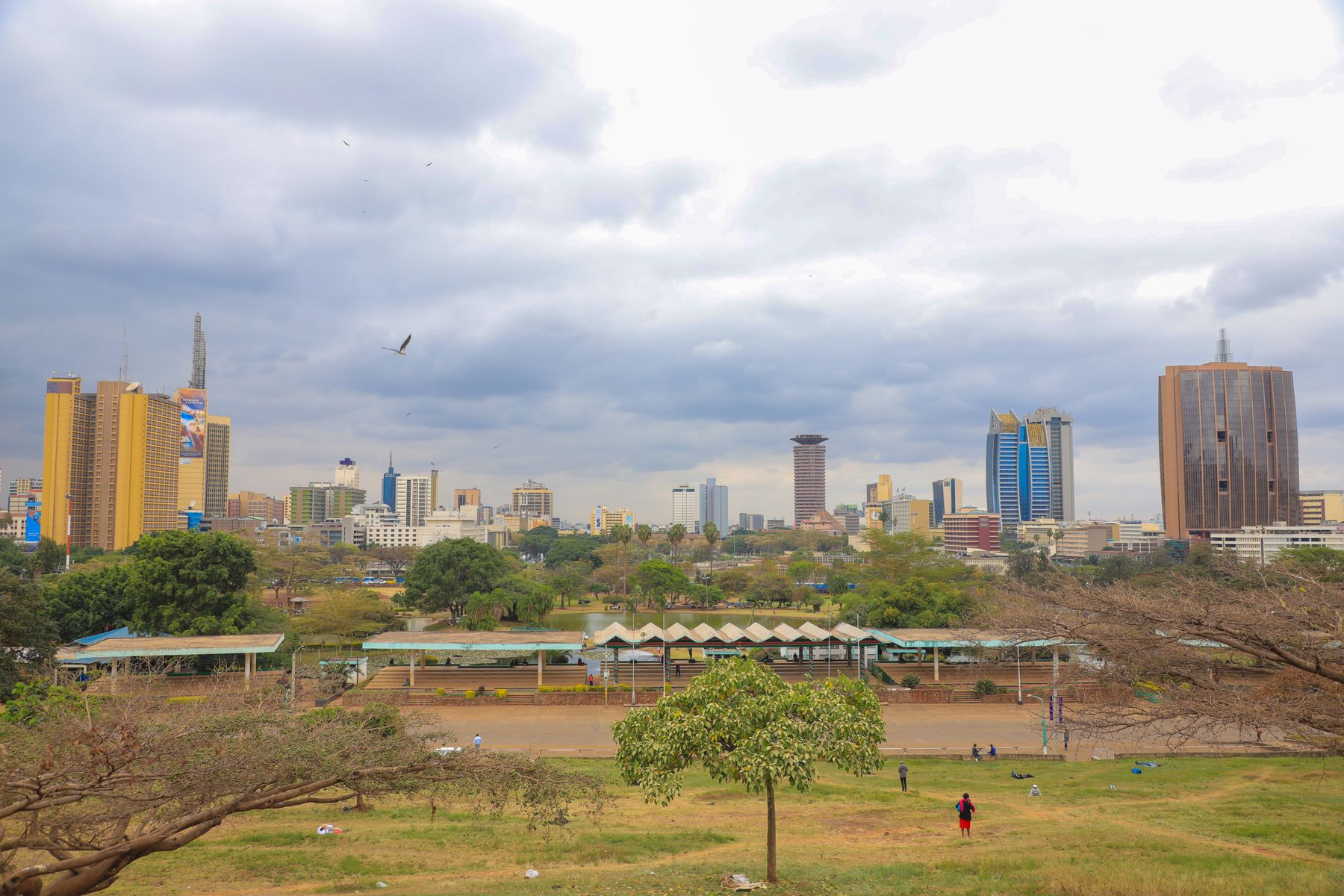
01Start at Kenyatta Avenue and the government quarter
Park or alight at the Central Bus Station side of Kenyatta Avenue and walk west towards Parliament Buildings. The stretch passes the Kenyatta International Convention Centre tower, the Attorney General's chambers and the quieter lawns around the All Saints Cathedral, a 1917 Gothic building on Kenyatta Avenue that is usually open to visitors in daylight hours. Two hours is genuinely enough for this block, but only if you move steadily: from KICC to the cathedral is roughly 700 metres, and the pavements are busy with matatus and hawkers between 8am and 9am and again from 5pm.
Weekday mornings before 10am are the calmest window. Security is visible around Parliament, so carry your passport or a copy, keep the camera down near government buildings and expect a bag check at KICC if you go up to the viewing deck. The deck itself takes about 30 minutes including the lift queue and is worth it in clear weather, particularly in January and February when the haze is thinner. Skip the deck in July and August afternoons, when cloud often closes in by 2pm.
02The Nairobi National Museum or the Railway Museum
You cannot do both in two hours, so choose. The Nairobi National Museum on Museum Hill is about 3.5 kilometres from Kenyatta Avenue; in light traffic that is a 10 to 15 minute taxi or a 20 minute walk up past the University of Nairobi. Allow 60 to 75 minutes inside. The human origins gallery and the Joy Adamson bird paintings are the parts most visitors remember, and the adjacent snake park adds 20 minutes if you have it. Entry sits in the modest low-hundreds-of-shillings band for non-residents.
The Nairobi Railway Museum off Haile Selassie Avenue is the better fit if you are short on time and on foot. It is 15 minutes' walk from the Central Bus Station, small enough to cover in 40 minutes, and the colonial-era locomotives and the old East African Railways carriages sit outdoors in a courtyard that children enjoy. I would book the National Museum if you have a car waiting and the Railway Museum if you are walking. Both are closed on some public holidays, so check before you set out.
03A coffee stop and a market detour
Coming back down towards the centre, the area around Kimathi Street and Muindi Mbingu Street has a dense cluster of coffee houses and simple lunch places where an espresso and a pastry cost far less than a hotel breakfast. This is also where you feel the city's commercial rhythm; the streets fill from 12.30pm as office workers head out. If you want one Nairobi souvenir and nothing else, the City Market on Muindi Mbingu Street sells crafts, fabric and produce, and 20 minutes is enough for a quick circuit.
I would not attempt the City Market on a first visit if you dislike bargaining, and I would not push a two-hour loop as far as Uhuru Park and back; the park is pleasant but the round trip from Kenyatta Avenue eats 40 minutes on foot alone. If you are staying centrally, choose a hotel within walking distance of Kenyatta Avenue or Kimathi Street, so the two-hour window starts when you step outside rather than when your taxi arrives.
04Getting around and timing your return
Central Nairobi is not a walking city in the way European capitals are, but this specific loop works because everything sits within roughly two kilometres. Use taxis for the museum leg and walk the rest. Traffic on Kenyatta Avenue, Haile Selassie Avenue and Mombasa Road peaks between 7am and 9am and again from 5pm to 7pm; a journey that takes 10 minutes at 11am can take 40 at 5.30pm. If you have a flight or a train from Nairobi Terminus in Syokimau, leave a full hour for the 20 kilometre run, more in the evening peak.
Rain changes the plan. The long rains arrive in April and May, usually as heavy afternoon downpours, and the short rains come in November. In those months, cut the outdoor stretch and give the extra time to the museum. The dry, cooler months of June to September and the warm, clear weeks of January and February are the easiest for a walking loop. Carry small notes for matatus and market stalls, and keep a copy of your passport rather than the original on the street.
Where this page comes from
Desk research, not fieldwork. Nobody writing this stood on the corner with a stopwatch, and a page that implied otherwise would be the least trustworthy thing on the site. The specifics above came from here:
- Written for this site by its editor. No outside source is claimed for it.
Opening hours, ticketing and market days change. No hotel or operator pays to appear here.
05Questions
Is two hours enough for Nairobi National Museum?+
Yes, if you go directly. Allow 60 to 75 minutes inside, plus 10 to 15 minutes by taxi from Kenyatta Avenue. The human origins gallery and the bird paintings are the highlights. Skip the snake park if you are tight on time.
How far is the Railway Museum from the city centre?+
About 15 minutes on foot from the Central Bus Station, off Haile Selassie Avenue. It is small, so 40 minutes covers the locomotives and carriages comfortably. It suits a walking itinerary better than the National Museum, which needs a taxi.
Can I visit the KICC viewing deck?+
Yes, during opening hours, with a bag check and a modest entry fee. The lift queue and the viewing time together take around 30 minutes. Go before 10am or on a clear January or February day; cloud often builds by afternoon in July and August.
When is the best time of year for a walking loop?+
June to September is cool and dry, and January and February are warm and usually clear. Avoid April and May, when long rains bring heavy afternoon downpours, and expect showers in November. Rain makes the outdoor stretch between KICC and the cathedral unpleasant.
How bad is traffic in central Nairobi?+
Peak hours are roughly 7am to 9am and 5pm to 7pm on Kenyatta Avenue, Haile Selassie Avenue and Mombasa Road. A 10 minute ride at 11am can become 40 minutes at 5.30pm. Allow a full hour to reach Nairobi Terminus in Syokimau for a train.
Is it safe to walk around the government quarter?+
It is a busy, working area with visible security near Parliament. Walk purposefully, keep cameras down near government buildings, and carry a copy of your passport rather than the original. Weekday mornings before 10am are the quietest and easiest window.
Where should I stay for a short central visit?+
Look for a hotel within walking distance of Kenyatta Avenue or Kimathi Street. That puts KICC, the cathedral and the coffee houses on your doorstep, so a two-hour window starts the moment you leave the lobby instead of after a taxi ride.
What should I skip with only two hours?+
Uhuru Park and back adds about 40 minutes on foot, which breaks the loop. The City Market is worth 20 minutes only if you enjoy bargaining. Doing both museums is not realistic; pick one and give it your full hour.