01Why the centre stops twice a day
At roughly the same two hours every weekday, the CBD becomes a place where vehicles outnumber pedestrians and everyone in a car loses. The morning peak brings the workforce in from the estates; the evening peak takes it home. Between those windows, the grid works as a grid. During them, it works as a car park with pavements attached. If you are crossing the centre at those hours, the question is not how far, but how long you will stand still.
The stoppage has a shape. It arrives from the west along Uhuru Highway, from the north over the Globe flyover, from the south along Haile Selassie Avenue, and from the east along the market streets. Each artery empties into the same small set of junctions on Kenyatta Avenue, Moi Avenue and the Haile Selassie Avenue corridor. Nothing in the layout absorbs the volume, because the layout predates it: the colonial grid was drawn for a town of carts, and it has never been widened.
Walking is the answer, and it is not a romantic one. The centre is small. Kenyatta Avenue can be crossed on foot in the time a car takes to clear one signal cycle. The pavements on the avenue are wide, the signalled junctions are frequent, and the blocks are short. Two hours a day, a pair of legs is the fastest vehicle in the CBD, and the pedestrians are the only traffic still moving.
This page is about that rhythm: not a general guide to the centre, but what the two hours a day when nothing moves do to every other decision a day here requires. Where to sleep, when to change money, whether to walk to the museum or ride, how to reach the airport. Get the peaks right and the centre is manageable. Get them wrong and a short hop becomes an afternoon.
02What each part of the centre does at peak
Kenyatta Avenue is the spine, and at peak it is the spine under pressure. Traffic on the avenue backs up from the Uhuru Highway roundabout in the west to the Moi Avenue junction in the east for the whole of both windows. The pavements on the north side remain the fastest route between the bank towers, even when they are crowded. Crossing the avenue on foot is quicker than riding it, and much quicker than driving it.
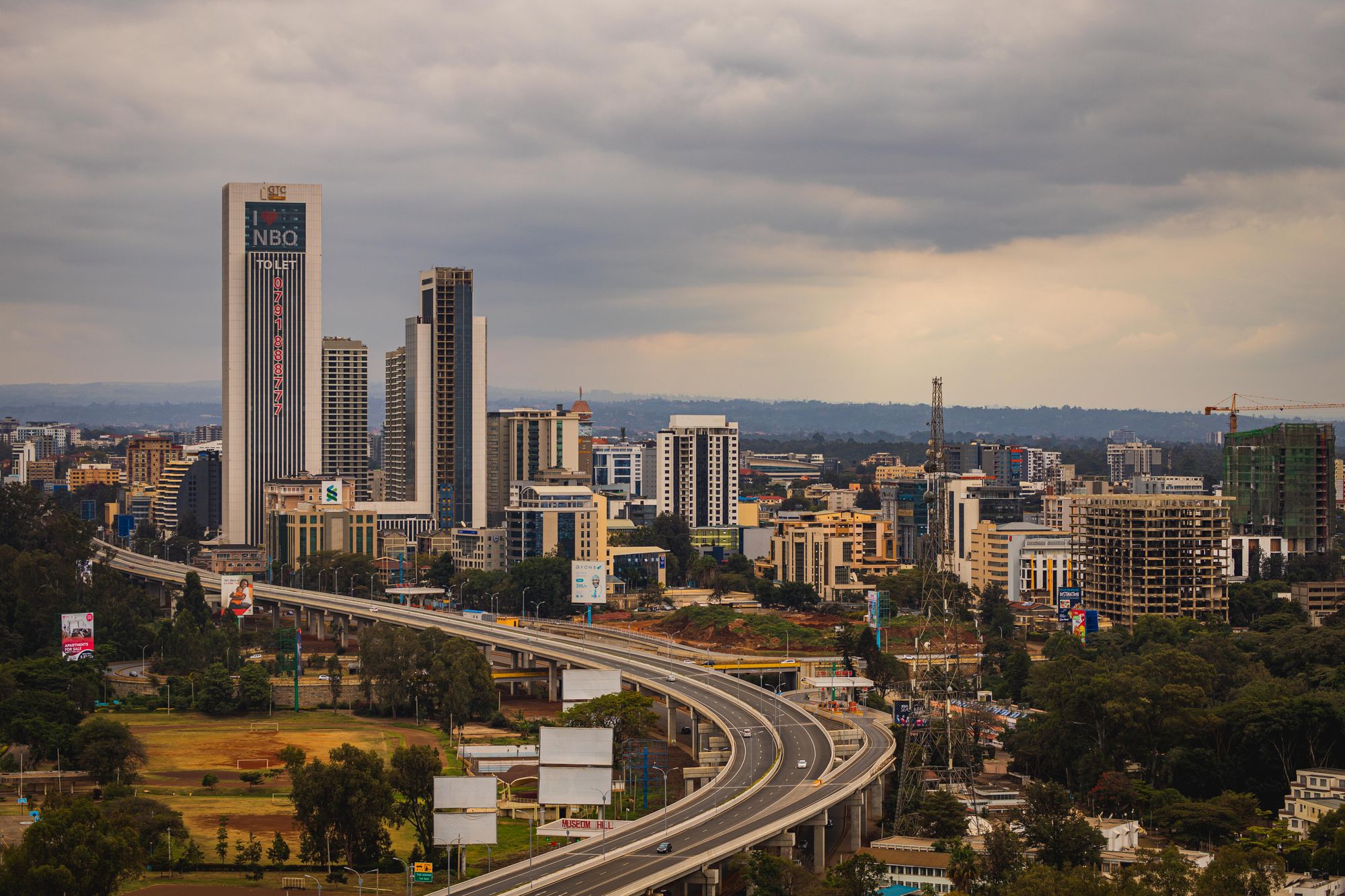
Upper Hill and the ridge behave differently. Office workers arrive by matatu and car from the west and north from first light, and the expressway ramp feeds directly onto the ridge. At the evening peak the exits onto Haile Selassie Avenue and the expressway are the pinch points. If a journey begins on the ridge and ends anywhere in the grid, walking downhill is usually faster than waiting for a car to clear the ramp.
Ngara and the Globe is a road interchange wearing the clothes of a quarter. The flyover concentrates every northbound and southbound movement onto the roundabout, and the result at peak is queuing in all directions. The fruit market beside it has finished trading by the time the jam is at its worst. The crossing to Museum Hill is awkward in any conditions and hostile in the peak; take the signalled crossing, not the shortest line, and do not attempt it after dark.
The market quarter north of Kenyatta Avenue runs to a different clock. The produce trade finishes before the morning peak begins, and most of its working traffic moves on foot. The afternoon is the difficult half: Moi Avenue and the streets around the market become slow for vehicles and uncomfortable on the pavements as both the shoppers and the commuters arrive. Walk it in the morning if you can, and be patient in the late afternoon.
Kenyatta Avenue
The widest pavements in the centre, and the easiest line to hold at peak. Crossings are signalled at every major junction. The pavement on the north side keeps the afternoon shade.
Upper Hill and the ridge
The expressway ramp serves that quarter directly, which makes the airport run better from the ridge than from the grid. Between the peaks it is the fastest link out.
Ngara and the Globe
The northern hinge, built as a road interchange. The market there trades before dawn and is finished early. Junctions favour vehicles over pedestrians at every hour.
The market quarter
Streets north of the avenue run on their own rhythm, from before dawn. Peak traffic makes crossing between them slow. Walk the block rather than the long way round.
03What this page cannot tell you
This page is compiled from published information and the site's own checks, not from a visit to Nairobi. Nobody writing it has stood on the avenue at either peak. Anything that moves week to week, including opening arrangements, traffic conditions, road works, market days and public holidays, is not printed here. Treat the shape of the day as reliable and the specifics as something to confirm on the ground with a hotel desk, a driver, or simply by looking at the traffic before committing to a route.
The same restraint applies to fares and journey times. Matatu fares, taxi quotes, expressway tolls and airport transfer rates are set by operators, change with demand and fuel, and cannot be verified from a desk. The page prints none of them. Agree the fare before you get into any car or matatu, and if the figure you are offered before dawn or after dark is different from what you expected, that is normal rather than a scam.
The quiet hours are the practical gift of the peaks. Between the two windows, roughly the middle of a weekday, the grid is at its most workable: banks open, pavements manageable, and a car or a matatu across the centre is a genuinely fast option. Use the quiet hours for anything that depends on a vehicle, and the peak hours for anything that can be done slowly on foot with a destination on the same block.
What the peaks cost is the honest caveat. This page does not print fares, journey times or clock times for them, because those numbers belong to the operators and the day. The claim that can be made is narrower: the two hours when nothing moves are the two hours the centre is most expensive to cross by vehicle, and the time saved on foot is exactly the time a car spends stationary. Plan around that and the arithmetic will look after itself.
- Walk the grid between the peaks; the distances are short and the pavements are wide.
- Allow far more time than the distance suggests if a journey crosses the centre in the peak.
- Agree the fare before you get into any car or matatu, and expect the airport run to take longer in the morning peak.
- Cross at the signalled junctions on the avenue; the traffic moves faster than it looks.
What the peaks actually cost
This page does not print fares, journey times or clock times for the peak, because they are set by operators, move with the day, and cannot be verified from a desk. What can be said honestly is that the two hours when nothing moves are the two hours the centre is most expensive to cross by vehicle, and the time saved on foot is the time a car spends stationary.
04How to use the two quiet hours
Build the day around the shape of the traffic, not the clock. If two things need doing and one is on Kenyatta Avenue and the other on the ridge above the centre, do the avenue first and walk up to the ridge later. The uphill walk is longer than the downhill, but it is still shorter than the queues on the ramp at the end of the working day. Work the grid in the morning and the edges in the afternoon.
If a vehicle is genuinely needed, the middle of the day is when to take it. The expressway run to the airport is at its most useful between the peaks, and the ridge is the logical departure point for it. Before dawn, the roads are clear but the fare negotiation is not; after dark, the same applies with less margin. Agree the price at the desk or with the driver before the wheels move, and expect the figure to differ from what a friend was quoted last month.
Handle money and opening-hours business inside the quiet window. Banks on the avenue, bureaux, the galleries, and anything that depends on a counter being staffed, all sit inside weekday daytime. This page does not print those hours because they are set by the operators and shift. Check the day you go, not the page you read. The same advice applies to the museum on Museum Hill: check the current ticketing and days before setting out, and do not build an afternoon around an assumption.
Finally, walk more than the distance seems to justify. In the CBD, the pavement is usually the fastest lane, and the signal-controlled crossing is a better bet than a gap in the traffic. Cross at the junctions on the avenue, keep to the north side in the afternoon where the shade is, and treat any journey that crosses the centre by vehicle during the peaks as a decision to spend the next hour sitting still. Walk the grid between peaks and the centre rewards you.
Where this page comes from
Desk research, not fieldwork. Nobody writing this stood on the corner with a stopwatch, and a page that implied otherwise would be the least trustworthy thing on the site. The specifics above came from here:
- Distances: computed from published coordinates, direct line from Kenyatta Avenue at Moi Avenue.
- Expressway ramp locations: Nairobi Expressway operator information.
- Nothing on this page is a measurement or a first-hand account.
Opening hours, ticketing and market days change. No hotel or operator pays to appear here.
05Questions
What time is rush hour in the centre?+
There is a peak in the morning and a larger one after the offices close, and the second runs longer. Exact clock times move with the day and with the school term. Plan around the peaks in words rather than trusting a fixed hour printed anywhere.
Is it better to walk or take a car across the CBD?+
On foot is almost always faster between two points inside the grid, because the distances are short and the pavements are wide. A car makes sense for the ridge, the airport and anything after dark. The expressway ramp serves the ridge directly.
Is the centre safe after dark?+
The centre is a working district and empties with the offices, so the streets are quiet rather than busy. Any after-dark movement is better done by car, with the ride arranged in advance. Check current travel advisories alongside this page rather than instead of them.
How do I get to the airport without sitting in traffic?+
Allow a generous margin, and avoid the morning peak if the flight is tight. The expressway ramp on the ridge is the fastest link out on a clear run. The fare is agreed with the operator, and this page prints no price.