01What the railway quarter is
The railway quarter occupies the southern edge of Nairobi Central, the flat land below Haile Selassie Avenue where the grid runs out and the city stops pretending to be a city. It is defined by rail: the 1929 station building, the yards and workshops behind it, the museum in the old yard beside the station, and the memorial park at the top of the quarter. The address that matters here is Workshops Road and the station approach, not the avenue. This page treats the quarter as one district because it functions as one: a piece of working railway land that happens to hold the city's best explanation of itself.
Nairobi exists because this flat ground was chosen. In 1899 the Uganda Railway reached the swamp at the foot of the escarpment and stopped to gather itself for the climb into the Rift. The depot pitched to serve the works became a town, then a capital. The grid above, laid out on the higher ground, was planned to serve the depot below. Once you have stood at the station and looked up at the towers on the ridge, the shape of central Nairobi stops being arbitrary. That is the whole argument for coming down here.
What the quarter is not is a visitor district. There is no hotel stock to speak of, no evening trade, and little reason to linger once the museum and station have been seen. The industrial roads empty early and light badly. The quarter's value is explanatory rather than comfortable: it shows what the city was built to do, and it shows the cost of the reason moving on. A morning is enough. A full day would be a mistake.
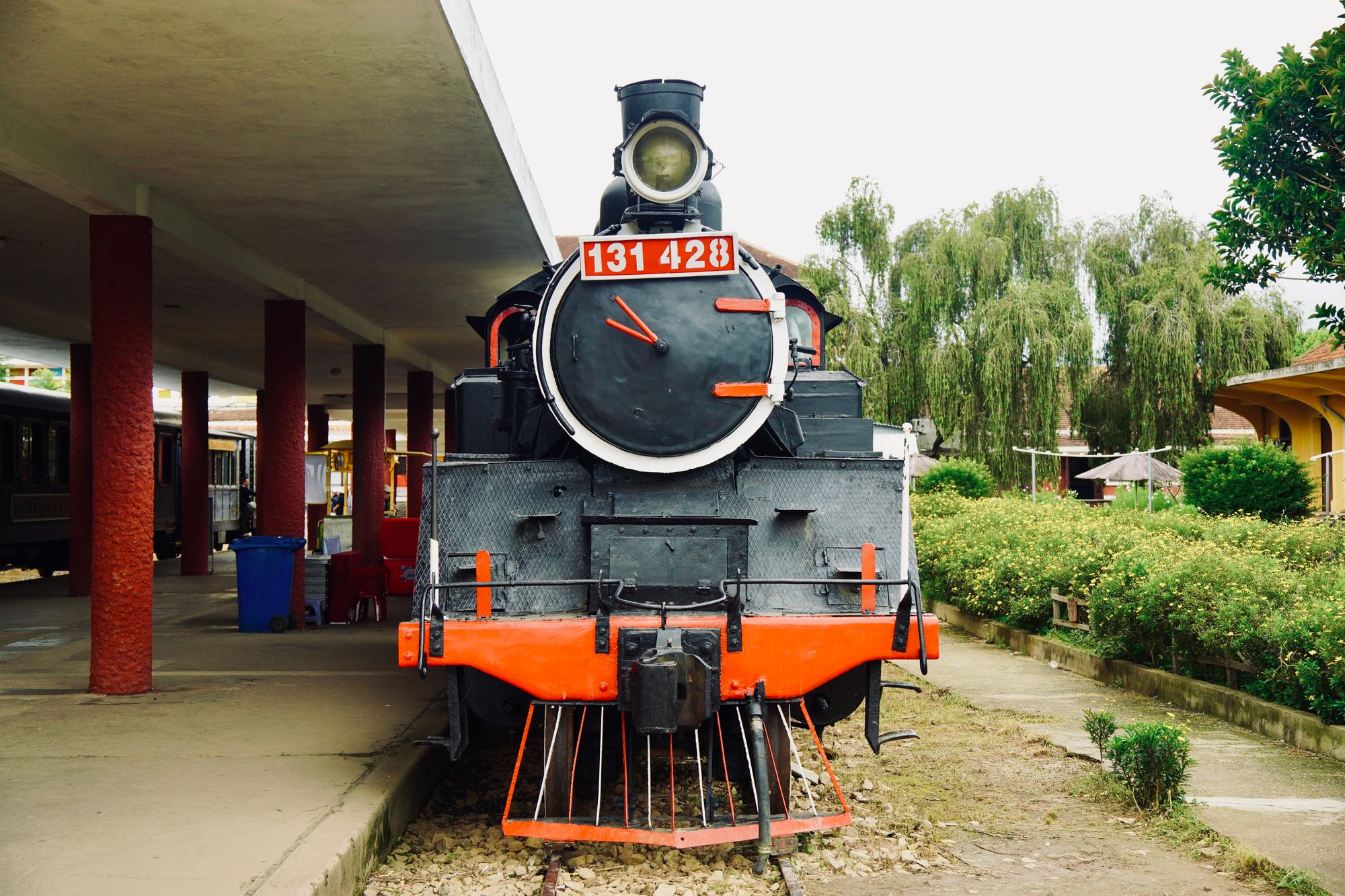
The quarter reads a century older than the avenue above it, and that is not an accident of maintenance. Long-distance passenger traffic shifted to a terminus outside the city in 2017, leaving the old station with commuter services and a great deal of land. The museum is unrestored, dusty and unbothered, which is precisely why it holds the clearest history in the centre. Expect sheds, locomotives in the open, and a working railway rather than a heritage park.
02The quarter, street by street
The descent from the avenue is short and direct. Leave the grid at its southern edge, cross Haile Selassie Avenue, and the buildings change within a block: bank halls give way to warehouses, then to railway land. The road names tell the story plainly. Haile Selassie Avenue forms the northern boundary, carrying traffic across the foot of the grid. Station Road and the yards run down towards the platforms. Workshops Road is the museum approach, unremarkable to look at and the reason to be down here at all.
The four places worth the walk are fixed. The Railway Museum, ticketed and roughly an hour, holds locomotives in the open, carriages you can climb into, and the coach tied to the Tsavo man-eater story. Nairobi Railway Station is the 1929 building, still handling the commuter network. The yards are visible from the museum and the station approach, with a century of rolling stock in various states. The August 7th Memorial Park sits at the top of the quarter, on Haile Selassie Avenue, and pairs naturally with a museum morning.
Read the geography once and the walk organises itself. Come down Workshops Road to the museum, take the station building on the way back, and finish at the memorial park on the avenue. The yards are working land, not an attraction: keep to the museum and station approaches rather than wandering the sheds. The underpass beneath Uhuru Highway links west towards the ridge, but it is a vehicle route and a poor walk, so treat it as a road and not a path.
The order matters less than the light. The museum sets the tempo because it closes in the mid-afternoon, and the quarter has nothing to offer once it does. Two hours covers the descent, the museum and the station. Add the memorial park and you have a full morning without ever leaving the southern edge. Everything below Haile Selassie Avenue is best done in one continuous stretch, because there is no reason to come back a second time.
Nairobi Railway Museum
Ticketed, an hour, and unrestored in the best way. Locomotives stand in the open, carriages can be climbed into, and the coach tied to the Tsavo man-eater story is kept here.
Nairobi Railway Station
The 1929 building, still handling commuter services. The intercity line to Mombasa runs from a separate terminus outside the city, so check which station a ticket names.
The yards
Visible from the museum and the station approach. More than a century of rolling stock in various states of repair, on working railway land rather than a display.
August 7th Memorial Park
At the top of the quarter on Haile Selassie Avenue, and the natural pairing with a museum morning. The site of the 1998 bombing, kept as a garden.
03What this page cannot settle
This page is compiled from published information and the site's own checks rather than from a visit. Nobody writing it has stood in the yards or timed the walk down from the avenue. That matters most for the things that move: opening arrangements, ticketing, market days and timetables are set by the operator and change with the season. No hour is printed here for the museum or the commuter rail, and none should be taken from any page, including this one, as settled. Read the museum's own visitor information and the current operator timetable on the day you go.
The other honest limitation is safety. The industrial roads empty and go unlit quickly after the working day, and the quarter has no evening trade to keep them occupied. Daylight is the working assumption. A car back up the hill is sensible if you are running late, and there is no shame in it: this is not a district built for strolling after dark, and treating it as one is how a good morning turns into a bad evening. Come down early, be back on the avenue before the light goes.
A third thing this page cannot do is make the quarter convenient. It is not. There is almost no visitor stock, the food follows the shift pattern, and the nearest beds are on the avenue, a short walk north, which is where anyone doing a museum morning should sleep. The practical effect is that the railway quarter is a destination you visit and leave, not a base. Plan it that way and it rewards you. Plan it as somewhere to stay and it will not.
The gaps are deliberate, not lazy. Where a fact belongs to an operator, the operator should be asked; where a fact moves week to week, this page stays quiet. What remains is the part that does not move: the layout, the history, the descent and the daylight rule. Those are enough to plan a morning, and they are what the rest of this page covers.
- Come down in daylight and be back on the avenue before the light goes: the industrial roads empty and unlit quickly.
- Check which Nairobi station your ticket names, because intercity services leave from a terminus outside the city.
- The museum keeps its own hours and closes in the mid-afternoon, and those hours are the museum's to set.
- Treat the yards as working railway land rather than an attraction, and keep to the museum and station approaches.
What this page will not print
The museum's opening hours, the days it closes and its ticketing arrangements are set by the museum and move with the season, so no hour appears here. The same applies to the commuter rail timetable, which is the operator's to publish. Read the museum's own visitor information and the current Kenya Railways timetable on the day you go, and treat any fixed hour quoted elsewhere, including on this site, as a guess.
04How to use the railway quarter
Give the railway quarter one morning, and give it the morning. Start on the avenue, walk down, take the museum first while it is open, then the station building, then the memorial park on the way back up. That order respects the one fixed constraint, the museum's mid-afternoon closing, and it puts the walk back uphill at the end rather than the beginning. Two hours is a comfortable floor, three is generous, and there is nothing to fill a fourth.
Before you go, settle two questions that decide whether the trip works. Ask the museum for its current opening arrangement and ticketing, because it sets its own and they move. And check which station your onward ticket names if you plan to travel on: intercity services leave from a terminus outside the city, not from the 1929 building. Getting either wrong costs you the morning. Both answers come from the operator, not from a guide.
Pack for a working district rather than a heritage one. Comfortable shoes for the station approach and the yard, water, and no expectation of shade or seating below Haile Selassie Avenue. Food is thin on the ground: kiosks near the station follow the shift pattern, which means early and at lunch and very little afterwards. The reliable plan is to eat back up on the grid, a short walk north, where the centre feeds itself properly from midday. Do that and the quarter stays a morning rather than an endurance test.
The final advice is to treat the descent as the point. The railway quarter is the least tidy part of the centre and the most explanatory. Standing below the grid, with the sheds in front and the towers above, tells you more about why Nairobi is where it is than any single building on the avenue. Come for that, come in daylight, and leave before the light does. The rest of central Nairobi will make better sense for the rest of your stay.
Where this page comes from
Desk research, not fieldwork. Nobody writing this stood on the corner with a stopwatch, and a page that implied otherwise would be the least trustworthy thing on the site. The specifics above came from here:
- Nairobi Railway Museum: Kenya Railways, museum information.
- Commuter rail services: Kenya Railways published timetables.
- Uganda Railway dates and the 1929 station: published railway histories and the National Archives record.
Opening hours, ticketing and market days change. No hotel or operator pays to appear here.
05Questions
Can I walk down from Kenyatta Avenue?+
Yes, it is a short direct line downhill from the avenue at Moi Avenue, and the main approaches are fine on foot in daylight. The streets are working roads rather than a promenade, so the walk is for getting there rather than for its own sake. Once the working day ends the industrial stretches empty and unlit.
Does the intercity train to Mombasa leave from Nairobi Station?+
No. Standard gauge services to Mombasa run from a terminus outside the city, and the 1929 station handles commuter services instead. Check which station your ticket names before travelling across the centre. The commuter timetable is the operator's to publish and changes, so read the current one.
How long should I give the railway museum?+
About an hour covers the locomotives, the carriages and the Tsavo coach, and the collection is small enough that an hour is not rushed. Ask at the desk about the ticketing and the day's hours, since both are the museum's to set. Pair it with the memorial park above on Haile Selassie Avenue.
Is there anywhere to stay in the railway quarter?+
Almost nothing. This is railway land and warehousing, with almost no visitor accommodation, and the nearest hotels sit on the avenue a short walk north. Anyone doing a museum morning should sleep up there and come down on foot. Eating follows the same pattern: kiosks near the station around the shifts, little afterwards.