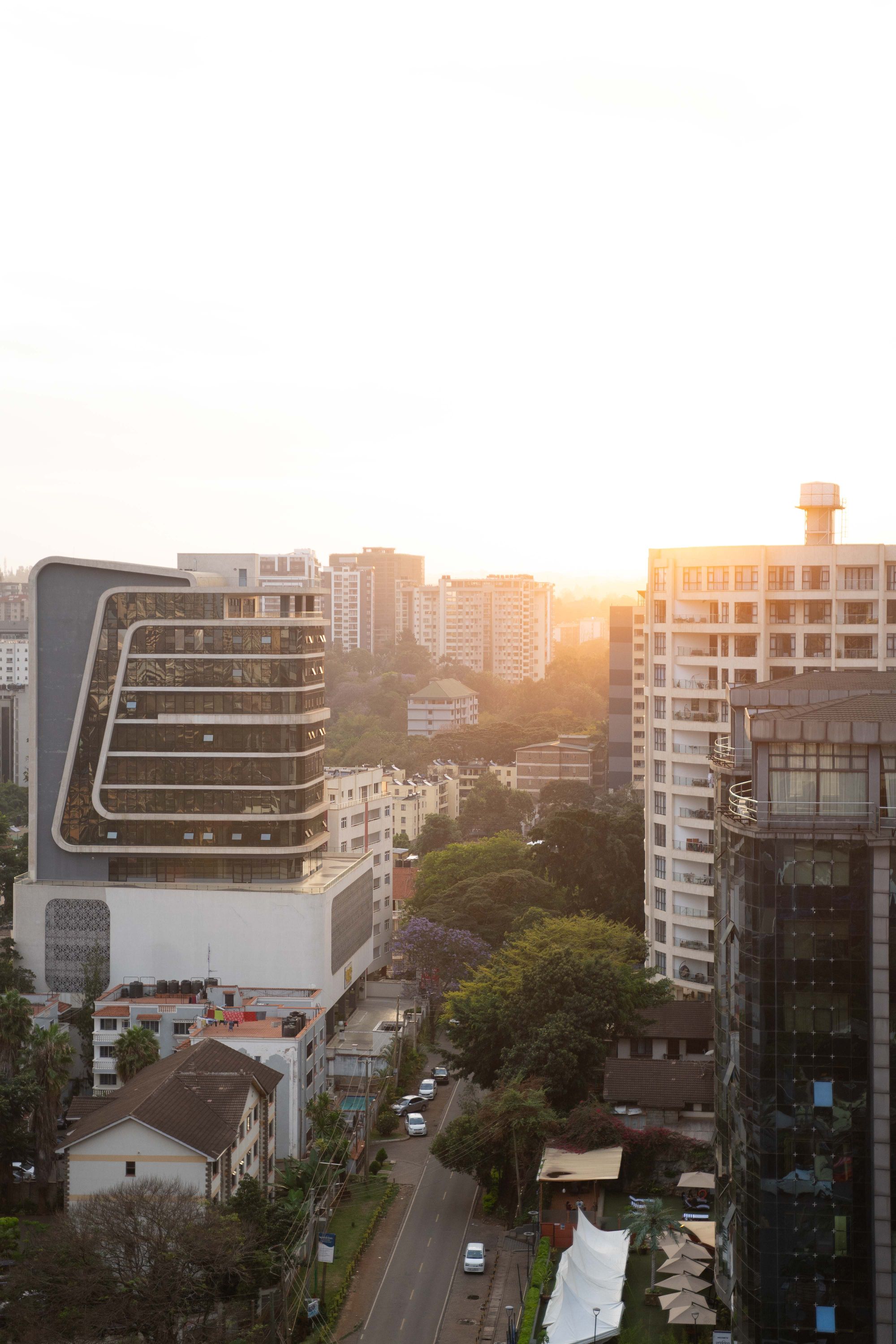
01The one hour the grid is empty
Equatorial cities do not have long dawns. The sun comes up at roughly the same time all year, quickly, and for about ninety minutes the CBD is a different place: the roads are clear, the pavements are being swept, the newspaper stands are being stacked, and the first matatu shift is already staging on River Road.
By seven that is over. The commute arrives all at once, the pavement on Moi Avenue fills end to end, and the district settles into the volume it keeps until the offices close.
02Why it is worth setting an alarm for
- The roads are clear, which for anything involving a vehicle is worth more than any other hour of the day.
- The light comes from the east along the avenue, which is the direction the towers face.
- The markets that matter are already trading: Ngara from around four, Muthurwa from around the same.
- It is the only time the grid feels like the small colonial railway town it was, rather than the city of four million it became.
What this post is not
It is not an account of a morning anyone from this site spent on the avenue. It is what the published trading hours, the commute pattern and the geography of an equatorial sunrise add up to, which is a different and more checkable kind of claim.
03The cold nobody warns you about
Nairobi sits at about 1,795 metres, more or less on the equator. The consequence is a climate that surprises most first-time visitors in both directions: the midday sun burns faster than the temperature suggests, and the hour after dawn is genuinely cold, particularly in the dry months around July and August.
A jacket for a six in the morning walk in the middle of the year is not overcautious. By nine you will be carrying it.
04The district by the hour, before the commute
Between four and five in the morning, the eastern edge of the grid is the busiest part of Nairobi. The wholesale market at Muthurwa is in full trade, handcarts moving produce between the aisles, and the country bus termini beside it are loading for the coast and the east. Almost none of it is aimed at a visitor, and almost all of it is gone by the time Kenyatta Avenue fills. This is the city at work rather than the city at leisure, and it is the reason a pre-dawn alarm in the centre has a purpose beyond light on the towers.
Around five, the sweepers reach the avenue itself. The pavement is washed down, the median planting is attended to, and the newspaper stands at the Moi Avenue junction are being stacked from bundles dropped at the kerb. The vendors who work the morning shift set up in the same order every day, which is why the pitch positions are worth noticing: the busiest stands are on the corner where the pedestrian volume peaks. Between five and six, the avenue carries almost no private cars, only service vehicles and the occasional taxi bringing an early arrival from the airport.
By half past five the fruit market on the northern edge is at its loudest. Mangoes and vegetables arrive by the crate and are sold on before the offices open; the breakfast stalls around the edge are feeding traders at the end of a working night. The trade runs from about four to seven and then stops. Anyone arriving after the middle of the morning will find a cleared ground and handcarts parked, and will have missed the window entirely. The same is true of Muthurwa: once the produce has changed hands, the quarter has nothing left to show.
The first matatu shift stages on River Road from before dawn, loading for the eastern estates before the roads thicken. The stages have no signs, and the queue is the timetable. For a visitor, the useful thing to understand is that the volume builds in a sequence: the markets first, then the stages, then the offices. The avenue is the last part of the centre to wake and the first to empty. Between six and seven the whole sequence reverses direction, and the pavements begin to fill from the west, from the stations and the bus stands.
05Why an equatorial dawn is so quick
Nairobi sits close to the equator at an altitude of about 1,795 metres, and both facts shape the first hour of the day. Near the equator the sun rises steeply rather than at a slant, so the transition from dark to full daylight takes far less time than it does in temperate latitudes. There is no long grey period and no slow build. The light arrives almost vertically, and the shadow of a building moves quickly across the pavement rather than stretching slowly along it.
Altitude changes the temperature more than the light. Thin air holds less heat, so the ground cools rapidly overnight and the hour before sunrise is the coldest part of the day. In the dry months around July and August, the drop is sharp enough that a jacket is sensible on the avenue at six in the morning. By mid-morning the same air is warming quickly under a high sun, and by the middle of the day the heat is stronger than the temperature alone suggests. The variation across a single morning is larger than most first-time visitors expect.
The direction of the light matters for anyone interested in the buildings. At sunrise the sun comes from the east, which is the direction the towers on Kenyatta Avenue face, so the facades that carry the bank headquarters and the older office blocks are lit straight on rather than in silhouette. That alignment changes within an hour of sunrise, and by mid-morning the light has flattened. The window for photographing the avenue face-on is short, and it belongs to the early part of the day rather than the end of it.
Cloud is the variable that cannot be predicted. A morning can be clear, or it can be overcast with the light arriving without a visible sun, and the wet seasons carry more cloud than the dry. Astronomical tables give the time of sunrise for the latitude, and the Kenya Meteorological Department publishes climate data for the city, but neither will tell you what a particular morning will look like. The honest position is that the early hour gives you the empty roads regardless, and the light is a separate matter that depends on the day.
06What the hour is good for, and what it is not
The early hour is the right time for anything that involves a vehicle. The grid is clear, the crossings are empty, and a car moving through the centre before the commute starts takes a fraction of the time it will take later. It is also the best hour for the markets, which are the reason to set an alarm rather than the light on the towers. Ngara and Muthurwa both trade before the offices open and both are finished with their day early. A visitor who wants to see how the city feeds itself should plan around those windows and not around the avenue.
It is not a good hour for the institutions. The galleries, the museum and the memorial park keep their own opening arrangements, set by the operators, and none of them are reliably open at first light. Ticketing is bought at the desk, and opening hours move with the season and with the operator. This page does not print them, and no page should be trusted on them. The same applies to bank and bureau hours on the avenue: weekday hours and Saturday mornings are the general pattern, but confirm on the day rather than assuming.
There are limits to what any written page can tell you about this hour. Nobody writing this has walked the avenue at six in the morning, and the details that matter most are the ones that change: which stalls are trading on a given day, whether the fruit market is busy, which stages are loading. That kind of information belongs to the morning itself and to the people on the ground. The value of reading ahead is in knowing the sequence and the general shape of the hour, so that a plan can be built around what is actually there rather than what a description claims.
The practical advice is to treat the early hour as a single-purpose trip rather than a general sightseeing slot. Pick the market or the avenue, not both, unless you are content to move between them in the gap after the trade has finished and before the offices open. Carry small notes for the markets. Keep your hands free and your phone out of sight on the eastern grid, where this site gives that advice plainly and for the whole day rather than only the morning. Then be back in the centre for breakfast, and let the commute arrive without you.
Markets before the offices
Ngara and Muthurwa trade from about four to seven in the morning and are finished before the commute begins. Plan the trip around that window, not around the avenue.
Empty roads, briefly
Between five and seven the grid carries almost no private traffic. Anything involving a vehicle is faster in that window than at any other hour of the day.
Institutions stay shut
Galleries, the museum and the memorial park keep their own hours and ticketing, both set by the operator. This page does not print them and no page should.
Cold, then hot
The hour before sunrise is the coldest part of the day at this altitude. By mid-morning the same air is warming quickly under a high sun.
Where this page comes from
Desk research, not fieldwork. Nobody writing this stood on the corner with a stopwatch, and a page that implied otherwise would be the least trustworthy thing on the site. The specifics above came from here:
- Market trading hours: Nairobi City County market information.
- Altitude and climate: Kenya Meteorological Department published data for Nairobi.
- Sunrise timing: standard astronomical tables for the latitude.
- Altitude and climate: Kenya Meteorological Department published data for Nairobi.
- Sunrise timing: standard astronomical tables for the latitude.
Opening hours, ticketing and market days change. No hotel or operator pays to appear here.
07Questions
Is it safe to be out at six?+
The grid at six is a working district full of people going to work, which is a different proposition from the same streets at ten at night. The usual daylight rules apply, and River Road remains a quarter to visit with someone who knows it.
Will anything be open?+
The markets and the breakfast stalls around them. Museums and galleries open considerably later.
Best place to watch the sunrise?+
Along the avenue itself, looking east, or from an upper hotel floor if you have one. The parks do not open that early.
Can I walk from Kenyatta Avenue to the Ngara market before it gets light?+
The distance is short, about eleven minutes on foot from the Moi Avenue junction, but the route crosses the Globe roundabout, which is built for vehicles. Before dawn the crossings are quiet but poorly lit, and the market itself is a working wholesale ground. Going with someone who knows it, and taking a car, is the safer arrangement.
Do the galleries and the museum open early enough to combine with a dawn walk?+
No. The Nairobi Gallery and the National Museum keep their own opening arrangements and ticketing, both set by the operators, and neither is reliably open at first light. A dawn walk belongs to the streets and the markets. The institutions are a separate visit later in the day, and hours should be confirmed on the day.