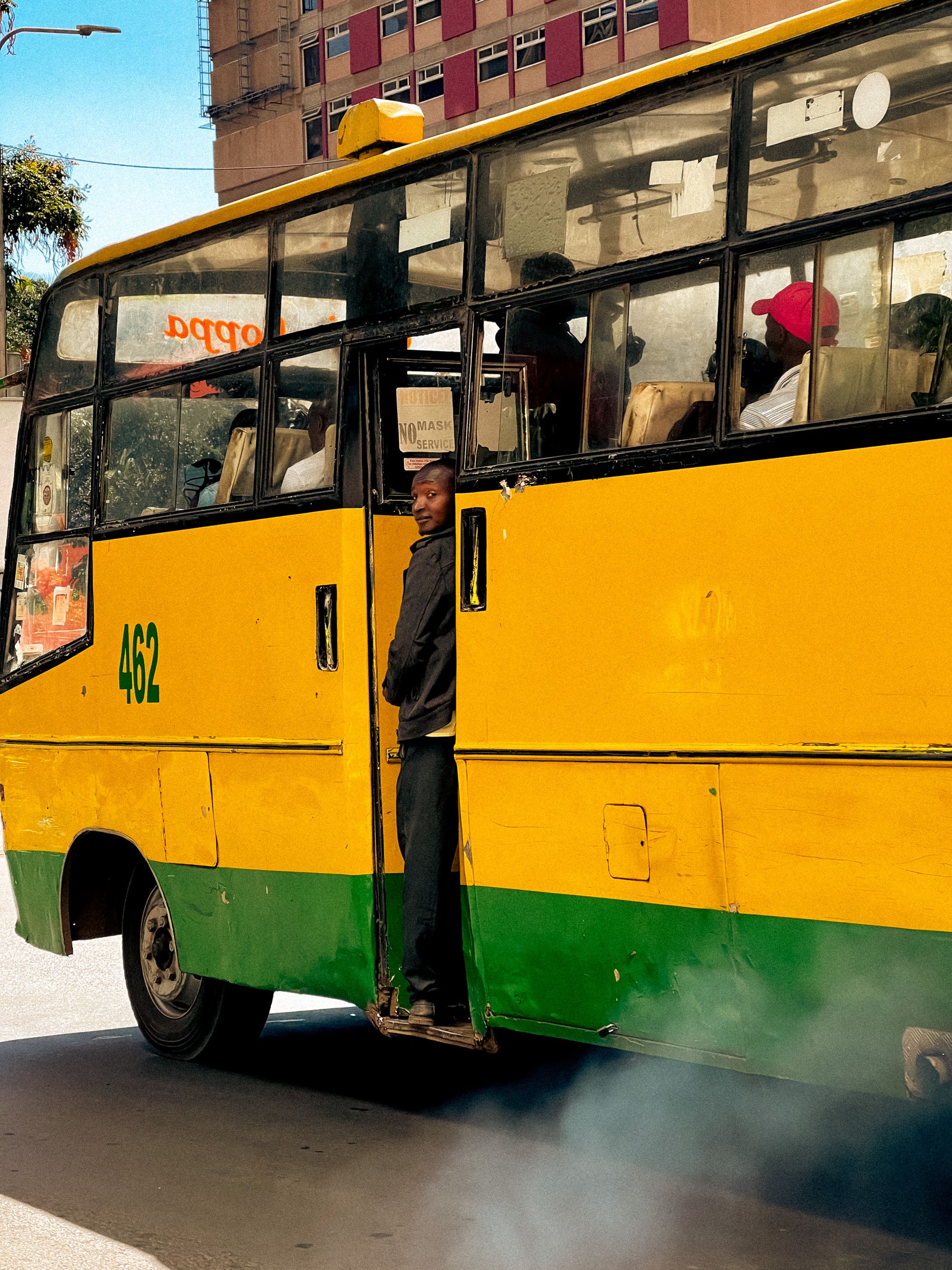
01What River Road is actually for
River Road is not a sight. It is the working half of the Central Business District, the part the brochures skip, and it is worth a page because most visitors never see how the city actually runs. This is where the country arrives in the city: the matatu stages that serve the whole eastern hinterland, the lodgings that take people off an overnight bus, the hardware and spare parts trade, and kitchens cooking for people on a shift. If you want to understand Nairobi rather than look at it, this is where to walk.
The quarter takes its name from the Nairobi River that closes the centre to the north. It sits in the eastern grid, between the railway and Ngara, and it is not the tourist CBD. The avenue and the market streets are a different experience. This page sets what River Road is for, what an hour in daylight gives you, and why this site says plainly that it is not a place to be after dark. That caution is specific to this quarter, not to Nairobi as a whole.
What it is for is movement. The stages are not a landmark so much as the point of the quarter: each route has a stand, a queue system and a crew, none of it signposted and all of it orderly once you can read it. Around the stages sits everything that serves them, lodgings, hardware, food, phone shops, money changers. The country arrives here and leaves from here. You do not need a ticket to watch it, and you do not need to be going anywhere to learn something from it.
An hour here in the middle of the day tells you more about how Nairobi works than a week of hotel lobbies. The verdict is simple: come in daylight, come with nothing in your hands, and treat it as the city's working half rather than a place to be. It is worth the hour. It is not worth pretending that the warnings are exaggerated. Both things are true at once, and this page will not smooth either away.
02The streets, the stages and the kitchens
The quarter has a spine and three or four working streets around it. River Road itself carries the stages, lodgings, hardware and kitchens, with constant movement from before dawn. Latema Road has bars and music and a reputation that daytime does not support: in daylight it is a working street like the others. Duruma Road and Accra Road hold the long-distance matatu and bus offices, and they are the departure point for much of the country. Ronald Ngala Street marks the boundary with the busier retail grid to the west, and it is the cleanest crossing point between the two halves of the centre.
The stages are the substance. Each route has a stand, a queue system and a crew, and none of it is signposted. What looks like noise resolves, after ten minutes of watching, into a strict internal order. This is the part of the quarter that repays patience. Do not try to read a list; watch a stands work instead. Ask at the stage which route leaves from which stand, because the arrangement moves with enforcement and no published list stays right. The people running the queue know, and they will tell you.
The kitchens are the other reason to come. Ugali, sukuma wiki, matumbo and chapati, cooked in front of you for a working wage, served fast, and priced for people on a shift. This is the best value eating in the centre and none of it appears on a hotel list. Eat where the queue is working people on a shift, which is the signal that the food is hot, fast and honest. The grill houses that Nairobi is known for are mostly outside the grid. What this quarter does well is a hot lunch in the middle of a working day.
The hardware blocks fill the rest. Streets of spare parts, tools and machine shops explain why the quarter is here at all, and they are as much the point as the stages. Over the river to the north, Ngara is the quarter's edge and an easy continuation if you are walking in the morning. Together these four streets and a handful of blocks are the densest working district in the centre. None of it is presented for you. All of it is legible if you slow down and watch.
River Road itself
The spine: stages, lodgings, hardware and kitchens, moving from before dawn. Walk it in daylight, in the middle of the pavement, with nothing in your hands.
Latema Road
Bars and music and a reputation that belongs mostly to the night. In daylight it is a working street like the others around it.
Duruma and Accra
Long-distance matatu and bus offices, and the departure point for much of the country. This is where the country arrives in the city.
Ronald Ngala Street
The boundary with the busier retail grid to the west and the cleanest crossing point between the two halves of the centre.
03What this page will not pretend to know
This page is compiled from published information and the site's own checks rather than from a visit. Nobody writing it has walked these blocks. Opening arrangements and anything that moves week to week are not printed here, because they would be out of date by the time they were read. Stage assignments, terminus arrangements and which street carries which route are set by operators and by enforcement, and they move. Any figure of that kind belongs to the operator and the booking partner, not to this page. Ask at the stage, or ask at the lodgings desk.
The honest caveat is not only about movement. It is also about risk. The opportunistic crime that the whole city gets blamed for is genuinely concentrated in a few of these blocks, and the risk profile changes sharply after the stages wind down. This page says plainly: not after dark. That is a flat answer, given without dressing the quarter up as a warning and without dressing it up as a secret. Walking here in daylight is worth doing. Walking here at night is not, and no amount of local colour changes that.
The bullet list above is the practical half of that verdict. Daylight only. Phone in a pocket rather than a hand. Nothing loose. Ask at the stage rather than trusting a list. Eat where the queue is working people. Take a car out before the light goes. None of that is exotic advice; it is the same advice the quarter gives itself. What this page will not do is pretend to a precision it does not have. No stage location, no route number, no opening hour for anything here is printed, because each of those is a moving fact.
The district is also not the city. Nairobi's reputation abroad is built substantially on a few blocks around here after dark, and that reputation is then applied to several hundred thousand daily workers who are going about their business. The avenue, the market streets and the parks are a different experience. Treating the whole centre as if it were this quarter is a mistake, and so is treating this quarter as if it were the avenue. Both errors are common. This page would rather state the limit than paper over it.
- Walk this quarter in daylight only, keep a phone in a pocket rather than a hand, and carry nothing loose.
- Ask at the stage which route leaves from which stand; the arrangement moves with enforcement and no list stays right.
- Eat where the queue is working people on a shift, which is where the best value in the centre is cooked.
- Take a car out before the light goes rather than walking back through the blocks after the stages wind down.
No figure is printed here
Stage assignments, terminus arrangements and which street carries which route are set by operators and by enforcement, and they move. This page prints no stage location, no route number and no opening hour for anything in the quarter, because any such figure would be out of date by the time it was read. Ask at the stage, or ask at the lodgings desk, and treat any published list as a starting point rather than a fact.
04What to do with the quarter
The verdict is this: give River Road an hour in the middle of the day, on foot, on your own if you are comfortable, and with a local if you can arrange one. Start from the busier grid to the west and cross at Ronald Ngala Street, which is the cleanest crossing between the two halves. Work east and north through the stages rather than along a single street, since the quarter is a set of blocks rather than a route. Then leave the way you came. That is the whole programme, and it is enough.
If you are only in Nairobi briefly, an hour here is a better use of it than another museum, provided you go in daylight and keep your hands free. The stages explain the city's transport, the kitchens explain its lunch, the hardware blocks explain its trade. None of it is presented. All of it is real. If that is not what you want from a short stay, that is a fair judgement too, and the avenue one block west will give you a gentler version of the same city without asking anything of you.
Two practical arrangements matter more than any other. First, the timing: the quarter works from before dawn to the evening commute and then winds down into something far less comfortable, so take a car out before the light goes rather than walking back through the blocks after the stages empty. Second, the asking: which stage serves which route moves with enforcement and with the termini projects, so ask at the stage or at the lodgings desk. Treat any published list, including this page, as a starting point rather than a fact.
For sleeping, the lodgings here are cheap, local and reviewed accordingly: thin walls, early noise, and the honest advantage of being at the stage you are leaving from. For most visitors the right move is to see this quarter and sleep in another. Come for the hour, eat a hot lunch, watch a stage work, and leave before the light goes. That is what the quarter is for. It is not the whole Central Business District, and it is not the Nairobi most people arrive expecting, which is exactly why it is worth the hour.
Where this page comes from
Desk research, not fieldwork. Nobody writing this stood on the corner with a stopwatch, and a page that implied otherwise would be the least trustworthy thing on the site. The specifics above came from here:
- Distances and walking minutes: computed from published coordinates, direct line at 4.8 km/h.
- Street-level guidance: hotel and operator advice, which is specific to the block and worth asking for.
- After-dark guidance: current travel advisories, read alongside this page rather than replaced by it.
Opening hours, ticketing and market days change. No hotel or operator pays to appear here.
05Questions
Can I walk River Road on my own?+
Yes, in daylight, and with attention. The crowd is dense and the traffic is constant, so the practical cautions are a phone in a pocket, a bag held in front, and nothing carried loose in a hand. A local companion makes the stages and the kitchens far easier to read.
Is it worth an hour if I am only in Nairobi briefly?+
If you want to understand how the city actually runs, yes, and an hour in the middle of the day is enough. The stages, the hardware blocks and the working kitchens are the substance of the quarter. It is not a shopping or sightseeing district, and it does not pretend to be.
Where do the matatus to the rest of the country leave from?+
Long-distance offices cluster on Duruma Road and Accra Road, and the town stages are in and around River Road itself. Which stand serves which route moves, so ask at the stage or at a lodgings desk rather than trusting a printed list. Departure information belongs to the operators.
Is it safe after dark?+
This site gives a flat answer for this quarter: not after dark. The stages wind down, street lighting is patchy, and the risk profile changes sharply once the evening commute is over. Do the walking in daylight and take a car out before the light goes.