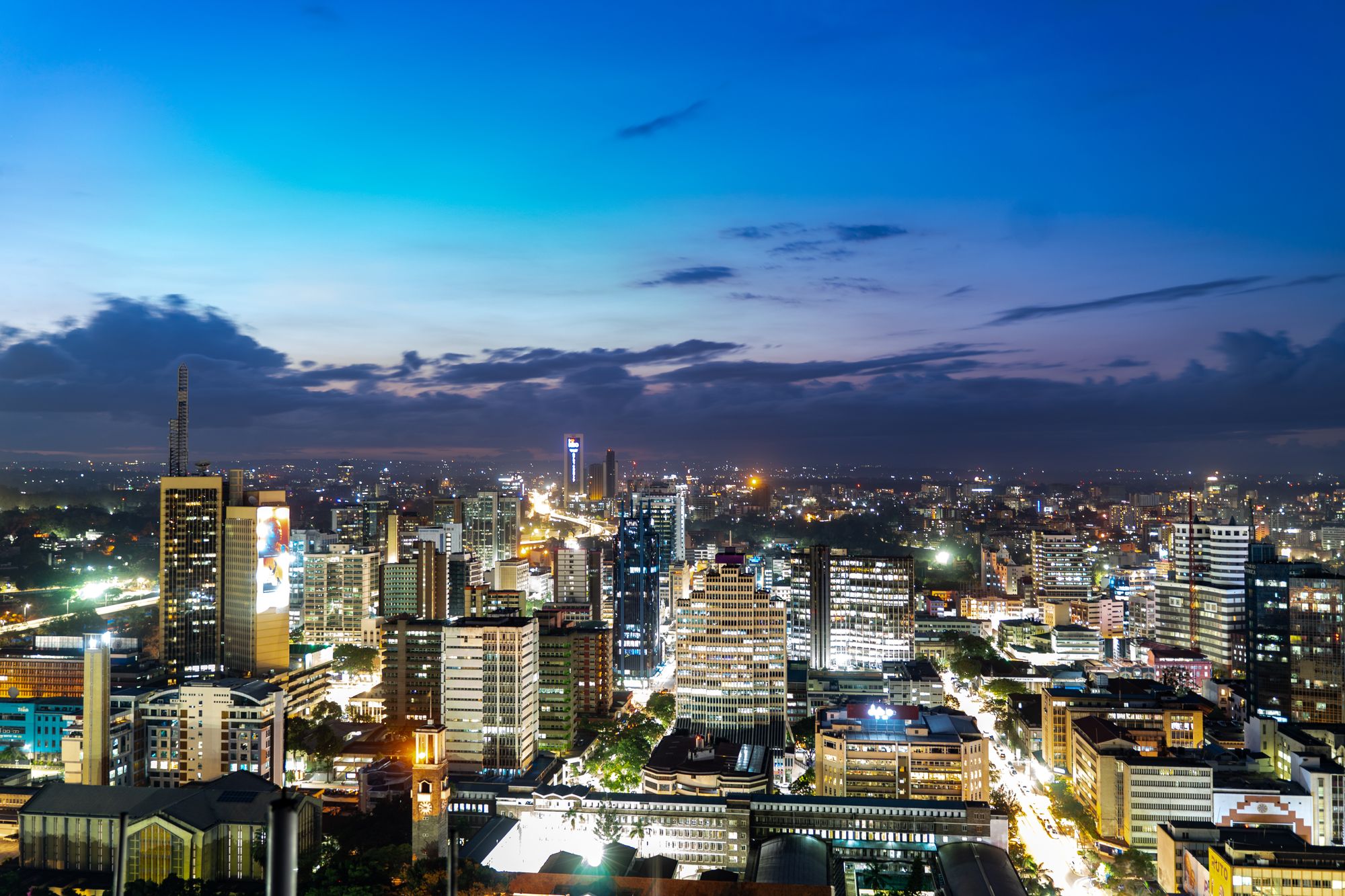
01Why the centre shuts at night
The Central Business District is a working district. It fills before dawn, peaks in the middle of the day and empties with the offices. By the time the last desks clear, the pavements on Kenyatta Avenue and Moi Avenue are wide, lit and nearly empty. Very few kitchens stay open once the office crowd has gone home. That is not a failure of the district; it is how the grid was built. Banks, bureaux, government offices and wholesale traders set the rhythm, and that rhythm ends when the working day ends. If you are staying in the centre, plan the evening before the afternoon is over.
What closes is almost everything that serves the lunch trade. The cafes and canteens off Standard Street and Mama Ngina Street, which turn over fast from about half past twelve, shut when the office crowd leaves. The ground-floor phone shops, pharmacies and tailors along the avenue pull their shutters at much the same point. A few convenience kiosks hold on later, and the streets around the bus stations stay awake longer, but those are transport places, not places to sit and eat. The honest picture is a district that goes quiet and stays quiet until the next working morning.
This is why the evening meal becomes a decision rather than an afterthought. Two things stay open inside the district after the offices close: hotel dining rooms and hotel bars, mostly on the ridge immediately above and west of the grid. Everything else is a ride. Westlands, a short drive out past the park, carries the night in a way the centre does not. That is not a judgement on the food in the CBD; it is simply where the kitchens are. A visitor who expects a late street life around Kenyatta Avenue has been sold the wrong picture of the city centre.
The rhythm matters more than any single venue. The working day starts early, the lunch trade is the busiest meal the centre serves, and the last reliable hour for a walk-in meal is the end of the afternoon. After that you are choosing between a hotel lobby, a hotel bar, or a car. None of those is a poor option, but they are the real ones. This page exists to say so plainly, and to name the one most visitors should take when the offices empty and the question of dinner arrives.
02What is open after the offices close
Start with hotel dining rooms. Several of the older full-service hotels along the avenue and its side streets keep a restaurant open into the night, often the same room that serves breakfast from six in the morning. These are the most reliable in-district option. The food is conventional and aimed at business travellers rather than at a local crowd, which is exactly what you want when the alternatives are a car ride or nothing. If you are staying in one of those hotels, the walk from your room to a table is a lift ride. That is why this site would send a first evening to a hotel dining room.
Hotel bars on the ridge are the second option, and for many visitors the better one. Upper Hill, the ridge immediately west of the grid, holds the newest and most numerous hotels in central Nairobi, most of them with a bar or two and a restaurant above. The view from the upper floors covers the whole CBD and the park. A ride up there is short, and the evening has more life in it than the avenue does after the offices close. It is safe and quiet, and for a lot of trips that is the right trade. Book the ride up and the ride back.
A ride west is the third option, and the one that matters if the evening is the point of the day. Westlands holds the concentration of restaurants and bars that the centre lacks. The drive is not long outside the two hours a day when nothing moves. The practical rule is to arrange the vehicle before you set out rather than after the meal, because the end of an evening on a dark street corner is the part of the night that goes wrong. Westlands is where the night is; the centre is where you sleep.
What the grid has, finally, is thin but not empty. A handful of hotel kitchens inside the district serve late, and a few places around the edges keep going for the transport trade. There is no street of restaurants to walk along, and no cluster of bars waiting for a late crowd. If you are in the centre on foot after the offices close, the grid gives you a hotel lobby and not much else. Treat that as the default, not the fallback. The row list above sets out the four options side by side; the rest of this page is about choosing between them.
Hotel dining rooms
The in-district evening meal is a hotel restaurant, attached to a lobby rather than a street. Hours move with the hotel and the season, so ask at the desk rather than trusting any printed time.
Hotel bars on the ridge
A short ride up to the western ridge puts you in hotel bars with the newest rooms and views back over the whole centre. Book the ride both ways rather than relying on finding one outside.
A ride west
The rooftops and restaurants of Westlands and Kilimani carry the night for most visitors. The ride is the part that matters, and it should be arranged with a known operator rather than hailed on the street.
What the grid has
Street-level food in the centre follows the offices: lunch trade, then shutters. A late plate inside the district means a hotel, and most evenings mean leaving it.
03What this page will not promise you
The honest half of this subject is what cannot be known in advance. Which kitchen is serving on a given evening, when the last order is taken, whether the bar closes before the restaurant, and whether a room has been booked out for a private function: all of that moves with the season, with staffing, with the day of the week and with the management. This page prints no clock time for any of it, because any time printed here would be wrong within weeks. The bullet list above is the procedure; the callout below repeats the caveat in its own words.
This page is compiled from published information and the site's own checks rather than from a visit. Nobody writing here has sat in a dining room on the avenue after the offices close. Opening arrangements and anything that moves week to week are not printed here. What is written instead is the structure of the problem: where the kitchens are, where they are not, and what to ask. If that reads as cautious, it is. A list of late venues that is out of date by the time you land is worse than no list at all, and a page that invents a closing time is worse than both.
So the practical instruction is to ask on the day. The hotel desk knows which of its rooms is serving and until when. The operator of any other venue knows the same for its own kitchen. Ask before you commit to the walk or the ride, and ask again if the answer sounds like a guess. For anything outside a hotel, agree the fare and the route before you get into the car, and fix the return as part of the same arrangement. This site prints no price of any kind, so the fare is a question for the driver and not for a page.
The same caution applies to the map. The district is small and the grid is easy to hold, but the useful information is not geometry; it is timing. Two venues a hundred metres apart can have completely different evenings. The one thing this page will say with confidence is structural: the centre empties with the offices and stays empty, the hotels are the exception, and everything else is west. Beyond that, the details belong to the operators and to the day you arrive. There is no version of this page that can replace a question asked at the desk.
- Agree the fare and the route before you get into any car after dark.
- Treat eating in a hotel lobby as the default in-district option, not a fallback.
- Arrange the return ride when you set out, so the evening does not end on a street corner.
- Check the day's service hours with the hotel or the operator, because they move and this page does not print them.
What this page cannot know
Opening hours, kitchen closing times and which rooms are serving on any given evening are set by the operator and move with the season, staffing and the day of the week. This site prints no clock time and no price for any of them, because both would be wrong within weeks. Ask the hotel desk or the operator directly, on the day, and treat any list of late-night venues as a starting point rather than a promise.
04What to do with the evening
The verdict is short. If you are sleeping in the district, eat in your hotel on the first night. It removes the transport problem, it removes the timing risk, and it lets you see the centre after dark before you decide how much of the evening you want to spend in it. Once you know how the district feels at night, the other options open up and you can judge whether the ride west is worth it to you. Most visitors who do this end up eating out later in the trip; almost none regret the quiet first evening.
If you are not staying in a hotel, or if you want more from the night than a lobby can give, go up to the ridge. Upper Hill has the newest hotel stock in central Nairobi and a genuine evening, and the ride from the grid is short. A bar on one of the upper floors covers the whole centre and the park below, which is the one view of the district that the district itself cannot give you. Eat there rather than in the grid, and arrange the car back at the same time you arrange the car out.
For a full evening, go west to Westlands. That is where the restaurants and bars concentrate, and it is where the night is if the night is the point of the trip. Build the whole thing around the two journeys: out before the meal, back after it, both booked or agreed in advance. Do not plan to find a car on the street at the end of the evening, and do not plan to walk any part of it after dark. The centre is a working district, and the working day is over.
Whichever you choose, decide before mid-afternoon rather than at dinner time. That is the one habit that makes the evening work. The district is at its best in daylight and its emptiest after the offices close, so the meal is a deliberate move rather than something you fall into. Ask the desk what is serving that day, agree the fare before you get in, fix the return when you set out, and the evening takes care of itself. The centre will be quiet again in the morning, and that is the version of it worth seeing.
Where this page comes from
Desk research, not fieldwork. Nobody writing this stood on the corner with a stopwatch, and a page that implied otherwise would be the least trustworthy thing on the site. The specifics above came from here:
- Distances: computed from published coordinates, direct line from Kenyatta Avenue at Moi Avenue.
- After-dark guidance: current travel advisories, read alongside this page rather than replaced by it.
- Hotel ratings and review counts: the booking partner’s published guest scores.
Opening hours, ticketing and market days change. No hotel or operator pays to appear here.
05Questions
Can I walk to dinner inside the district?+
During the working day, yes: the lunch trade on the side streets fills quickly. After the offices close, the ground floors of the grid go quiet and the street-level eating with them. In the evening the in-district options are the hotel dining rooms, and anything else is a ride.
Is it worth going up to the ridge for dinner?+
It is the nearest change of scene, and the hotel bars there have the newest rooms and a view back over the whole centre. The trade is that there is little street-level eating on the ridge itself, so plan the ride and the table before you go.
How do I get back after eating?+
Arrange the return with a known operator or through the hotel, and settle it when you set out rather than on the pavement afterwards. After dark the centre is lit but empty, and the honest advice is not to rely on finding a car on the street.
Should I just eat in the hotel?+
For a first night in the centre, that is the sensible choice. It is the only full evening meal that does not require a ride, and it removes the return journey from the plan entirely. If the trip is longer, the west of the city is worth the crossing on at least one night.