01Why the boda boda deserves its own page
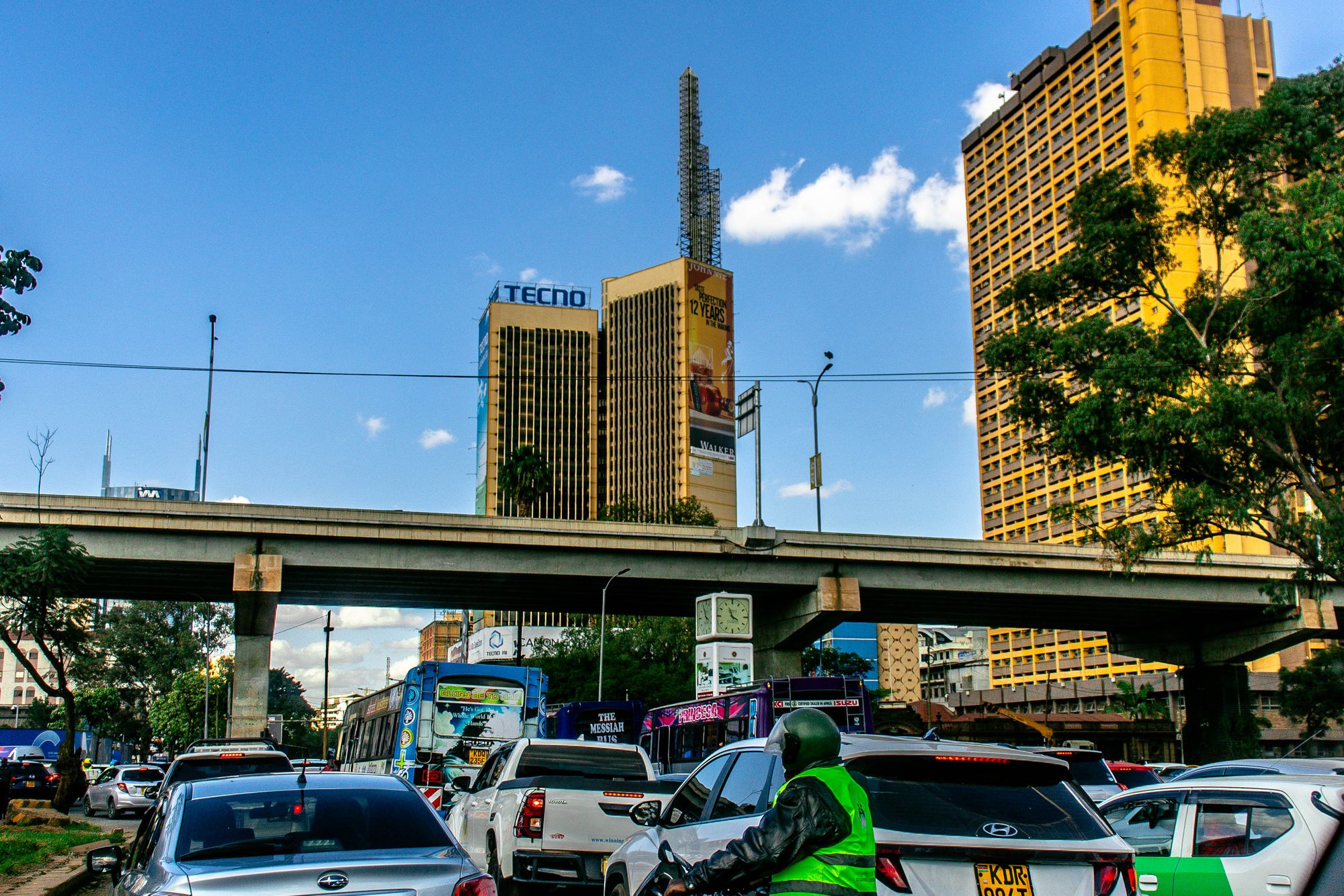
A motorcycle taxi is the one vehicle in the central business district that does not sit in the queue. The grid between Uhuru Highway, the railway and Ngara moves slowly for cars for most of the working day, and a bike filters through it. That single fact is why the boda boda is worth a page of its own on a site about this district: it is not a novelty here, it is a working part of how the centre moves, and a visitor who does not understand it will either overpay, overtrust it, or refuse the one form of transport that solves a specific problem.
The problem it solves is the short, awkward journey. Kenyatta Avenue to the market quarter, the Archives to a stage on River Road, a hotel on Moi Avenue to a meeting across the grid: distances that are too far to be pleasant on foot in the middle of the day and too short to be worth waiting for a car in stationary traffic. On those trips a bike is quicker than anything else on the road, and that is the honest case for it. This page is about when that case holds and when it does not.
It also deserves its own page because the terms are not published anywhere. A matatu route has a stage and a crew and a rough convention. A bike has a rider and a passenger and a conversation at the kerb, and everything that matters is settled in that conversation before the engine starts. That makes the boda boda the most negotiable transport in the district and the easiest to get wrong. The rest of this page is about the negotiation, the journeys worth making, and the ones where a car is the right call instead.
Understand what you are buying. You are buying passage through gaps that a car cannot use, at a speed set by the rider, on a machine with no cabin and no seatbelt, in traffic where the other drivers are also improvising. That is the trade. It is a real trade and it is often a good one. It is not a taxi with two wheels, and treating it as one is how people end up arguing at the roadside about a destination that was never agreed.
02The journeys, and the terms to settle
The row list above sets out the four journeys this page would actually consider. Each has a different character and a different set of terms. The short hop within the grid is the strongest case for a bike: a distance that is uncomfortable on foot and slow by car, with both ends on streets the rider knows. The crossing of the grid, from the railway side to the eastern edge, is the next strongest, because the alternative is sitting still. The airport run and the far side are longer, faster and more exposed, and the terms matter more. After the offices close, the calculation changes again.
Settle the destination out loud before you get on, and settle whether the rider waits. Those two things decide most disputes. Name the building or the junction rather than the street, because a street in this district can be several blocks long and the rider will take the nearest end. If you want the rider to wait while you go in somewhere, say so at the kerb and not after you arrive, because waiting is a separate arrangement and both sides need to know it is part of the trip.
Then settle the rest of the practical terms in one pass: the route if you have a preference, the pace, and what happens if the traffic forces a change. A rider who is asked to go slower at the start will generally go slower. A rider who is asked to go slower halfway through a fast stretch has less room to respond. Say what you want before the bike moves, keep it short, and hold to what was said rather than reopening it at a junction.
The helmet is not a negotiating point. Ask for one for yourself and expect the rider to be wearing one. If there is no helmet, the trip is not worth taking, however short it looks. Keep the phone and the wallet out of your hand and off your lap for the whole ride, and hold a bag in front of you rather than on a shoulder where it can be pulled. If the pace feels wrong at any point, ask the rider to slow down or to stop, and get off if the response is not what you asked for. No trip through this district is worth an argument at the roadside.
The short hop
Between Kenyatta Avenue at Moi Avenue and the River Road stages is a couple of blocks the bike covers in a minute or two. On foot it is a short walk, and on many days that walk is faster.
Across the grid
For a full crossing of the CBD, a motorcycle beats a car outright through stationary traffic. It is also the trip where the exposure is longest, so a helmet and settled terms matter more, not less.
The airport and the far side
Longer runs leave the CBD and join fast roads where the rider sets the pace. A car with a seatbelt is the honest answer for these, particularly with luggage or after dark.
After the offices close
Guidance for the centre is consistent on this: a car after dark, not a motorcycle. The stage areas thin out, lighting is patchy in places, and the risk profile changes.
03What this page cannot tell you
This page is compiled from published information and the site's own checks. Nobody writing it has ridden a boda boda in Nairobi, timed a journey across the grid or stood at a kerb agreeing a fare. That is the honest position and it shapes what is printed here. What can be described is how the arrangement works, what to settle, and where the risks are. What cannot be described is what any particular trip will feel like, because that depends on the rider, the hour, the weather and the traffic on the day.
Opening arrangements and anything that moves week to week are not printed here. Fares move with the hour, the weather and the traffic, which is exactly why no figure appears anywhere on this page. Enforcement moves riders off particular corners and onto others. Which stage or which kerb is busy changes from month to month. A number or a location printed here would be wrong by the time it was read and would be treated as a rate or a rule. The ticket is agreed at the kerb, and it is agreed by the two people making the trip.
The bullet list above is the part that does not change. Agree the terms before you get on. Insist on a helmet. Keep the phone and the wallet out of your hands. Ask the rider to slow down or stop, and get off if they do not. Those four hold whether the trip is a short hop across the grid or a longer run to the far side, and they hold at any hour. Everything else on this page is context for those four.
There is a real limit to what any page can do here. A bike is the most exposed way to travel in this district and the fastest way through its traffic, and both of those are true on the same trip. The advice that follows is about choosing which trips are worth that trade and which are not. It is not a guarantee about any individual ride, and no page can be. Treat the terms, the helmet and your own hands as the things you actually control.
- Agree the terms before you get on, including the destination and whether the rider waits, and hold to what was said.
- Insist on a helmet, for yourself and for the rider, and do not accept a bike without one.
- Keep the phone and the wallet out of your hand and off your lap, and hold bags in front rather than on a shoulder.
- Ask the rider to slow down or stop if the pace feels wrong, and get off if they do not; no trip is worth the argument.
The figure this page will not print
No fare appears here. Motorcycle taxi pricing in Nairobi is agreed trip by trip, moves with the hour, the weather and the traffic, and is set by the rider and the passenger rather than published by anyone. A number printed on this page would be wrong by the time it was read, and would be treated as a rate. The ticket is agreed at the kerb; agree it before you get on.
04What to do with all of this
Use a bike for the journeys where the traffic is the problem and the distance is short. Within the grid, from Kenyatta Avenue towards the market quarter or the eastern streets, it is the fastest option and the case is straightforward. For the airport run and the far side, weigh the exposure against the time saved and decide for yourself; those are longer trips at higher speed and the terms deserve more care. After the offices close, take a car, especially on the eastern side of the district.
Walk to the kerb with the terms already decided. Know the destination, know whether you want the rider to wait, and know what you will say if there is no helmet. Say the terms once, plainly, before the bike moves. If the arrangement does not suit, decline and take the next one; there is no shortage of bikes in this district and no reason to accept a trip that starts badly.
Keep the phone away for the whole ride. This is the single most useful habit on a bike here, because a phone in your hand is the thing that turns a fast, ordinary trip into a story. Hold your bag in front. Keep both feet on the pegs. If the pace is wrong, say so at once, and be prepared to get off at the next junction rather than continue an argument.
Then put the bike in its place in the wider plan for the district. Most of the centre is best done on foot, in daylight, with one pocket and nothing in your hands. A bike is for the gaps between those walks that are too long for comfort and too short for a car. Use it that way and it is a tool. Use it as a default and it becomes the most expensive and most exposed habit in the city.
Where this page comes from
Desk research, not fieldwork. Nobody writing this stood on the corner with a stopwatch, and a page that implied otherwise would be the least trustworthy thing on the site. The specifics above came from here:
- Street-level safety guidance: current travel advisories for Nairobi, checked against the operator advice given at the stages.
- Distances and walking minutes: computed from published coordinates, direct line at 4.8 km/h.
- After-dark guidance: current travel advisories, read alongside this page rather than replaced by it.
Opening hours, ticketing and market days change. No hotel or operator pays to appear here.
05Questions
Can I take a boda boda from the CBD?+
Motorcycle taxis work the whole centre and are easy to find at the busier junctions and stage areas. The question is not whether one is available but whether the trip, the hour and your own confidence make it the right choice. For shopper hops in daylight the answer is often yes; for longer runs or anything after dark this site would call a car instead.
How much does a boda boda cost?+
This page does not print a fare, and no other page on this site does either. Pricing is agreed between rider and passenger, and it moves with the hour, the weather and how much traffic is standing. Ask what the trip costs before you get on, agree it clearly, and hand over what was agreed at the other end.
Is it safe to ride one in the centre?+
It is the fastest way through stationary traffic and the most exposed way to travel, and both of those are true at the same time. A helmet, settled terms, a daylight hour and a rider who is not in a race with anyone all reduce the risk. Current travel advisories for Nairobi should be read alongside this page rather than replaced by it.
Should I take a boda boda after dark?+
For the central business district the guidance is plain: take a car after dark, not a motorcycle. The stages wind down, the streets thin out, lighting is patchy in places, and the risk profile changes sharply. Daylight trips across the grid are a different question with a different answer.