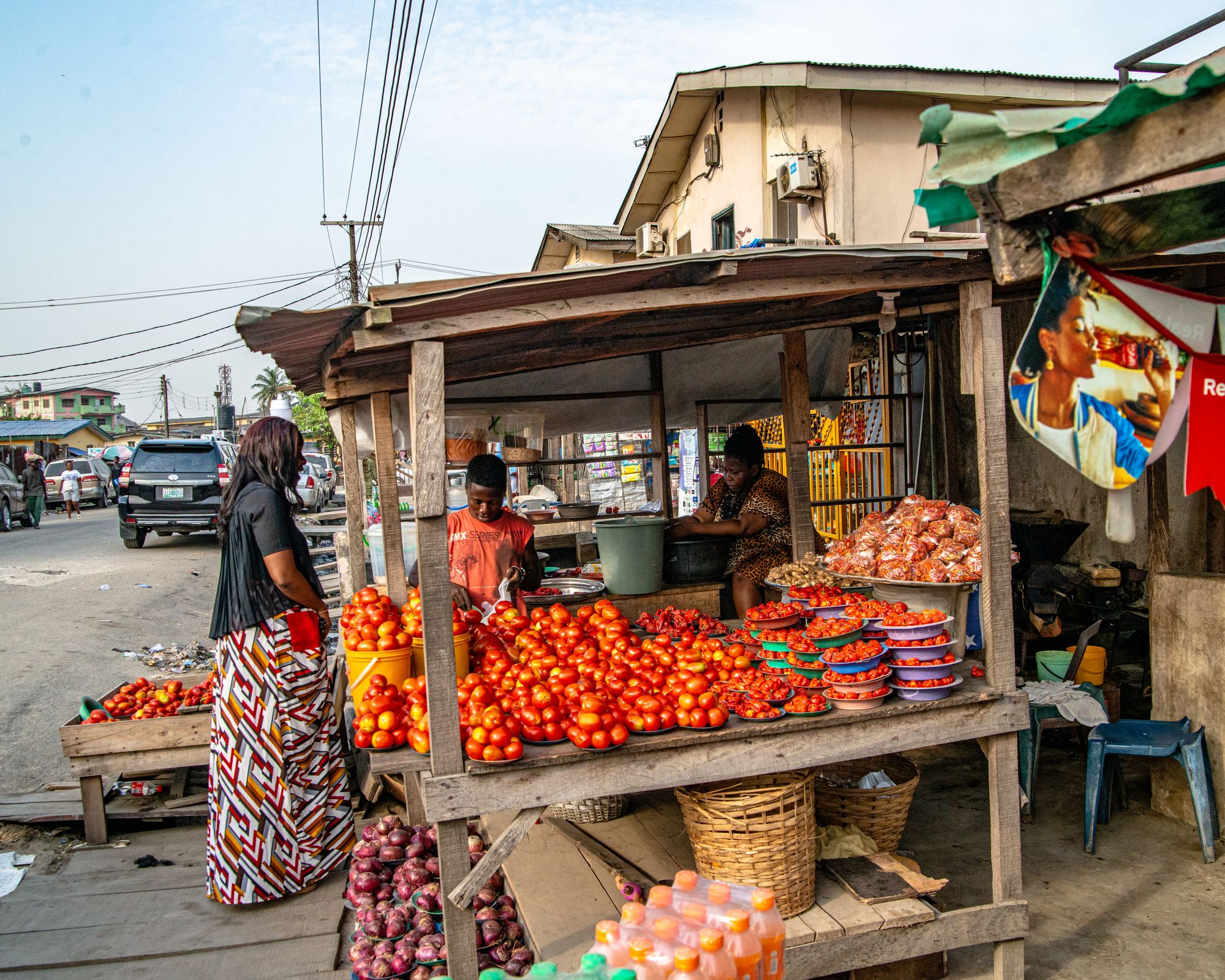
01Why the eastern edge is the country's front door
Most of Kenya reaches Nairobi by road, and the road ends on the eastern edge of the Central Business District. The country bus termini off Landhies Road are where the long-distance coaches set down: the overnight services from the west, the morning arrivals from the Rift, the coast buses that have run all night. If you are arriving by country bus, this is the ground you step onto, and it is not the Nairobi of the avenue. It is a working transport edge, pressed between the market and the railway land, and it is the first thing the city shows you.
The site treats this quarter as the eastern gateway because that is what it is. The wholesale market feeds the rest of the centre, and the termini feed the market. Everything the city eats during the day has passed through these aisles by handcart before first light. A traveller arriving here is landing inside the machine rather than beside it. That is worth a page of its own, because the arrival is not merely a place to leave from: the first ten minutes on this ground set the tone for the rest of the stay.
This page does not repeat the row list or the bullet list already written for you. It is about the arrival itself: what the ground is like underfoot, what you should have settled before the coach door opens, and why the first ten minutes decide how the rest of the day goes. The district is compact and functional. It runs on trade and transport, it finishes its main business by mid-morning, and it has no interest in whether you have slept. Arriving here is a practical transaction, and the better you understand that, the smoother it is.
The eastern edge is also the least visited part of the Central Business District, and the least dressed for visitors. There is no signposted arrivals hall, no information desk, no taxi desk with a printed rate board. What there is instead is an organised, fast-moving working ground where everyone except you knows the system. The page that follows tries to close that gap: not by pretending the ground is gentler than it is, but by telling you what to arrange before you step off, and what to do in the first ten minutes so the rest of the arrival is not decided by whoever approaches you first.
02What the termini and the market ground are
The market ground is the reason the termini are here. It is a wholesale produce market, built to move bulk rather than to serve shoppers, and its working window is the small hours: the trade peaks between four and seven in the morning and is largely finished by the time the offices open. Trucks come in from the growing areas, handcarts move the loads out, and the whole ground changes hands fast. Arriving on an overnight coach, you will step into the tail end of that. It is busy, it is loud, and it is not a place to stand still and get your bearings.
The termini themselves are not one building. They are a cluster of stands and yards where different operators load and unload, and which operator uses which stand keeps moving. There is no central concourse and no single departure board that covers the whole ground. Each company runs its own office, its own queue and its own departure arrangement. If you are leaving again rather than arriving, the practical move is to go to the operator's office in person, confirm the stand and the departure, and keep the ticket on you. Do not rely on a stand number you were given weeks ago.
Landhies Road is the main axis of the quarter, and it carries the whole thing: termini on one side, market on the other, handcart traffic in between at every hour before noon. Most arrivals will be set down somewhere along it or just off it. The road is a working street first and a pedestrian route second, so the pavement is where the trade happens and the traffic does not wait. If you are walking out of the quarter towards the centre, Landhies Road is the line to follow until the grid proper begins.
The railway boundary closes the quarter to the south. It is the edge that explains the whole district: the land here was railway land before it was anything else, and the market and the termini were moved onto it precisely because it sat outside the tight commercial grid. The practical consequence for you is that the quarter has a hard southern edge and no through route in that direction. If your onward destination is west, towards the avenue, you are walking away from the railway, not along it.
The market ground
Muthurwa's wholesale market shares its ground with the termini, so produce and passengers move through the same streets. The trading peak falls before first light and the quarter empties well before the offices open.
The termini themselves
Departures for much of Kenya leave from stands around the market. Each operator keeps its own office and its own stand, and the allocation moves, so the stand to look for is the one confirmed on the day.
Landhies Road
The main axis runs with the termini on one side and the market on the other, handcart traffic between them. It is the street that makes the quarter legible, and the one to walk first.
The railway boundary
The southern edge closes the quarter against the railway land, which is why the termini and the wholesale trade sit here rather than nearer the avenue. From Kenyatta Avenue at Moi Avenue it is 1.23 km, about 16 min on foot.
03What this page cannot settle for you
The honest caveat comes first, because it governs everything else. This page is compiled from published information and the site's own checks rather than from a visit. Nobody writing it has stood on the market ground. That means opening arrangements, stand allocations and anything else that moves week to week are not printed here. Where a detail is set by the operator and changes without notice, the page names the office to ask rather than inventing a figure. A page that guessed at a departure time or a fare would be worse than useless on the day, so it does not guess at either.
The bullet list beside this section already carries the practical instructions, so this paragraph does not repeat them. What matters here is the habit behind them: settle things before you hand anything over, and settle them at the source rather than on the ground. The operator's office, not a tout. The taxi rank, not whoever approaches you between the coach and the gate. That single distinction, made once at the start, removes most of the friction an arrival here can produce. Nothing on this ground requires you to trust a stranger's version of the arrangement.
The market's internal layout is another thing the page will not fix in place. It is reorganised periodically, and the stall rows you read about elsewhere are not stable enough to print. The same applies to the termini: stand allocation shifts, and operators move between stands. The district has been reshaped more than once, most recently as street trade and long-distance transport were moved out of the core grid, and it continues to be reshaped. Treat every fixed plan as a starting point to confirm, never as a map to follow blind.
So the page withholds deliberately, and says so. No prices of any kind. No departure times. No opening hours, because the market and the termini run to a trade clock rather than a published one. No walking time between the stands and the centre, because the honest figure depends on the hour, the traffic and how much you are carrying. What is left is the part that does not change: the order of the tasks, the direction of the walk, and the fact that the first ten minutes are about arrangement, not movement.
- Confirm the operator and the departure stand at the operator's office before you hand anything over, and keep the ticket where you can reach it.
- Agree the fare for any onward taxi before you get in, at the rank rather than with anyone who approaches you on the ground.
- Keep small notes ready and bags closed on the market ground: the trade finishes early and change is handled fast.
- If the arrival is after dark, have the onward car arranged before you step off rather than finding one at the roadside.
What this page does not print
Stand allocation at the termini and the market's internal layout are reorganised periodically, and which operator uses which stand keeps moving. This page prints no departure time and no fare, because both belong to the operator and both change without notice. Ask at the operator's own office, or check the operator's published departure information, on the day you travel rather than trusting any list, including a list written earlier this year.
04How to use this on the day
Use the page backwards, from the moment you step off. Before the coach door opens, you should already know three things: which operator brought you and where its office is, whether an onward car is arranged or you are walking, and where your money and ticket are on your person. If any of those three is unresolved, resolve it while the coach is still moving rather than on the ground. The ground is for moving through, not for planning in. That is the whole discipline of arriving here, and it takes less time than reading this paragraph.
If the arrival is in daylight and the onward destination is the centre, walk. The quarter is compact and the route out is plain: follow Landhies Road until the commercial grid takes over, then aim for the avenue. Keep your hands free, keep your bag closed and in front, and keep walking. If the arrival is before dawn, the picture changes. The market is in full trade, the ground is crowded and dark at the edges, and the correct move is a car that has been arranged in advance rather than found at the roadside. Agree the fare before you get in.
If you are departing rather than arriving, reverse the order. Go to the operator's office in person before you hand over anything, confirm the stand and the departure on the day, and keep the ticket where you can reach it. Arrive with margin, because stand allocations move and a stand you cannot find costs more than an early start. Buy nothing from anyone who approaches you offering to sort the ticket for you. The office is the office, and everything that is genuine happens there or at the vehicle itself.
Finally, do not treat this quarter as the city. It is the front door, not the house. The Central Business District proper begins a short walk west, and the avenue, the market streets and the parks are a different experience from the transport edge. Come back to the termini on the day you leave, with the same arrangement made in advance. In between, the district is yours to read without the luggage. The arrival is a transaction, and once it is done, the city is straightforward from here.
Where this page comes from
Desk research, not fieldwork. Nobody writing this stood on the corner with a stopwatch, and a page that implied otherwise would be the least trustworthy thing on the site. The specifics above came from here:
- Country bus operators: the operators’ own published departure information.
- Muthurwa market and the termini: Nairobi City County market and transport information.
- After-dark guidance: current travel advisories, read alongside this page rather than replaced by it.
Opening hours, ticketing and market days change. No hotel or operator pays to appear here.
05Questions
Can I walk from the termini into the centre?+
Yes, on foot, in daylight and with nothing in your hands. From Kenyatta Avenue at Moi Avenue the walk down is 1.23 km, about 16 min, in the other direction. The ground is a working market with handcarts moving at pace, so walk in the middle of the road and give way.
Is it safe to arrive before dawn?+
The quarter is at its busiest before first light, which is the safest part of its day and the only part worth planning around. Have the onward car or the address arranged before you get off, and do not stand on the ground working out what to do next.
Where do I buy a ticket and how much is it?+
The ticket is bought at the operator's own office, and the fare is set by the operator and changes with the route and the season. This page prints no price of any kind. Ask at the office counter for the destination and the departure you want, and get the fare confirmed there.
What should I do if the stand has moved?+
Stand allocation and the market layout are reorganised from time to time, and no list stays right for long. Ask at any operator's office on the ground, follow the crowd of passengers with luggage, and allow slack in the plan rather than cutting an arrival fine.