01Start at the Cathedral and walk the old grid
Sunday traffic in the Central Business District thins out by 8am, so the streets around City Hall Way and Taifa Road are unusually walkable. Begin at the Holy Family Basilica on City Hall Way, where the 7am and 9am Masses draw a well-dressed crowd and the square outside fills with families. Continue north to the Jeevanjee Gardens on Muindi Mbingu Street, a shaded, free public garden that is at its calmest before 10am. From there, walk down Moi Avenue to the two metal elephant tusks, a five-minute stroll that gives you the classic downtown orientation without fighting weekday crowds.
The pavements here are uneven and the crossing signals at Kenyatta Avenue and Moi Avenue are erratic on Sundays, so keep to the marked crossings and wear closed shoes. Two hours covers the basilica, Jeevanjee Gardens and the August 7th Memorial Park on Haile Selassie Avenue, which opens on Sunday mornings and documents the 1998 embassy bombing in a small, sober museum. Entry is modest and posted at the gate. I would skip the souvenir stalls along Moi Avenue on a Sunday; half are shuttered and the rest price for tourists.
02Lunch and the museum quarter
By midday, heat builds and the sensible move is a matatu-free hop to the museum district. The Nairobi National Museum on Museum Hill is roughly 3km from the city centre, a 40-minute walk via Uhuru Highway and Museum Road, or a short ride if you prefer. The museum opens daily including Sunday and holds the fossil galleries and the Joy Adamson collection, and the adjoining Snake Park opens the same hours. Allow two to three hours. Book tickets at the gate or online in advance; Sunday queues are shorter than Saturday's.
For lunch, the museum café is convenient but limited. A better value is the cluster of hotels and cafés around the University of Nairobi and the YMCA on State House Road, where Sunday buffets run from mid-morning to mid-afternoon at prices well below weekday business rates. Kenyan staples such as nyama choma, ugali and sukuma wiki are the reliable choice. If you want something lighter, the Kilimani and Upper Hill areas are a short ride southwest and have more variety. Sunday afternoons are the best-value window for hotel dining in Central.
03Afternoon: markets, parks and the view
The City Market on Muindi Mbingu Street runs a reduced Sunday schedule, mainly produce and curio sellers rather than the weekday meat and flower trade. It is worth 30 minutes if you want craft souvenirs at less pressured prices; expect to negotiate and bring small notes. From there, walk 15 minutes southwest to Uhuru Park along Kenyatta Avenue and Processional Way. The park's lawns, the Nyayo Monument and the artificial lake fill with families on Sunday afternoons, and entry is free. It is the single best free hour in the city centre and the safest place to sit and read.
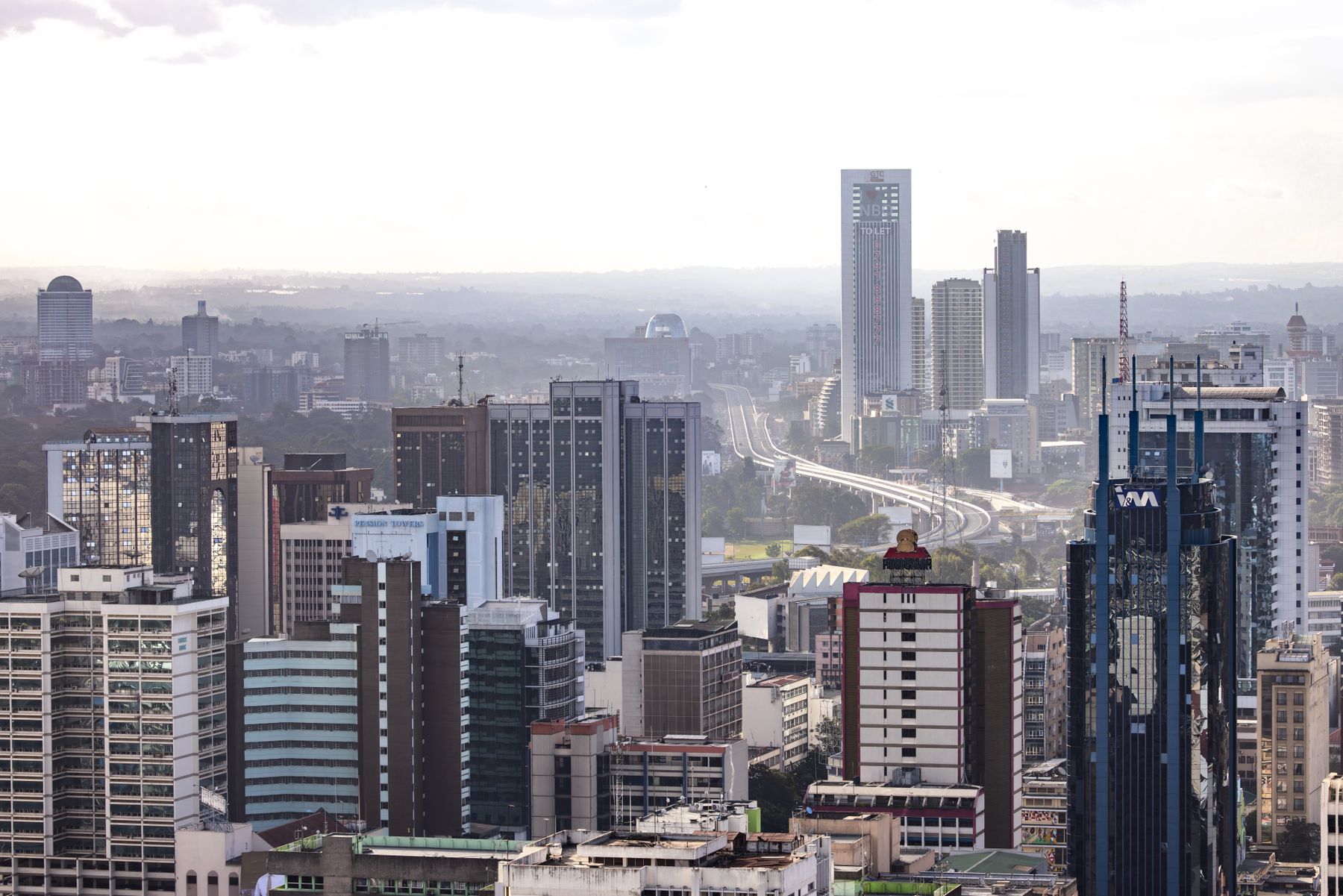
For a view, the Kenyatta International Convention Centre tower on Harambee Avenue opens its rooftop to visitors on most days, including Sunday, for a small fee. The 27th-floor walkway gives you the whole CBD grid, Uhuru Park and, on a clear day, the Ngong Hills to the west. Go before 4pm, when the light softens and the heat breaks. Skip the crowded downtown bars along Tom Mboya Street on Sunday night unless you are with someone who knows the area; they are not the calm end of the city.
04Where to stay and how to plan the day
Staying in Central is the whole point of a car-free Sunday. Hotels along Kenyatta Avenue, Muindi Mbingu Street and University Way put the basilica, Jeevanjee Gardens, City Market and Uhuru Park inside a 20-minute walk, and the museum a short ride away. Book a room on a higher floor away from the street: Sunday morning church bells and evening traffic on Moi Avenue carry. Rates in Central sit below the Upper Hill and Westlands business hotels, and Sunday nights are often the quietest, cheapest night of the week to add to a stay.
Nairobi's dry seasons, roughly January to February and June to September, are the most comfortable for walking, with cooler mornings and less mud underfoot. The long rains in April and May make pavements slick and the park muddy. Use ride-hailing apps for the museum leg rather than street taxis, agree any street-hailed fare before you get in, and keep small cash for market stalls and museum tickets. I would book a Central hotel for the Saturday night, walk the basilica and gardens on Sunday morning, and take a ride to the museum after lunch.
Where this page comes from
Desk research, not fieldwork. Nobody writing this stood on the corner with a stopwatch, and a page that implied otherwise would be the least trustworthy thing on the site. The specifics above came from here:
- Written for this site by its editor. No outside source is claimed for it.
Opening hours, ticketing and market days change. No hotel or operator pays to appear here.
05Questions
Is Nairobi Central safe to walk on a Sunday?+
Sunday is the quietest day in the CBD, which helps, but stick to main streets such as Kenyatta Avenue and Moi Avenue, keep valuables out of sight, and avoid empty side streets. Walk in daylight hours and use ride-hailing after dark.
Do the museum and parks open on Sunday?+
The Nairobi National Museum, Snake Park, Uhuru Park and Jeevanjee Gardens all open on Sunday, and the August 7th Memorial Park opens Sunday mornings. The KICC rooftop is usually accessible; confirm opening hours at your hotel before setting out.
How far is the museum from downtown hotels?+
The Nairobi National Museum on Museum Hill is about 3km from the Kenyatta Avenue hotels, roughly 40 minutes on foot via Uhuru Highway or a short ride. Walking is pleasant in the morning; take a ride back in the afternoon heat.