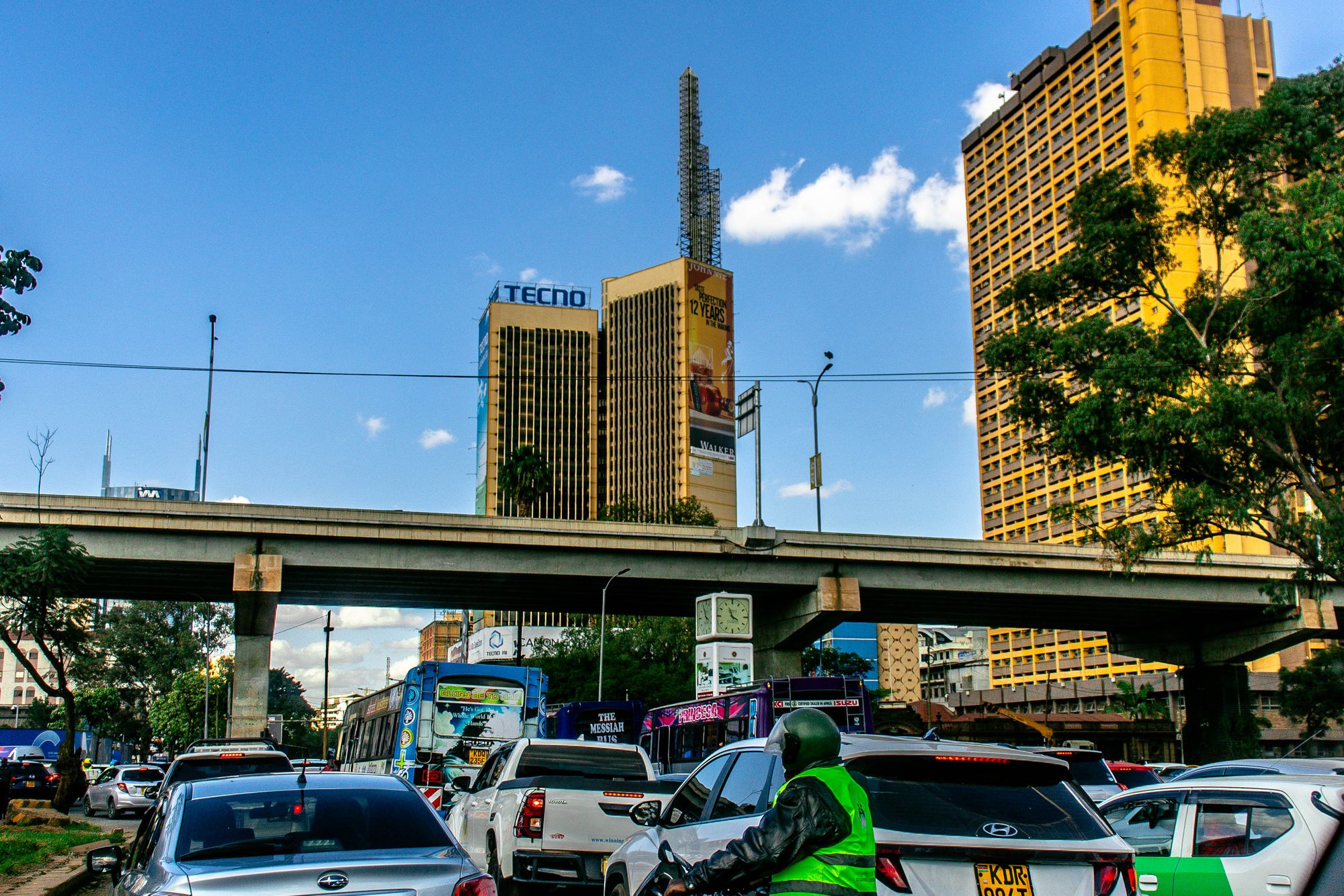
01What the first hour is for
The first hour in Nairobi's central business district is not for seeing things. It is for getting the shape of the place into your head so that everything after it is easier. The centre is a grid of about a dozen streets between Uhuru Highway, the railway and the Ngara side, and it is more legible than its reputation suggests. Hotels here attract business travellers and conference delegates, large rooms and reliable water, ratings strong on service and location. What that means in practice is that somebody has already worked out the sensible routes, and the front desk will tell you which direction is worth walking from where you are standing.
Arriving into a new city centre is unsettling for reasons that have little to do with danger. You do not know which way the traffic runs, which pavement thins out, where the crossings are, or how long a block takes. Those are the things the first hour is for. Use it to walk one line and hold it, rather than to tick off landmarks. Kenyatta Avenue works best for this, because it is wide, straight and signposted, and because the whole grid arranges itself around it once you are standing on it. Get that line fixed and the rest of the centre becomes a set of short hops off it.
What the first hour is not for is deciding whether Nairobi is safe. That judgement does not survive one walk in one district, and the reputation the city carries abroad is not a useful guide to a weekday pavement here. There is real caution worth keeping, and the honest version of it sits further down this page: daylight for the walking, a phone in a pocket rather than in a hand, a car after dark when the offices empty. None of that requires you to be afraid of the centre at eleven in the morning. It requires you to walk it the way the people who work here walk it.
Treat the hour as reconnaissance and it pays off for the rest of the stay. Note where the bank halls are, which junction has signals, where the coffee is, which side of the street holds the shade in the middle of the day. Note the direction the traffic flows on the one-way streets, because that decides which way you can cross. None of this is glamorous. All of it is the difference between a district that feels closed to you and one that opens up on the second walk. The centre rewards a little boring attention more than it rewards a list of sights.
02The four blocks worth knowing
Think of the centre as four pieces rather than as one place, because they read completely differently and each asks something different of you. Kenyatta Avenue is the spine: bank towers, airline offices, the widest pavements in the centre and the easiest orientation line to hold. Moi Avenue and Tom Mboya Street carry the heaviest pedestrian traffic in Kenya between them, shops at street level and offices stacked above. City Square and the KICC form the civic block. The market streets sit one block north and feel like another city again. Learn the four and you can place anything anybody tells you.
The spine is where a first walk belongs. It runs from the Uhuru Highway roundabout in the west to the Moi Avenue junction in the east, and almost every bank in the country keeps its headquarters within sight of it. The avenue is orderly, the crossings are signalled, and hawker pressure is not an issue there the way it is a block east. If you hold that one line, the rest of the grid is short hops off it. The blocks immediately north, Kimathi Street and its parallels, are where the office crowd eats and where the older full-service hotels sit.
The busy grid is the opposite experience and worth doing deliberately. This is where the city shops, changes buses, eats lunch and preaches, and it does not thin out between early morning and the end of the commute. The Kenya National Archives occupies the old Bank of India building at the Hilton corner, and behind the banking-hall columns is the Murumbi collection: African art, textiles, beadwork and photographs, stacked floor to ceiling. It is ticketed, it takes about an hour, and photography rules are posted at the desk and enforced. For many visitors it is the most surprising interior in the centre.
The civic block and the market streets complete the picture. City Square holds Parliament, the Supreme Court, City Hall and the Kenyatta mausoleum around open paving closed to through traffic, and the KICC tower whose rooftop deck gives the best view of the city there is. The market streets north of the avenue are for errands, fabric, produce and the lunch counters that come with a long Indian commercial history. Do the four in daylight. Do the busy grid first if you want to understand how the centre works, and the civic block last, when you want somewhere quiet to stand still.
Kenyatta Avenue
Six lanes with a planted median, banks on both sides, and the widest pavements in the centre. It is the easiest line to hold on to, and everything else in the grid arranges itself around it.
Moi Avenue and Tom Mboya Street
Two parallel streets carrying the heaviest pedestrian traffic in the country: shops at street level, offices above, matatu stages at both ends. The crowd is not the risk; being distracted in it is.
City Square and the KICC
The state's block, with Parliament, the Supreme Court, City Hall and the 1973 conference tower. The rooftop deck is the reason most visitors come, and the walk between the civic buildings is the reason to linger.
The market streets
City Market and the blocks around Muindi Mbingu sit one street north of the avenue. Busier, less orderly and more interesting than the bank frontages, and a short walk from the spine.
03What this page cannot tell you
The honest half of this page is the part that admits its limits. Nothing here is a measurement or a first-hand account. The page is compiled from published information and the site's own checks rather than from a visit, and the street-level guidance comes from hotel and operator advice, which is specific to the block and worth asking for on arrival. Opening arrangements and anything that moves week to week are not printed here. That is a deliberate choice rather than an oversight, because a page that prints an opening hour invites somebody to plan a day around it and then find a closed door.
What moves is more than you would think. Bank and bureau hours, gallery ticketing, the KICC deck's closures for state events and for weather, market days, hawker enforcement that shifts street trade from block to block month by month: all of it is set by the operator and changes. Confirm with the operator on the day. The hotel desk is the fastest source and the most current one, and it knows which direction is worth walking from where you are, which no page can tell you in advance. Ask before you set out rather than after you arrive somewhere shut.
The same restraint applies to money. This page prints no fare, no ticket cost and no entry fee, because live pricing belongs to the operator and to the booking partner. Where a cost matters, the rule is simple: the ticket is bought at the desk, and any fare is agreed before getting into a vehicle. KICC deck entry is arranged at the ground-floor desk and identification is asked for. Taxis and the informal stages have no posted prices at all, which is exactly why the fare is settled before the doors close rather than at the other end.
None of this makes the page useless, and it should not be read as a disclaimer bolted on at the end. It tells you what kind of thing you are holding: a shape of the district, the order to do it in, and the cautions that hold regardless of the day. Treat it as the thing you read before you ask the person at the desk, not the thing you read instead of asking. The one piece of advice that survives every changing detail on this page is the one about asking, and it costs nothing to take.
- Do the walking in daylight and take a car after dark, when the office quarter empties and the pavements go quiet.
- Keep a phone in a pocket rather than in a hand, and photograph from doorways and shop fronts rather than mid-pavement.
- Confirm opening hours, deck closures and photography rules with the operator on the day, because they move and this page prints none.
- Agree any fare before getting into a vehicle, and ask the hotel desk which direction is worth walking from where you are.
What this page does not know
This page prints no opening hour, no fare and no entry time, because all of them are set by the operator and change. Bank and bureau hours, gallery ticketing, the KICC deck's closures for state events and weather, and market days are all moving targets. Nothing here is a measurement or a first-hand account; street-level guidance comes from hotel and operator advice, which is specific to the block and worth asking for on arrival.
04How to use this on the day
Start on Kenyatta Avenue in the morning, when the offices are opening and the pavement has enough people on it to feel ordinary without being crowded. Get your bearings at the Moi Avenue junction, which is the easiest point in the centre to read the grid from. Walk east and north from there if you want the busy streets while they are still workable, or south towards City Square if you want the quiet, open paving first. Either order works. What does not work is trying to do all four pieces in one push, because the centre is hotter, louder and more tiring by the middle of the day than it looks on a map.
Do the walking in daylight and take a car after dark. That is not a hedge, it is the actual advice, and it is the same advice the hotels give. The office quarter empties in the early evening and the pavements go quiet, and a quiet pavement in a district with nothing open is not a place to be wandering. Eat in the hotel or take a car out to the ridge or west of the centre. If the day's plan has run late, take the car back as well. There is no evening version of this district worth the trouble, and the daytime one is where the value is.
Carry one thing in a pocket rather than in your hand, and photograph from doorways and shop fronts rather than mid-pavement. The crowd on the busy streets is not the risk; being distracted in it is. Keep the camera strap on, keep the phone out of view at junctions, and cross at the signals. The pavements on the avenue are wide enough to walk three abreast, which is why the avenue is the good place to take a breath and check where you are. The busy grid is narrower and faster and rewards attention rather than lingering.
Finally, ask. Ask the hotel desk which direction is worth walking from where you are, ask the operator about hours, deck closures and photography rules on the day, and agree any fare before getting into a vehicle. Every practical detail on this page that can change should be confirmed rather than trusted, this page included. Use the four blocks as the frame and let the staff on the ground fill in the rest. That sequence, frame first and local detail second, is what turns a first uneasy hour in the centre into an ordinary morning's walk.
Where this page comes from
Desk research, not fieldwork. Nobody writing this stood on the corner with a stopwatch, and a page that implied otherwise would be the least trustworthy thing on the site. The specifics above came from here:
- Distances: computed from published coordinates, direct line from Kenyatta Avenue at Moi Avenue.
- Nothing on this page is a measurement or a first-hand account.
- Current travel advisories for Kenya: your own government’s published advice, which is updated and dated.
Opening hours, ticketing and market days change. No hotel or operator pays to appear here.
05Questions
Can I change money on the avenue?+
Yes. The bank halls along Kenyatta Avenue handle currency and the larger bureaux sit in the same blocks. Hours are set by each operator and vary, so check before walking over. Look up at the ceilings while you are in there; several of the interiors date from the 1950s and 1960s.
Is the centre safe to walk in during the day?+
The busiest streets are heavily used and well lit through the working day, and the caution that matters is ordinary: daylight, one pocket, nothing carried openly. Read your own government's current travel advisory alongside this page. After dark the sensible answer changes, and a car is the better choice.
How do I get up to the KICC rooftop deck?+
A ticket is bought at the ground-floor desk and identification is usually asked for. The deck has closing hours and closes in bad weather without much notice. Morning light is better for the view north and west, so go early rather than late in the day.
Which street should I start on?+
Kenyatta Avenue, because it is the easiest line to hold on to and the wider pavements make the first ten minutes simple. From there the busy grid on Moi Avenue is a few minutes east and City Square a short walk south. Add the market streets once the grid has settled.